The Data Engineering

From pipelines to platforms — inside the $105 billion ecosystem where Databricks and Snowflake wage war, open table formats reshape storage, and every AI breakthrough depends on the engineers building the foundation beneath it.
Last week, we published a comprehensive deep dive into the state of agentic AI in 2026 — the autonomous systems, the big players, the frameworks, the standards. We ended with a promise: a two-part series on data engineering. Because here’s the thing that most AI hype cycles conveniently ignore — every breakthrough model, every autonomous agent, every enterprise AI deployment is only as good as the data infrastructure underneath it. And in 2026, that infrastructure is undergoing its own quiet revolution.
What Is Data Engineering, Really?
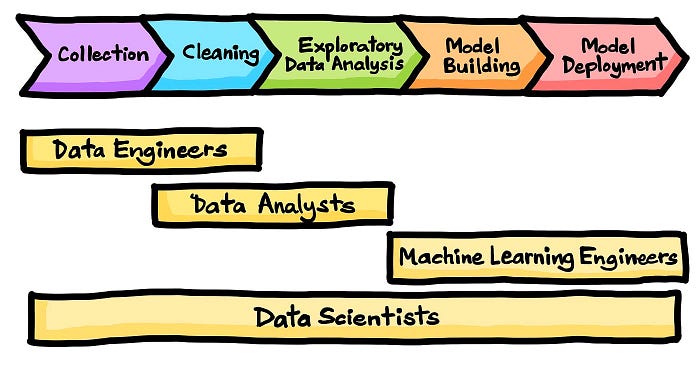
Data engineering is the discipline of designing, building, and maintaining the systems that collect, store, transform, and deliver data at scale. If data science is asking questions, data engineering is building the roads those questions travel on. It encompasses everything from ingestion pipelines that pull raw data from hundreds of sources, to transformation layers that clean and model that data for analytics, to orchestration systems that ensure everything runs reliably, on time, every time.
The role has evolved dramatically. A data engineer in 2020 mostly wrote ETL scripts and managed Hadoop clusters. A data engineer in 2026 is expected to architect cloud-native platforms, build real-time streaming pipelines, integrate ML feature stores, implement data governance frameworks, and manage infrastructure-as-code — all while keeping costs under control. Job descriptions now combine platform engineering, DevOps integration, ML pipeline support, and governance orchestration into a single requisition. It is one of the hardest roles to hire for in tech right now, and for good reason.
The Data Engineering Market by the Numbers
The global data engineering market is projected to exceed $105 billion in 2026, with the broader big data and data engineering services market reaching $91.54 billion in 2025 and projected to hit $187 billion by 2030 at a 15.38% CAGR. The sector employs over 150,000 professionals globally, adding more than 20,000 new jobs in the past year alone. Mid-level data engineers nationally earn between $119,000 and $149,500 annually, while senior engineers command $147,000 to $183,500. The U.S. projects roughly 20% job growth for data engineers over this decade, and globally there are expected to be 2.9 million data-related job vacancies — highlighting a massive skills gap that shows no signs of closing.
Eighty-two percent of organizations now use real-time streaming in their pipeline architectures. Fifty percent of organizations with distributed data architectures are expected to adopt sophisticated observability platforms in 2026, up from under 20% in 2024. And by 2026, over 70% of data engineers rely on transformation tools like dbt, underscoring how deeply the modern data stack has embedded itself in everyday workflows. These are not incremental shifts. This is a fundamental restructuring of how enterprises think about data.
The Platform Wars: Databricks vs. Snowflake
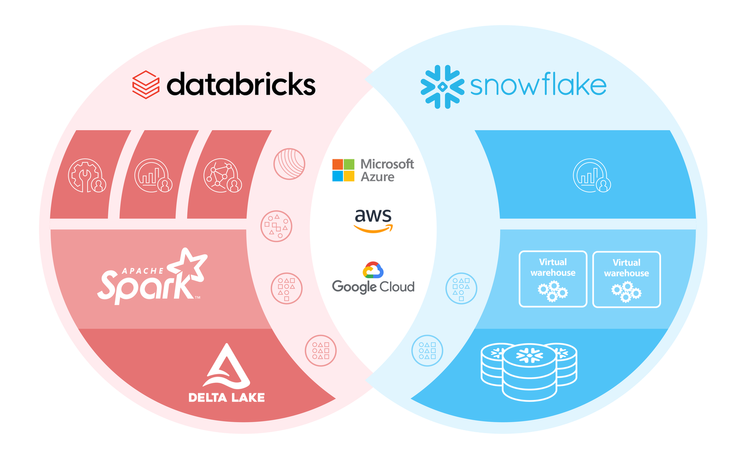
If data engineering has a headline rivalry, it is Databricks versus Snowflake. And in 2026, the gap between them is widening in ways nobody expected five years ago.
Databricks: The AI-First Lakehouse
Databricks has exploded. The company’s annualized revenue now exceeds $5.4 billion, up 65% year over year. Its most recent funding round — $5 billion at a $134 billion valuation — makes it one of the most valuable private companies in the world. For context, Databricks is now valued at roughly 2.5 times Snowflake’s public market cap of about $58 billion.
The reason is AI. Databricks caught the AI wave in a way Snowflake simply has not. Annualized revenue from AI products alone now exceeds $1.4 billion. The company acquired MosaicML to build its own foundation models, launched Agent Bricks for production AI agents, and bought Neon for $1 billion to create Lakebase — a serverless Postgres offering that signals its ambitions beyond the lakehouse. Databricks is built on Apache Spark and the Delta Lake open table format, and its Unity Catalog provides unified governance across data and AI assets. An IPO is widely expected in the second half of 2026.
Snowflake: The Analytics Powerhouse
Snowflake is not standing still. It reported $1.21 billion in quarterly revenue and remains the dominant platform for SQL-based analytics, business intelligence, and governed reporting. Snowflake’s architecture — separating compute and storage with massive concurrency — gives it a natural advantage for BI workloads and multi-team analytics environments. Its Cortex AI layer is expanding, and Snowflake has partnered with OpenAI and Google rather than building its own AI stack from scratch.
For organizations whose primary use case is analytics and BI, Snowflake remains the top choice. For data engineering, ML, and AI-heavy workloads, Databricks typically wins. The reality is that many enterprises now run both — Databricks for data engineering and ML, Snowflake for analytics and BI — creating a hybrid operating model that is increasingly common across the Fortune 500.
The Lakehouse Revolution: Open Table Formats
One of the most consequential shifts in data engineering over the past two years is the rise of open table formats. These are the storage layers that sit between your raw files and your query engines, providing ACID transactions, schema evolution, time travel, and efficient data management on top of cloud object storage. The three major players are Apache Iceberg, Delta Lake, and Apache Hudi.
Apache Iceberg has emerged as the practical winner — not because it is technically superior in every dimension, but because it has the broadest engine support and the strongest vendor-neutral governance. Snowflake, BigQuery, Databricks, Trino, Dremio, and DuckDB all support Iceberg natively. That interoperability advantage is decisive. Iceberg’s partition evolution — the ability to change partitioning schemes without rewriting existing data — is unique among the three formats and critical for petabyte-scale datasets.
Delta Lake, backed by Databricks, offers the most reliable general-purpose lakehouse experience with strong ACID transactions, time travel, and deep Spark integration. Its Change Data Feed feature, originally proprietary, was released to open source in Delta Lake 2.0. If you are already in the Databricks ecosystem, Delta Lake is the natural choice.
Apache Hudi excels at streaming ingest and upsert-heavy workloads. Its Merge-on-Read mode writes only changed columns to delta log files, minimizing write amplification. For high-frequency CDC pipelines and real-time data lakes, Hudi remains the strongest option.
The broader trend is convergence. Databricks now supports Iceberg through UniForm. Snowflake has built its platform around Iceberg as a native format. The table format wars are giving way to interoperability, and that is a win for data engineers everywhere.
The Streaming Revolution: Kafka, Flink, and Real-Time Everything
Batch processing was the foundation of data engineering for decades. In 2026, it is no longer sufficient. Real-time data processing has gone from nice-to-have to business-critical, and the streaming ecosystem is consolidating around proven platforms.
Apache Kafka remains the backbone of the streaming world — the distributed event log that most real-time architectures are built on. Confluent, the company behind Kafka, has shifted its strategic focus to Apache Flink as the stream processing standard. The data streaming ecosystem is consolidating, with several early players exiting — Decodable was acquired by Redis, Google retired its BigQuery Engine for Apache Flink, and other managed Flink startups have struggled to reach meaningful adoption.
Apache Flink 2.2, released in December 2025, represents the biggest leap since Flink 1.0. It brings native AI/ML inference in SQL, a disaggregated state backend, Process Table Functions that bridge SQL and DataStream, and removal of the legacy DataSet API. For stateful, low-latency stream processing, Flink is now the undisputed leader.
Apache Spark, meanwhile, has evolved from a pure batch engine into a hybrid powerhouse. Spark Structured Streaming handles many streaming use cases well, and for organizations that need both batch and streaming on a single platform, Spark remains the pragmatic choice. The rule of thumb in 2026: Flink for true real-time, event-driven architectures; Spark for unified batch-and-streaming workloads with strong ML integration.
SQL-first streaming is an emerging pattern — ksqlDB, Apache Flink SQL, and Materialize allow SQL-native real-time analytics, letting analysts write complex transformations, windowing functions, and joins on streaming data without writing Scala or Java. This democratization of streaming is one of the most significant shifts in the modern data stack.
The Transformation Layer: dbt and the Rise of Analytics Engineering
If there is a single tool that redefined how data teams work in the 2020s, it is dbt — the data build tool. dbt lets anyone who knows SQL build, test, and deploy data transformation models following software engineering best practices: version control, modularity, CI/CD, and documentation. By 2026, over 70% of data engineers rely on dbt, and it has become the industry standard for the transformation layer.
dbt Labs has been on an acquisition trajectory. The company signed a definitive agreement to merge with Fivetran, reshaping the product landscape by combining ingestion and transformation under one roof. The 2025–2026 feature additions — Semantic Layer, Copilot, Mesh, Canvas, and Catalog — move dbt Cloud from a pure transformation tool toward a broader data platform. The Semantic Layer, in particular, is significant — it provides a single source of truth for business metrics, accessible from any BI tool, eliminating the age-old problem of different teams calculating the same metric differently.
Analytics engineering — the practice of applying software engineering principles to analytics workflows — has matured from a trendy title into a legitimate discipline, and dbt is its defining tool.
The Orchestration Wars: Airflow vs. the New Guard
Every data pipeline needs an orchestrator — the system that schedules, monitors, and manages the execution of workflows. Apache Airflow has dominated this space since its inception at Airbnb in 2014, and it remains the most widely deployed orchestration tool in production. But in 2026, a new generation of challengers is gaining serious ground.
Dagster reframes pipelines around assets rather than tasks. Instead of defining a DAG of operations, you define the datasets and models you want to produce, and Dagster figures out how to build them. This asset-based approach makes pipelines more intuitive to design, easier to test, and simpler to debug. It brings software engineering best practices — type checking, testing, local development — to data orchestration in ways Airflow never did.
Prefect emphasizes dynamic flows, hybrid execution, and runtime control. It often delivers faster developer iteration for cloud-native teams and supports both local and managed control planes. For teams that want modern, Pythonic orchestration without Airflow’s overhead, Prefect is a compelling alternative.
Mage, founded by former Airbnb engineers, focuses on simplicity with an intuitive UI and real-time processing capabilities. It is the newest entrant and the most opinionated about developer experience.
The pragmatic view: Airflow still wins for large-scale, mature production environments where its massive community and ecosystem provide unmatched support. Dagster and Prefect win for teams starting fresh or modernizing their orchestration stack.
Data Governance and Observability: The New Non-Negotiables
If 2024 was the year enterprises realized data governance mattered, 2026 is the year they started treating it as infrastructure rather than an afterthought. Governance is now embedded directly into data engineering workflows — modern platforms integrate data quality rules, access controls, lineage tracking, and policy enforcement into pipelines and platforms by design.
Data observability has emerged as its own category. Monte Carlo pioneered the concept of “data downtime” — the idea that data systems fail silently and teams need automated monitoring of freshness, volume, schema, and distribution to catch issues before they cascade downstream. Atlan has positioned itself as the governance control plane, aggregating quality signals from Monte Carlo, Great Expectations, Soda, and other tools into one unified layer. Atlan was named a Leader in both the Forrester Wave for Data Governance Solutions (Q3 2025) and the 2026 Gartner Magic Quadrant for Data & Analytics Governance.
The NASDAQ data team deployed Monte Carlo and Atlan together — catching data incidents early and automating data quality checks that previously required manual review. This setup is becoming the template for data-mature enterprises.
Data Mesh vs. Data Fabric: Choosing Your Architecture
Two competing architectural philosophies are reshaping how enterprises organize their data at scale: data mesh and data fabric.
Data mesh, introduced by Zhamak Dehghani, decentralizes data ownership across business domains. Each domain team owns its data as a product, with self-serve infrastructure and federated governance. It is a people-and-process-centric model — organizational change as much as technical change. Companies implementing data mesh have seen up to 50% improvement in collaboration and time-to-insight.
Data fabric is a technology-forward, metadata-driven architectural pattern designed to automate data management across distributed systems. It functions as a unified intelligence layer, using AI and machine learning to connect, discover, and govern data from multiple sources — regardless of where it lives. Organizations using metadata-driven automation achieve 30% faster data delivery compared to legacy systems.
The reality in 2026: most enterprises are adopting hybrid approaches. Gartner predicts that by 2026, more than 60% of data-driven enterprises will adopt a hybrid approach between data fabric and data mesh. By 2028, approximately 80% of autonomous data products will emerge from fabric and mesh complementary architectures. Financial services and large enterprises with complex structures benefit from data mesh’s team-level ownership, while healthcare and manufacturing organizations with data spread across multiple cloud providers benefit from data fabric’s ability to connect everything.
AI and Data Engineering: The Symbiotic Relationship
Here is the truth that most AI discourse misses: AI success depends far more on data engineering than on model selection. The most sophisticated foundation model in the world is useless without clean, reliable, well-governed data flowing into it at scale. And in 2026, the integration between AI and data engineering has become deeply bidirectional.
AI is transforming data engineering itself. AI ETL platforms use machine learning to automatically map schemas, transform data, detect quality issues, and optimize pipeline performance. Streaming infrastructure is being integrated with AI ecosystems — OpenAI, Anthropic, Databricks — as well as enterprise platforms like SAP Joule, ServiceNow Now Assist, and Salesforce Einstein Copilot. Production ML models require real-time feature pipelines — streaming architectures that compute model input features from live event data and serve them to inference endpoints with millisecond latency.
Simultaneously, data engineering is becoming the critical enabler for AI at scale. Every RAG system, every fine-tuned model, every agentic AI deployment requires curated datasets, feature stores, vector databases, and reliable data pipelines. The data engineer of 2026 is not just building dashboards and reports — they are building the foundation that makes AI possible.
The Cloud Data Stack in 2026
The major cloud providers have each built comprehensive data engineering platforms, and the competition is fierce.
AWS remains the market leader with the broadest service portfolio — S3 for storage, Glue for ETL, Redshift for warehousing, Kinesis for streaming, EMR for Spark and Flink, and SageMaker for ML. Its strength is flexibility and scale, though the sheer number of services creates complexity.
Google Cloud has differentiated with BigQuery — a serverless data warehouse that now supports streaming inserts, ML inference, and native Iceberg table format. Google’s Agent2Agent protocol and Agent Development Kit extend its data platform into the agentic AI era. Dataflow (managed Flink) and Pub/Sub (managed messaging) round out a compelling streaming stack.
Microsoft Azure leverages its enterprise relationships and Fabric platform — an all-in-one analytics platform that integrates Power BI, data engineering, data warehousing, and real-time intelligence. Azure Synapse Analytics and the tight integration with Databricks (Azure Databricks is a first-party Azure service) make it a natural choice for Microsoft-centric enterprises.
What’s Next: The Future of Data Engineering
Several trends are converging to reshape data engineering over the next two to three years.
The autonomous data platform market is projected to grow from $2.51 billion in 2025 to $15.23 billion by 2033 — a signal that AI-driven pipeline operations, automatic anomaly detection, and self-healing data infrastructure are moving from vision to reality.
Streaming will become the default, not the exception. The real-time analytics market is projected to grow from $14.5 billion in 2023 to over $35 billion by 2032. Organizations that have not invested in streaming architectures will find themselves increasingly unable to serve the real-time demands of AI systems and customer-facing applications.
The data engineer role will continue to expand. Expect data engineers to become data platform engineers — responsible not just for pipelines but for the entire self-serve data infrastructure that enables analysts, scientists, and AI systems to operate independently. Skills in Kubernetes, Terraform, and infrastructure-as-code will become as essential as SQL and Python.
Open source will remain the center of gravity. Apache Iceberg, Apache Flink, Apache Kafka, Apache Spark, dbt, Airflow, and the broader open-source data ecosystem will continue to drive innovation faster than any single vendor. The companies that win will be those that build the best managed services on top of open-source foundations.
The Builder’s Perspective: What Should You Actually Learn?
For aspiring data engineers, the core stack in 2026 is clear: SQL and Python are non-negotiable. Cloud platform expertise — AWS, GCP, or Azure — is essential. Apache Spark and Apache Flink cover your batch and streaming needs. dbt handles transformations. Airflow or Dagster handles orchestration. And understanding at least one open table format — Iceberg is the safest bet — gives you the storage layer.
For data teams building new infrastructure, start with the lakehouse pattern on your cloud of choice. Use Iceberg as your table format for maximum interoperability. Adopt dbt for transformations and either Dagster or Airflow for orchestration. Invest in data observability from day one — Monte Carlo, Great Expectations, or Soda — because data quality problems only get harder to fix as your platform grows.
For enterprises scaling AI, recognize that your AI strategy is a data engineering strategy. The biggest bottleneck in AI adoption is not model capability — it is data readiness. Invest in real-time feature pipelines, data governance, and catalog infrastructure before scaling agent deployments.
The Bottom Line
Data engineering in 2026 is the most consequential and least glamorous discipline in the entire AI ecosystem. While foundation models grab headlines and AI agents capture imaginations, it is data engineers who build the invisible infrastructure that makes all of it work. The lakehouse is replacing the warehouse. Streaming is replacing batch. Open table formats are replacing proprietary lock-in. And the data engineer is evolving from pipeline builder to platform architect.
Databricks is valued at $134 billion because the market understands this. The global data engineering market exceeds $105 billion because enterprises understand this. The 2.9 million unfilled data jobs globally exist because the talent pipeline has not caught up to the demand.
The AI revolution is a data revolution. And data engineering is where it all begins.
Next week: Data Engineering Part 2 — Building Your First Production Data Pipeline. We get hands-on with the modern data stack, walking through a real-world pipeline from ingestion to dashboard using the tools and patterns covered in this article.
Sources:
Databricks $5.4B ARR and $134B valuation — CNBC, Databricks Newsroom, Constellation Research
Snowflake revenue and market cap — Snowflake Earnings, SaaStr Analysis
Data engineering market statistics — Fortune Business Insights, Folio3 Data, Binariks
Apache Iceberg, Delta Lake, Apache Hudi comparison — Onehouse, Dremio, RisingWave
Apache Flink 2.x developments — Kai Waehner Blog, Apache Flink Documentation
Data streaming landscape 2026 — Kai Waehner, Confluent
dbt adoption and Fivetran merger — dbt Labs, Analytics8, Integrate.io
Data observability — Monte Carlo, Atlan, DataKitchen
Data mesh and data fabric — Alation, Gartner, Promethium
Orchestration comparison — Reintech, Fivetran, Branch Boston
Salary and job market data — Motion Recruitment, Spectraforce, USDSI
Cloud platform comparison — AWS, Google Cloud, Microsoft Azure
AI ETL and pipeline automation — Databricks Blog, Trigyn, Seaflux
Know Your Author
Nithin Narla is a Data Engineer
He likes to build data pipelines, visualize data and create insightful stories. He is passionate about data visualization, machine learning, and building insightful data-driven solutions. He enjoys sharing his knowledge and learning experiences through writing on Medium. You can connect with him and follow his journey in the world of Data Science and AI.
Thank You!
The Data Engineering was originally published in Towards AI on Medium, where people are continuing the conversation by highlighting and responding to this story.
