
xAI joins SpaceX in mega-merger

Read Online | Sign Up | Advertise

Good morning, {{ first_name | AI enthusiasts }}. Rockets, AI models, a social platform, and now data centers in orbit — Elon Musk is building something that no other company can replicate.
Musk just merged xAI and SpaceX to create the world’s most valuable private company at $1.25T, with the world’s richest man pitching a future where space-based compute solves the energy issues holding AI back on Earth.
In today’s AI rundown:
-
SpaceX acquires xAI in $1.25T mega-merger
-
OpenAI’s Codex “command center” for agents
-
Prompts, strategies for generating AI headshots
-
AI catches 27% more aggressive breast cancers
-
4 new AI tools, community workflows, and more
LATEST DEVELOPMENTS

Image source: Lovart / The Rundown
The Rundown: Elon Musk just announced the merger of his AI startup xAI with SpaceX, forming what’s now the highest-valued private company on the planet at a reported $1.25T — combining his rockets, Grok, and the X platform all under one entity.
The details:
-
xAI will operate as a division within SpaceX, with Musk pitching a vision of launching AI data centers into orbit to overcome Earth’s energy constraints.
-
The merger comes ahead of an anticipated SpaceX IPO later this year, expected to push the company’s valuation to $1.25T.
-
Musk estimated that space-based AI compute will be cheaper than traditional data centers within 2-3 years, powered by near-constant solar energy.
-
He also said space-based data centers will “enable self-growing bases on the Moon, an entire civilization on Mars… and expansion to the Universe.”
Why it matters: Elon’s tech empire is consolidating fast, calling this merger “the most ambitious, vertically-integrated innovation engine on (and off) Earth.” Data centers in space may sound wild, but Musk isn’t alone in eyeing that solution — and with SpaceX now in the mix, nobody is better positioned to own that opportunity.
TOGETHER WITH YOU.COM
🧠 You.com founders predict an AI winter is coming

The Rundown: You.com’s Co-founders, Richard Socher and Bryan McCann, are among the most-cited AI researchers in the world. They just released 35 predictions for 2026.
Three that stand out:
-
The LLM revolution has been “mined out” as capital floods back to research
-
“Reward engineering” becomes a job; prompts can’t handle what’s coming next
-
Traditional coding will be gone by December— AI writes code and humans manage it
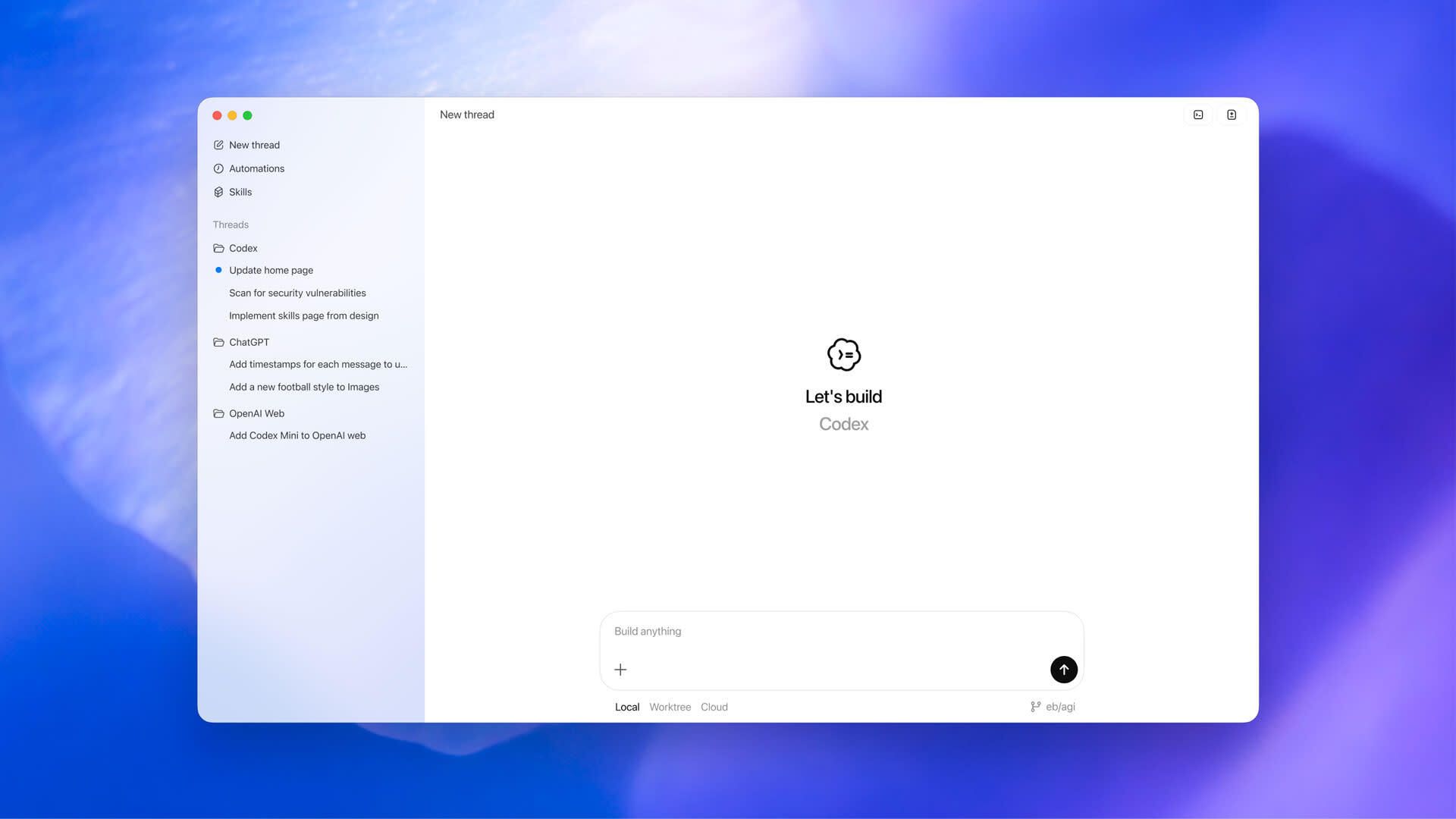
Image source: OpenAI
The Rundown: OAI just launched the Codex app for macOS, a new desktop interface that lets developers manage multiple AI coding agents in parallel, utilize skills, automate recurring tasks, and delegate entire features to AI.
The details:
-
The app acts as a “command center” to run separate agents across projects simultaneously, with built-in isolation so agents don’t conflict with each other.
-
Skills extend Codex beyond code generation into tasks like deploying apps, managing project boards, generating images, and more.
-
OAI demoed Codex building a full 3D racing game from a single prompt, handling design, development, and QA testing across 7M tokens autonomously.
-
The app is limited to Mac for now, with limited time access for free users and doubled usage limits for paid subscribers.
Why it matters: OpenAI has been playing catch-up to Anthropic’s breakout year in dev tooling, and this launch is a clear response. With OpenAI’s models still considered the best by many for coding tasks, a better interface could be all it takes to see a similar Claude Code-like consumer push for Codex.
AI TRAINING
📸 Prompts, strategies for generating AI Headshots
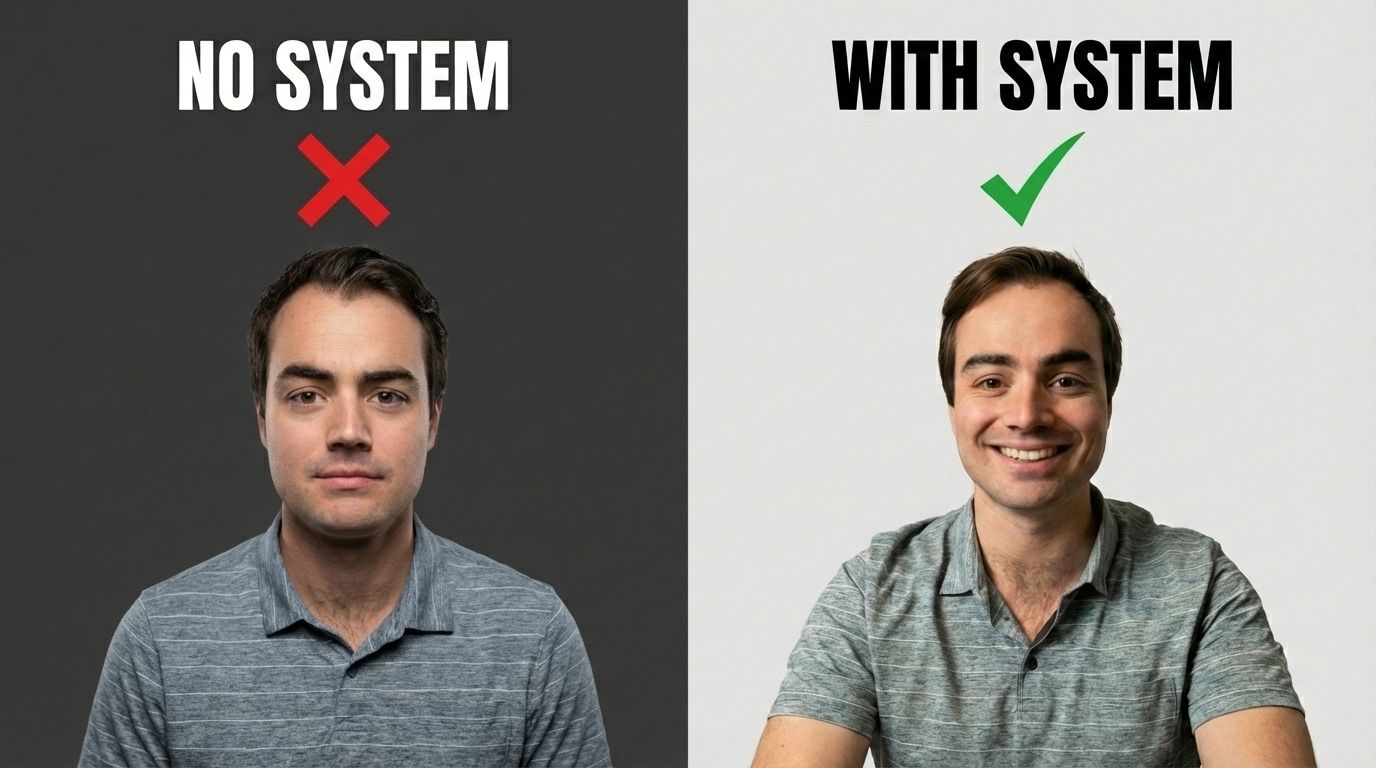
The Rundown: In this guide, you’ll learn a new workflow to turn selfies into professional-looking headshots using Google’s Nano Banana Pro, exploring why most AI headshots look “uncanny” and how to avoid that with our prompting system.
Step-by-step:
-
Use a neutral background with direct light or a window to avoid shadows. Then, take a chest-up photo with your webcam or camera, keeping the lens high
-
Go to Google AI Studio, click “playground” to start a new chat. Make sure you add an API key that has Gemini and Nano Banana Pro enabled.
-
Upload the photo and prompt “Generate: Post-processing enhancement, professional color grading, balanced studio lighting, remove noise and grain, sharpen focus, upscale to 8k, skin texture refinement, subtle dodging and burning, clear and crisp details, maintain original facial structure and clothing, photorealistic”
-
Test this with multiple photos, and when you get a result you like, prompt the AI to generate the same photo again in 4k
Pro tip: Drop the same prompt into Gemini and ask it to “come up with four concepts for headshots using the same principles,” being clear that you want to “edit photos.”
PRESENTED BY GLEAN
🎬 See Context in Action at Glean:LIVE

The Rundown: Join Glean’s flagship virtual launch event showcasing the new Glean Assistant — a personalized, context‑aware work partner. You’ll see live product demos, hear from actual customers, and understand what it takes to turn enterprise context into real business impact.
Register for Glean:LIVE on February 17 to:
-
Learn how context-aware, deeply connected AI drives broad impact and sustained usage across your company
-
Turn “aha moments” into enterprise‑wide change by expanding skill sets and delivering immediate AI value
-
Meet the latest Glean Assistant — personalized, proactive, and a true domain expert at work
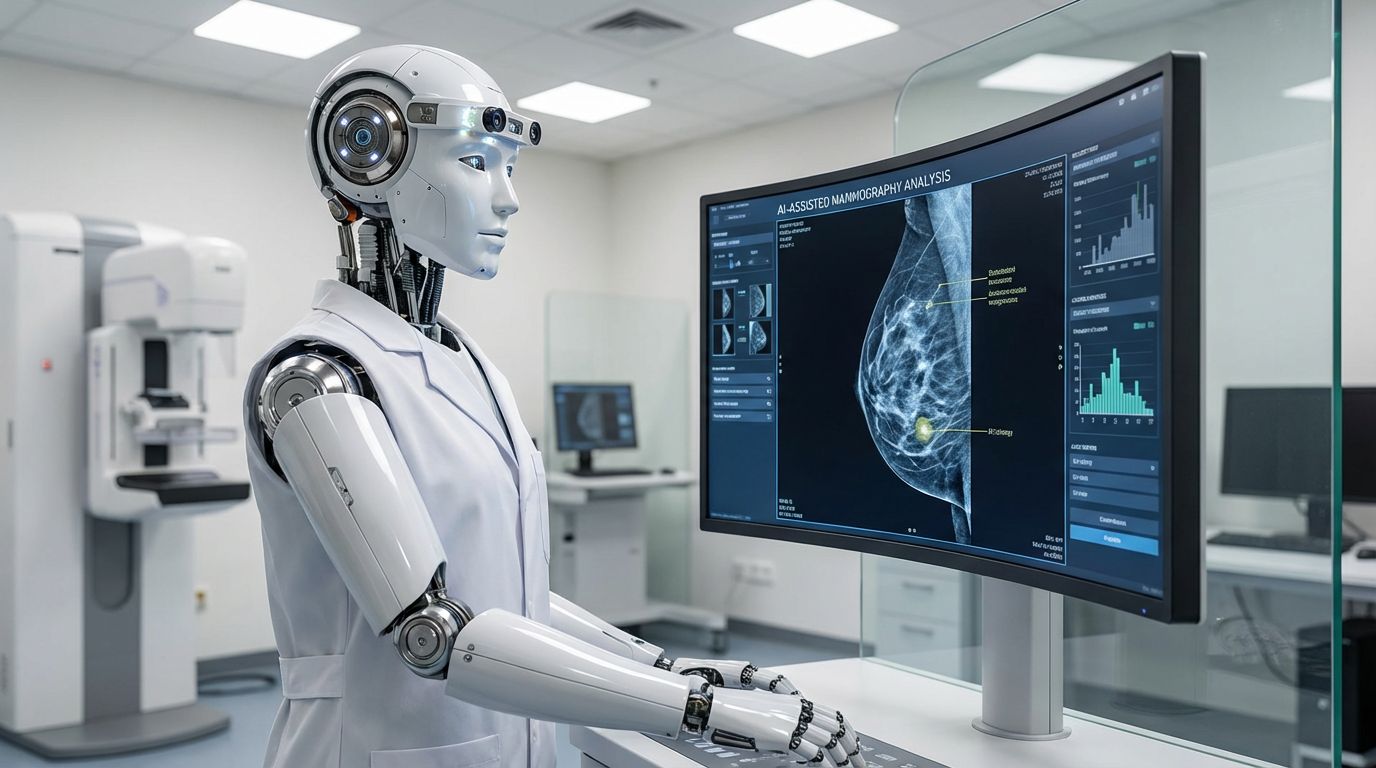
Image source: Lovart / The Rundown
The Rundown: Swedish researchers just published results from the largest-scale trial of AI-powered breast cancer screening, finding the technology helps radiologists spot a higher percentage of tumors while cutting radiologist workload nearly in half.
The details:
-
The two-year study tracked over 100K women to see if AI could catch cancers that traditional screening misses between appointments.
-
The AI analyzed mammograms and flagged high-risk cases for radiologists, boosting the detection rate from 74% to 81% without increasing false positives.
-
Women in the AI group saw 27% fewer aggressive tumor types and 21% fewer large tumors compared to standard screening alone.
-
The system also cut radiologist workload by 44% by handling initial screening, sorting, and freeing doctors to focus on the cases that need the most attention.
Why it matters: Between drug discovery, tumor detection, treatment planning, and more, AI is quickly becoming one of the most impactful tools in the cancer fight. With over 2M breast cancer diagnoses each year, scaling this kind of early detection via AI could be life-changing for women across the globe.
QUICK HITS
🛠️ Trending AI Tools
-
🚀 Codex App – OpenAI’s Mac app for managing AI agents
-
🎨 Riverflow 2.0 – Sourceful’s new top-ranked AI image editing model
-
🧠 Step-3.5-Flash – StepFun’s AI with strong reasoning, agentic capabilities
-
🗣️ Eleven v3 – ElevenLabs’ expressive voice AI, now commercially available
📰 Everything else in AI today
xAI released Grok Imagine 1.0, an upgraded version of its video model featuring improved audio, 10-second generations, and higher resolution.
Chinese AI lab StepFun open-sourced Step-3.5-Flash, a new model that shows strong agentic and reasoning capabilities alongside speed and efficiency.
ElevenLabs’ Eleven v3 officially exited alpha and is now commercially available, with the expressive speech model now featuring improved accuracy and stability.
Anthropic partnered with the Allen Institute and Howard Hughes Medical Institute to use Claude as a research assistant and build agentic tools for scientists.
OpenAI signed a $200M deal with Snowflake to give the data platform’s enterprise customers access to GPT-5.2 for building AI agents and leveraging their business data.
COMMUNITY
🤝 Community AI workflows
Every newsletter, we showcase how a reader is using AI to work smarter, save time, or make life easier.
Today’s workflow comes from reader Hung T. in Ann Arbor, MI:
“I recently added audio ‘podcasts’ to my personal blog using Qwen3-TTS. My new workflow automatically parses each post, generates a high-fidelity clone of my own voice, and embeds a player so visitors can listen. It’s a seamless way to make my long-form content more accessible. More info on the workflow here.”
How do you use AI? Tell us here.
🎓 Highlights: News, Guides & Events
-
Read our last AI newsletter: AI agents get their own social network
-
Read our last Tech newsletter: Humans head back to the moon
-
Read our last Robotics newsletter: Waymo hits record $110B valuation
-
Today’s AI tool guide: Prompts, strategies for generating AI Headshots
-
RSVP to our next workshop on Feb. 11: Agentic Workflows Bootcamp pt. 1
See you soon,
Rowan, Joey, Zach, Shubham, and Jennifer — the humans behind The Rundown

