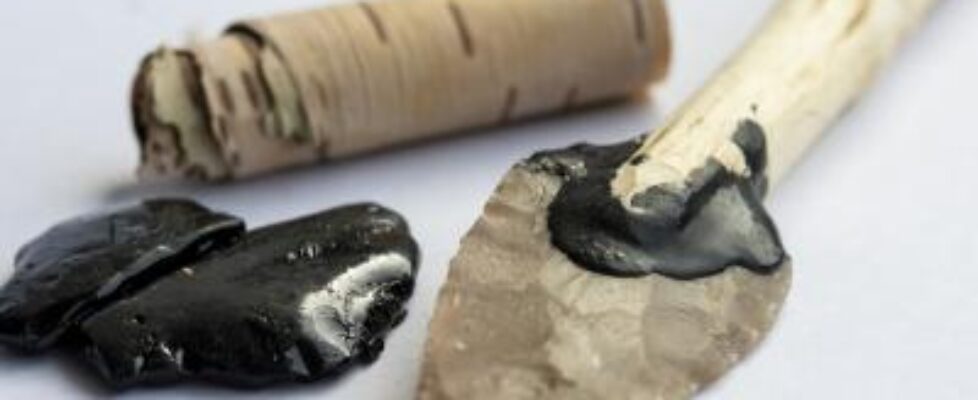
Never mind Band-Aids, Neanderthals had antiseptic birch tar

Neanderthals may have used birch tar as more than just glue; it could have helped them ward off infection and even insect bites.
People from several modern Indigenous cultures, including the Mi’kmaq of eastern Canada, use tar from birch bark to treat skin infections and keep wounds from festering. We know from several archaeological sites that Neanderthals also knew how to extract birch tar and that they used it as an adhesive to haft weapons. A recent study tested distilled birch tar against the bacteria S. aureleus and E. coli and found that Neanderthals could easily have used the same material as medicine for their frequent injuries.
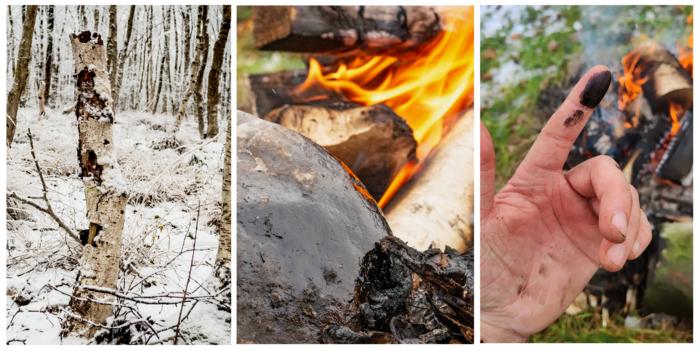
This is the simplest step-by-step tutorial for making birch tar: find a tree, set some bark on fire, get messy hands.
Credit:
Tjaark Siemssen, CC-BY 4.0 (https://creativecommons.org/licenses/by/4.0/)
Medicine can be messy
What we call “birch tar” in English has a lot of other names in multiple Indigenous languages, and it can range from an oily fluid to a brittle, almost solid tarry resin, depending on how long you heat it in the open air after extracting it from the bark. The Mi’kmaq of eastern Canada prefer the more fluid version, which they call maskwio’mi, for wound dressings and skin ointment.
