How Tok-Edge Is Trying to Rewire Crypto Hedge Funds With a New Token Class Called Redemption Tokens

What if you could hold a hedge fund position and still trade its liquidity on a public blockchain at 3 a.m. on a Sunday?
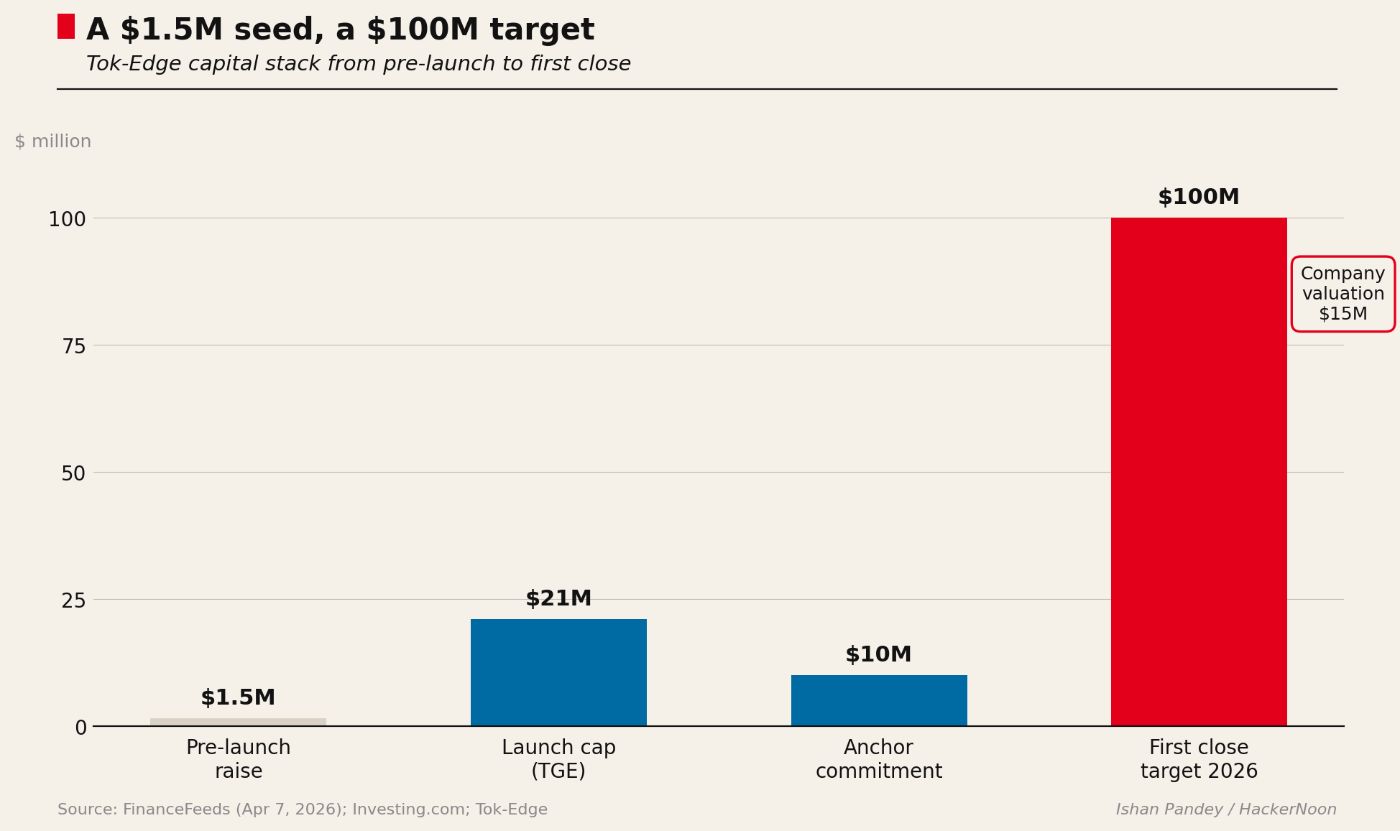
That is the question Tok-Edge, a London-based digital asset firm, is putting in front of institutional allocators with the launch of what it calls the Redemption Token, confirmed on April 7, 2026 at a $15 million company valuation.
The firm raised roughly $1.5 million in its pre-launch round, led by Marcus Meijer, founder of a fund that manages about $10 billion in assets. Meijer and a syndicate are expected to anchor the upcoming fund with up to $10 million. Tok-Edge is targeting a $100 million first close later in 2026, with the launch raise capped at $21 million to coincide with the token generation event.
What the Redemption Token actually is
In a traditional hedge fund, ownership and the right to pull your money out live inside the same legal wrapper, the fund share. You cannot sell the right to redeem without selling the share itself. Tok-Edge is trying to split those two things apart.
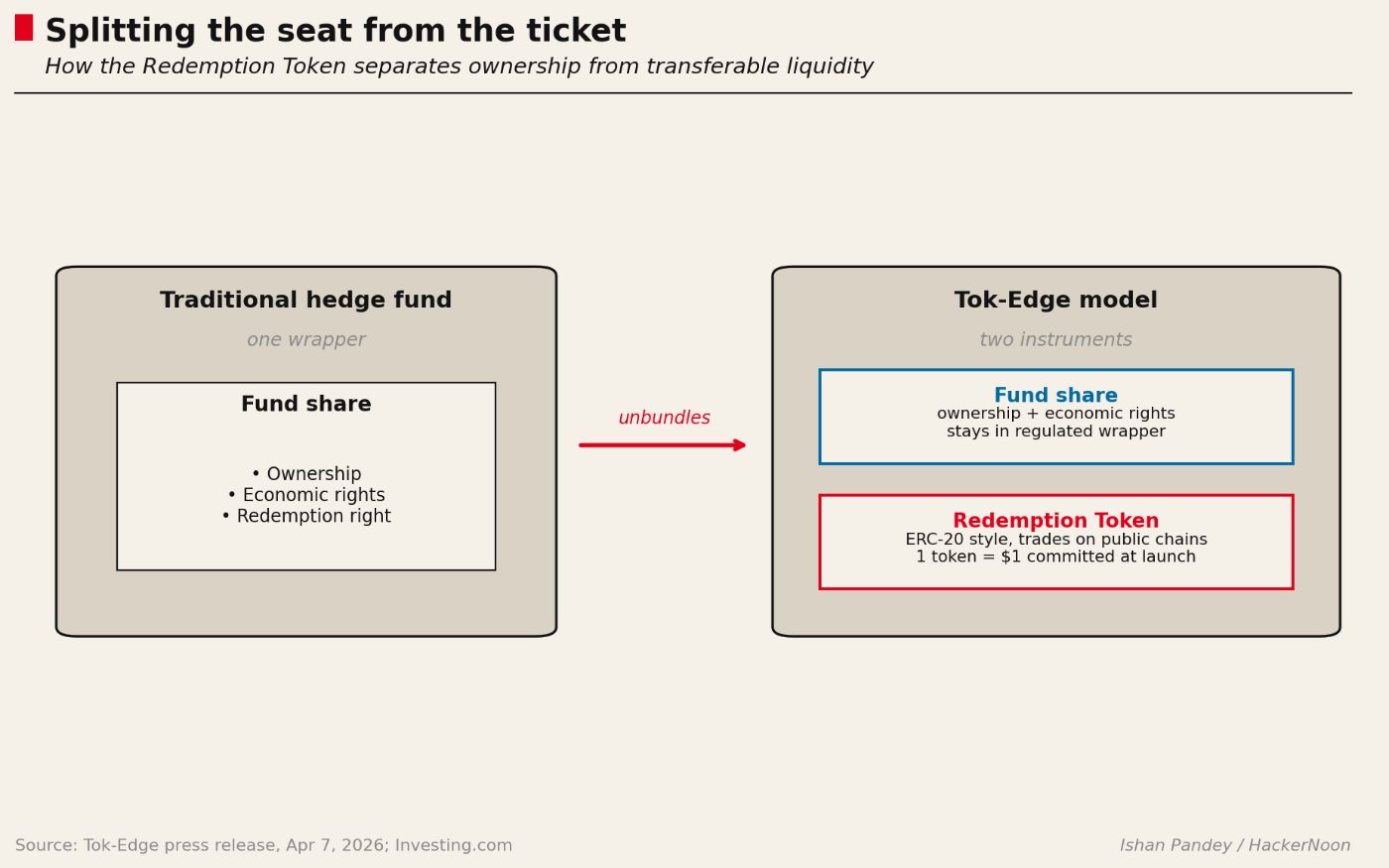
The Redemption Token is an ERC-20 style cryptoasset issued one-for-one against each dollar committed to the fund at launch. Ownership and economic rights stay embedded in the regulated fund share. The token is the key that unlocks redemption at net asset value, and that key can circulate independently on public blockchains, including Ethereum. In practice, a family office could hold the fund share for reporting and legal purposes while the Redemption Token trades on a secondary market or sits inside a DeFi protocol as collateral.
Think of it as separating a concert ticket from the seat. The seat is yours on the books. The ticket, which lets someone claim that seat, can change hands on its own.
Why a new token class now
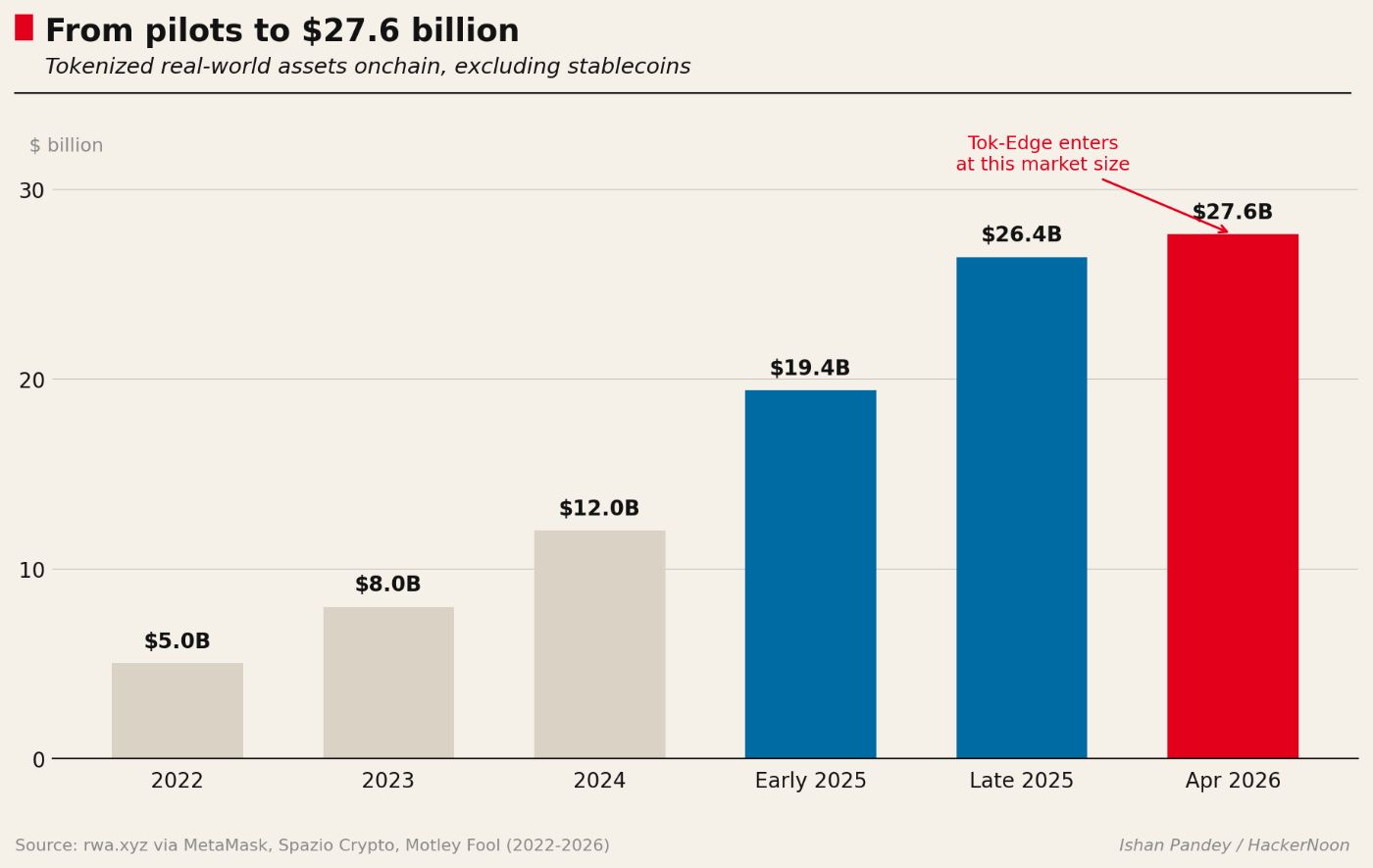
The pitch sits on top of a market that has stopped being hypothetical. Tokenized real-world assets, excluding stablecoins, reached roughly $27.6 billion in April 2026, with tokenized US Treasuries alone at about $12.88 billion as of early April, according to rwa.xyz data cited by MetaMask. McKinsey projects the broader RWA tokenization market could reach $2 trillion by 2030.
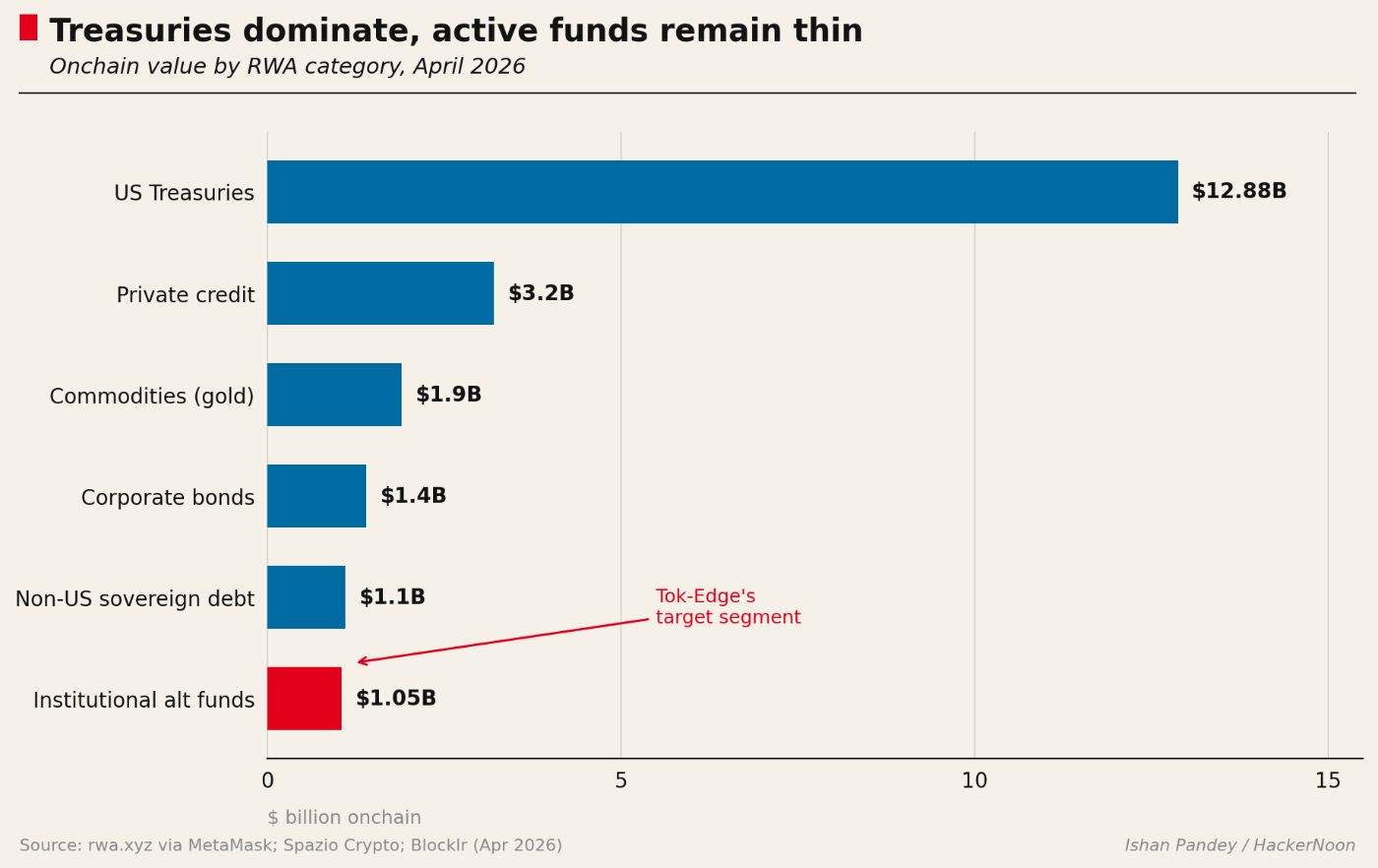
Most of that growth is in single-asset wrappers, like BlackRock’s BUIDL or Ondo’s OUSG. Tok-Edge CIO Raees Chowdhury, a former consultant at BCG and Bain and founding member of Revolt Ventures, argues the gap is on the actively managed side.
On the product itself, Chowdhury explains it as
Tok-Edge was founded to bring institutional-grade products to crypto markets, built around the openness and technological advantages of blockchain networks. The Redemption Token is a new cryptoasset that acts as a key for fund investors to redeem their capital and can be traded freely in the secondary market for price discovery.
Who is behind it
Tok-Edge says its leadership collectively carries experience from institutions managing over $950 billion in assets, including CVC Capital, Bain Capital, KKR, BCG, Tufa and GoCoin. Board advisor Eric Benz, the former CEO of Changelly and an early investor in the firm, described the structure as one
“that separates the tradable asset from the legal instrument that represents ownership,” adding that it “could broaden the institutional market for digital asset products.”
The fund itself is the first product to use the model. It will run an actively managed liquid strategy across crypto assets and DeFi, with returns coming from directional exposure plus staking and liquidity provision yield.
The honest question readers should ask
The Redemption Token is interesting precisely because it does not pretend to be the fund. It is a right, not a claim on assets. That is also where the risk sits. Secondary market pricing of a redemption right, detached from the underlying NAV, can drift. If the fund draws down in a volatile week, the token could trade at a discount that reflects fear more than math. Retail buyers who do not understand the distinction may learn the hard way.
Regulators will also want to look closely at how transferability interacts with existing hedge fund exemptions in the UK and EU, especially under MiCA.
Final thoughts
This is one of the more structurally creative moves I have seen in the institutional crypto stack this year. The industry has spent two years tokenizing things that already exist, Treasuries, gold, money market funds. Tok-Edge is doing something subtler, tokenizing a right that traditional fund structures never let investors hold separately in the first place. If it works, it hands institutions the liquidity profile they quietly want without forcing them to abandon the fund wrapper their compliance teams understand.
The execution risk is real and the first close will tell us whether allocators see it the same way. But the design deserves serious reading rather than a quick dismissal as yet another token launch.
Don’t forget to like and share the story!
