How Roblox Turns Play Into Learning

For most of the internet era, educational technology followed a familiar pattern: digitize the textbook, put worksheets on a screen, maybe add a video. The goal was efficiency. Faster distribution. Easier grading. More content, more quickly.
But that model is starting to feel dated.
Today’s learners don’t just want information delivered. They expect to interact with it. Remix it. Build on top of it. The question is no longer whether technology belongs in education; it’s whether our education systems are keeping up with how young people already learn.
That’s what makes platforms like Roblox interesting.
At first glance, Roblox looks like “just a game.” In reality, it’s a massive, user-generated ecosystem where millions of young people design environments, write scripts, test mechanics, and collaborate with others in real time. It’s less like a console and more like a public sandbox for experimentation.
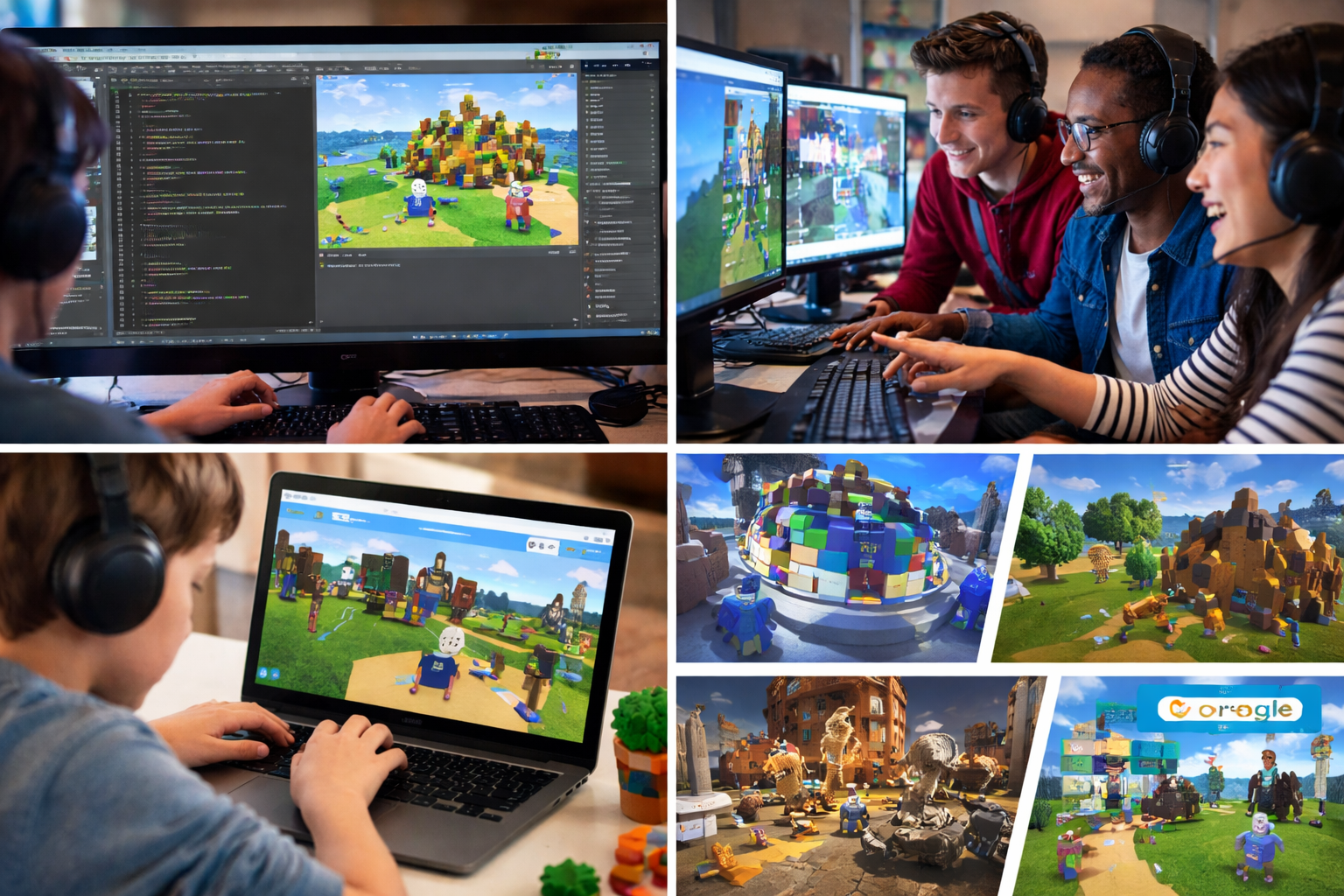
To formalize that shift, Roblox recently launched the Roblox Learning Hub, a curated experience that surfaces educational worlds across subjects like coding, math, climate science, digital citizenship, and life skills. Since July, the hub has drawn nearly 50 million visitors, a signal that families are actively searching for learning that feels native to how kids already spend time online.
Inside the hub, players can:
- Practice online safety in Google’s Be Internet Awesome World
- Explore climate systems with BBC Bitesize’s Planet Planners
- Walk through natural history in Ecos: La Brea
- Learn to code through Lua Learning by building their own games
What’s different here isn’t just the content, it’s the structure. These aren’t lectures disguised as games. Players don’t “complete a lesson.” They interact with the world.
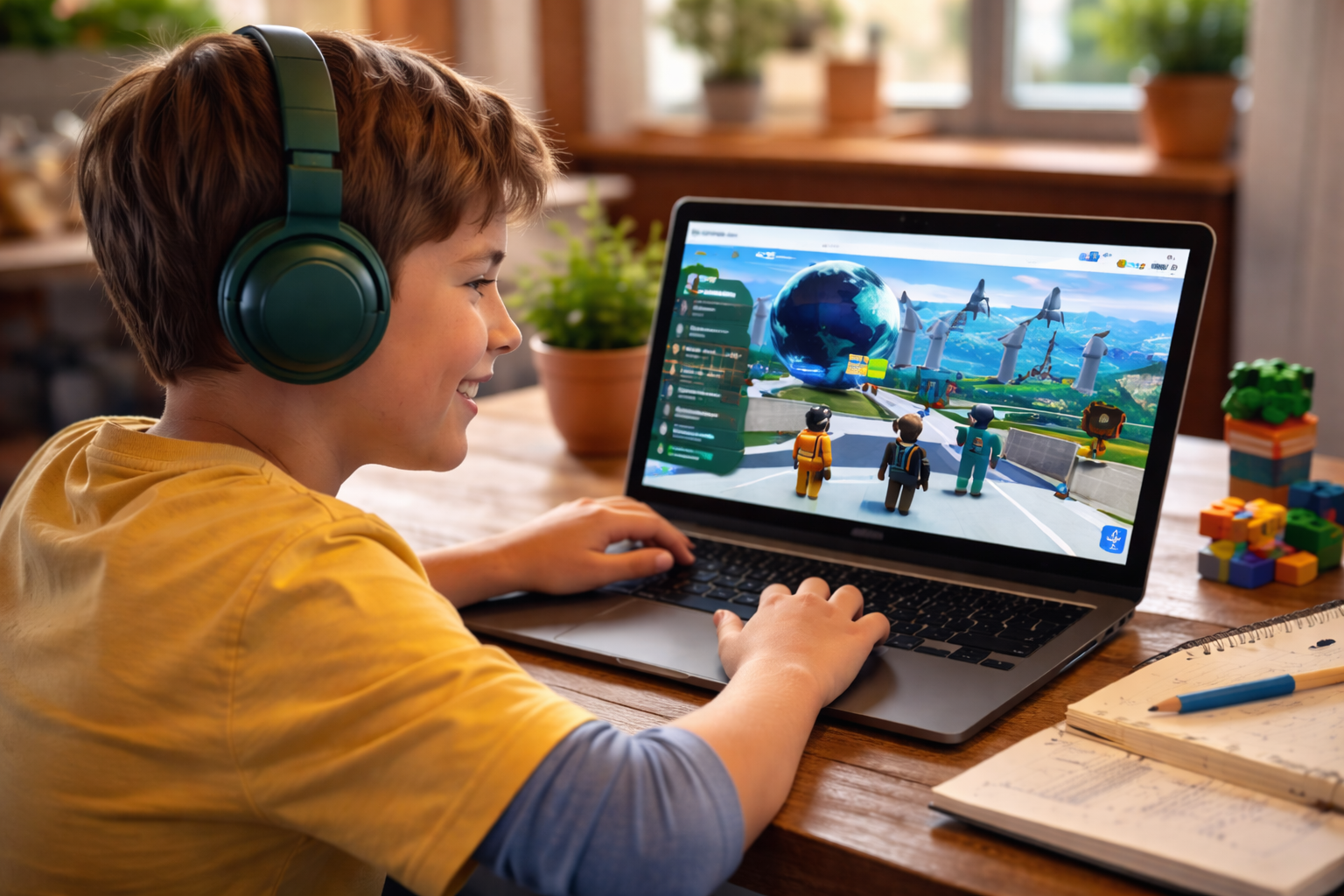
That matters because learning sticks when it’s experiential.
The Entertainment Software Association’s 2025 research reflects this shift: 45% of players say they use games to “keep their minds sharp,” and half report that games have improved their education or career trajectory. On platforms like Roblox, that’s visible in real time—kids debugging scripts, balancing virtual economies, collaborating across time zones, and iterating on designs based on feedback.
Adam Seldow, Senior Director of Education Partnerships at Roblox, frames it simply:
Play is one of the most powerful forms of learning. When kids explore and create together in immersive worlds, they aren’t just playing, they’re building the critical thinking skills they need to thrive.
This reframing challenges how we talk about “screen time.” The traditional fear assumes passivity: a child consuming content. But creator-driven platforms invert that dynamic. The screen becomes a tool for construction, not just consumption.
In that sense, Roblox doesn’t replace school, it models a different layer of learning:
- Learning by doing
- Learning with peers
- Learning through systems
On International Day of Education, UNESCO’s theme focuses on “the power of youth in co-creating education.” That’s exactly what these environments enable. Kids aren’t waiting for the curriculum to arrive. They’re building it.
The future classroom won’t be bounded by walls. It will look more like a shared world, one that students help design.
:::tip
This story was distributed as a release by Jon Stojan under HackerNoon’s Business Blogging Program.
:::
