Introducing Gemma 4 12B: a unified, encoder-free multimodal model

Post Content
Like
0
Liked
Liked
arXiv:2507.17544v3 Announce Type: replace Abstract: Differential privacy has become a cornerstone in the development of privacy-preserving learning algorithms. This work addresses optimizing differentially private kernel learning within the empirical risk minimization (ERM) framework. We propose a novel differentially private kernel ERM algorithm based on random projection in the reproducing kernel Hilbert space using Gaussian processes. Our method achieves minimax-optimal excess risk for both the squared loss and Lipschitz-smooth convex loss functions under a local strong convexity condition. We […]
Accurate molecular property prediction requires integrating complementary information from molecular structure and chemical semantics. In this work, we propose LGM-CL, a local-global multimodal contrastive learning framework that jointly models molecular graphs and textual representations derived from SMILES and chemistry-aware augmented texts. Local functional group information and global molecular topology are captured using AttentiveFP and Graph Transformer encoders, respectively, and aligned through self-supervised contrastive learning. In addition, chemically enriched textual descriptions are contrasted with original SMILES to incorporate physicochemical […]
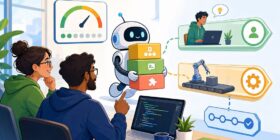
Programmatic agents need workflow design, not just a larger monthly credit pool. A billing change is easy to treat as an accounting problem. For developers building with the Claude Agent SDK, it is really an architecture problem. Anthropic now separates Agent SDK and claude -p usage on subscription plans into a monthly Agent SDK credit pool, separate from interactive Claude Code usage. That matters because the most expensive agent work is rarely the work a person starts and watches. […]
Peptide therapeutics are widely regarded as the "third generation" of drugs, yet progress in peptide Machine Learning (ML) are hindered by the absence of standardized benchmarks. Here we present PepBenchmark, which unifies datasets, preprocessing, and evaluation protocols for peptide drug discovery. PepBenchmark comprises three components: (1) PepBenchData, a well-curated collection comprising 29 canonical-peptide and 6 non-canonical-peptide datasets across 7 groups, systematically covering key aspects of peptide drug development, representing, to the best of our knowledge, the most comprehensive […]
Egocentric video understanding is inherently limited by the narrow perspective of wearable cameras: a single viewpoint, a single modality, a single model cannot capture the full richness of human action. We argue that a truly expressive egocentric representation must subsume complementary knowledge across viewpoints, modalities, and foundation model representations, yet remain deployable from egocentric video alone. To this end, we introduce a hierarchical multi-teacher distillation framework that produces UNIEGO, a unified egocentric encoder trained with nine teachers spanning […]

Potentially impacting all AI search engines and chatbots known to poorly paraphrase source links, a German court has ruled that Google is liable for false statements in AI Overviews. The preliminary ruling came in a case flagged by The Decoder, where two publishers found that Google’s AI Overviews incorrectly linked them to scams and other sketchy business practices. After smearing publishers by making affirmative statements like “Yes, [it] is known for dubious business practices and is often perceived […]
arXiv:2603.25901v1 Announce Type: new Abstract: Defensive coverage schemes in the National Football League (NFL) represent complex tactical patterns requiring coordinated assignments among defenders who must react dynamically to the offense’s passing concept. This paper presents a factorized attention-based transformer model applied to NFL multi-agent play tracking data to predict individual coverage assignments, receiver-defender matchups, and the targeted defender on every pass play. Unlike previous approaches that focus on post-hoc coverage classification at the team level, our model enables […]

Author(s): Bram Nauts Originally published on Towards AI. AI will not transform because it’s deployed – it will transform because the way of operating is redesigned. The tricky part? Transformations rarely fail at the start, they fail in the middle – when organisations try to scale. In a previous article I defined the concept of the AI-native bank. A bank where decisions, processes and customer interactions are continuously driven by AI. Since publishing that article, one question came […]
arXiv:2601.00103v1 Announce Type: new Abstract: The success of symplectic integrators for Hamiltonian ODEs has led to a decades-long program of research seeking analogously structure-preserving numerical methods for Hamiltonian PDEs. In this paper, we construct a large class of such methods by combining finite element exterior calculus (FEEC) for spatial semidiscretization with symplectic integrators for time discretization. The resulting methods satisfy a local multisymplectic conservation law in space and time, which generalizes the symplectic conservation law of Hamiltonian ODEs, […]