Why the rise of open source AI isn’t hurting Anthropic … yet

Open source models’ success isn’t coming at the expense of frontier labs. Instead, they each seem to capture two phases of the same life cycle.
Like
0
Liked
Liked
Open source models’ success isn’t coming at the expense of frontier labs. Instead, they each seem to capture two phases of the same life cycle.
arXiv:2606.07794v1 Announce Type: new Abstract: Timelines are effective ways to tell historical and personal stories. However, most timeline visualization tools impose an inflexible model of time prioritizing chronological clarity. On the other hand, unconstrained representations can better capture the irregular and contextual nature of lived time, but often at the cost of interpretability. In this work, we explore this continuum with a study of how historical and personal timelines could manifest in physical spaces. We conducted a formative […]
arXiv:2601.20995v1 Announce Type: new Abstract: Low performance pixels (LPP) in Computed Tomography (CT) detectors would lead to ring and streak artifacts in the reconstructed images, making them clinically unusable. In recent years, several solutions have been proposed to correct LPP artifacts, either in the image domain or in the sinogram domain using supervised deep learning methods. However, these methods require dedicated datasets for training, which are expensive to collect. Moreover, existing approaches focus solely either on image-space or […]
arXiv:2603.04323v1 Announce Type: cross Abstract: Federated learning (FL) faces two structural tensions: gradient sharing enables data-reconstruction attacks, while non-IID client distributions degrade aggregation quality. We introduce PTOPOFL, a framework that addresses both challenges simultaneously by replacing gradient communication with topological descriptors derived from persistent homology (PH). Clients transmit only 48-dimensional PH feature vectors-compact shape summaries whose many-to-one structure makes inversion provably ill-posed-rather than model gradients. The server performs topology-guided personalised aggregation: clients are clustered by Wasserstein similarity between […]
arXiv:2603.05567v1 Announce Type: new Abstract: Dual-target structure-based drug design aims to generate a single ligand together with two pocket-specific binding poses, each compatible with a corresponding target pocket, enabling polypharmacological therapies with improved efficacy and reduced resistance. Existing approaches typically rely on staged pipelines, which either decouple the two poses via conditional-independence assumptions or enforce overly rigid correlations, and therefore fail to jointly generate two target-specific binding modes. To address this, we propose FuseDiff, an end-to-end diffusion model […]
arXiv:2603.20256v1 Announce Type: new Abstract: Autonomous science agents built on large language models (LLMs) are increasingly used to generate hypotheses, design experiments, and produce reports. However, prior work mainly targets open-ended scientific problems with subjective outputs that are difficult to evaluate. Scientific coding benchmarks, by contrast, provide executable outputs for objective assessment. Existing approaches remain engineering-driven pipelines, revealing the need for structured, end-to-end science agent frameworks for scientific coding tasks. We address this gap by focusing on scientific […]
arXiv:2602.13218v1 Announce Type: new Abstract: Scaling verifiable training signals remains a key bottleneck for Reinforcement Learning from Verifiable Rewards (RLVR). Logical reasoning is a natural substrate: constraints are formal and answers are programmatically checkable. However, prior synthesis pipelines either depend on expert-written code or operate within fixed templates/skeletons, which limits growth largely to instance-level perturbations. We propose SSLogic, an agentic meta-synthesis framework that scales at the task-family level by iteratively synthesizing and repairing executable Generator–Validator program pairs in […]

Alphabet has lined up banks to sell a rare 100-year bond, stepping up a borrowing spree by Big Tech companies racing to fund their vast investments in AI this year. The so-called century bond will form part of a debut sterling issuance this week by Google’s parent company, said people familiar with the matter. Alphabet was also selling $20 billion of dollar bonds on Monday and lining up a Swiss franc bond sale, the people said. The dollar […]
arXiv:2603.12310v1 Announce Type: new Abstract: Despite rapid advancements in video generation models, aligning their outputs with complex user intent remains challenging. Existing test-time optimization methods are typically either computationally expensive or require white-box access to model internals. To address this, we present VQQA (Video Quality Question Answering), a unified, multi-agent framework generalizable across diverse input modalities and video generation tasks. By dynamically generating visual questions and using the resulting Vision-Language Model (VLM) critiques as semantic gradients, VQQA replaces […]
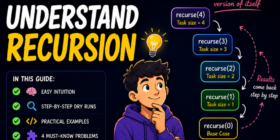
A beginner-friendly guide with simple examples and problems Continue reading on Towards AI »