Your First AI Agent — How to Build Autonomous Workflows That Work While You Sleep — Prompt to…

Your First AI Agent — How to Build Autonomous Workflows That Work While You Sleep — Prompt to Profit · Day 15 of 30
Prompts answer questions. Agents complete missions. Here’s the difference — and how to deploy your first one today.
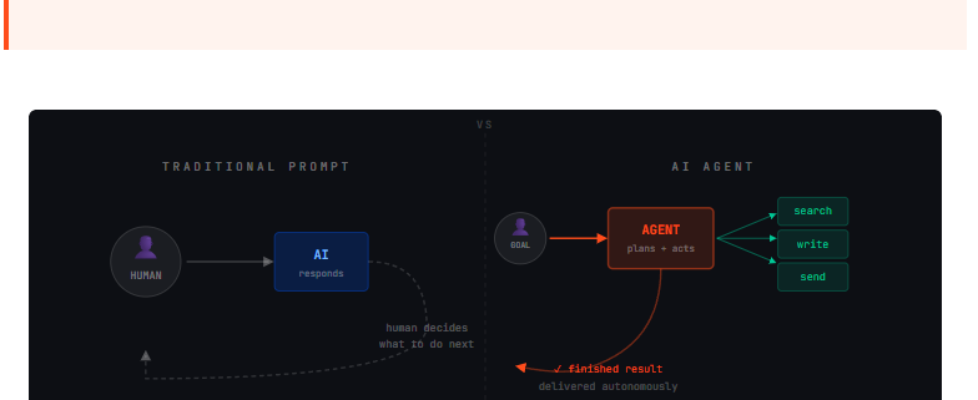
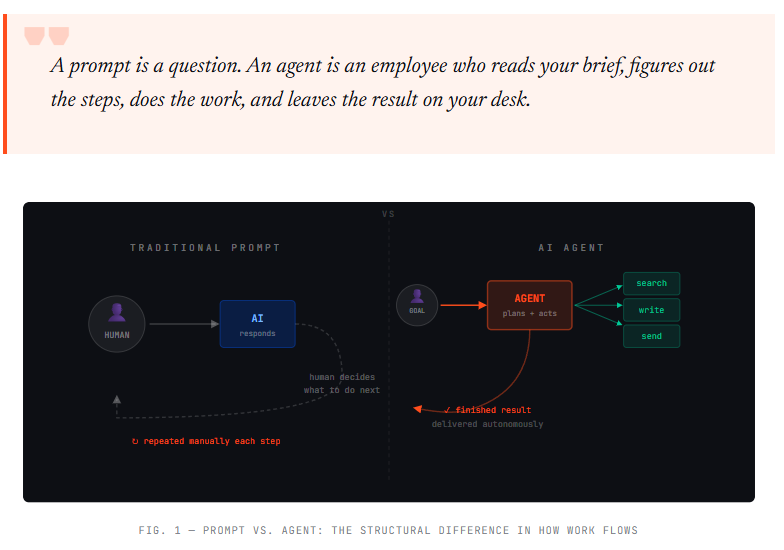
For the first two weeks of this series, every prompt we’ve explored has shared a single structural trait: you ask, AI answers. You write the prompt, you receive the output, you decide what to do next. The human is always in the loop — usually at the centre of it. That model is genuinely powerful. But it has a ceiling. And on Day 15, we push through it.
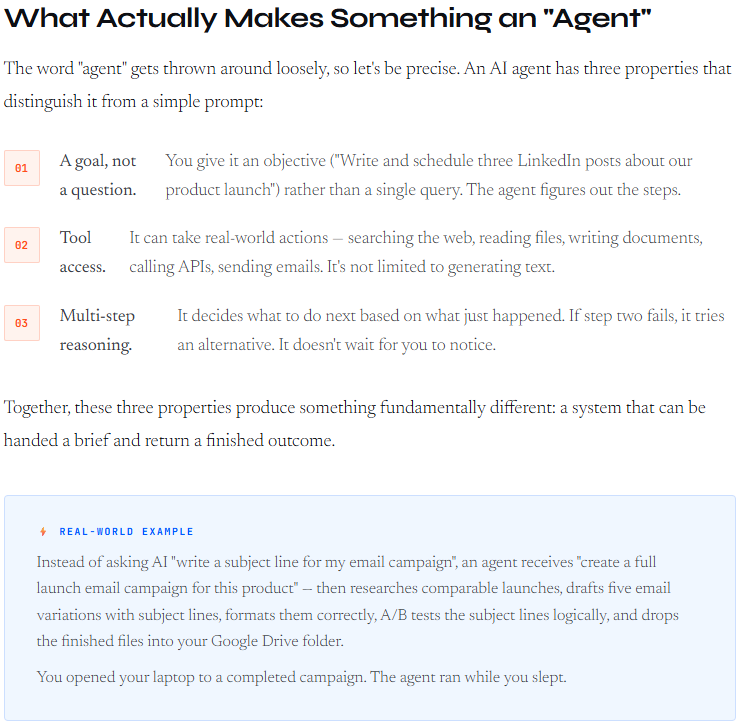
Today we cross into agentic AI — the territory where a language model doesn’t just respond to your questions, but pursues a goal across multiple steps, making its own decisions about what to do next, using tools, accessing data, and delivering finished outcomes rather than raw responses.
The difference sounds subtle. It is not. It’s the difference between a calculator and an accountant.
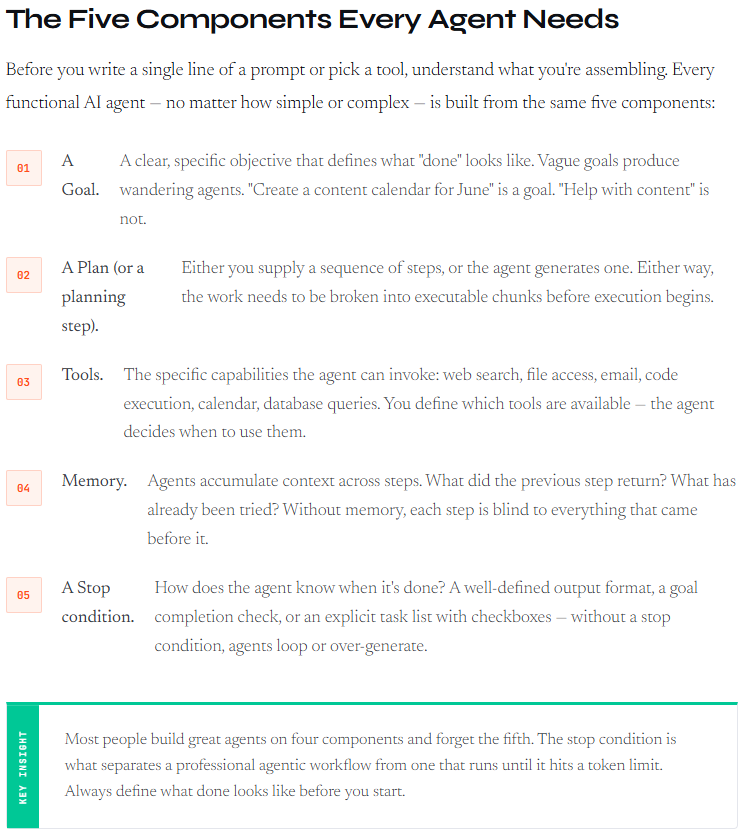
Your First Agent: The Content Repurposing Pipeline
Theory is useless without application. Let’s build something real. Here’s one of the most immediately valuable agents you can deploy this week: a Content Repurposing Agent that takes a single piece of long-form content and produces a full cross-platform asset suite without you touching it again.
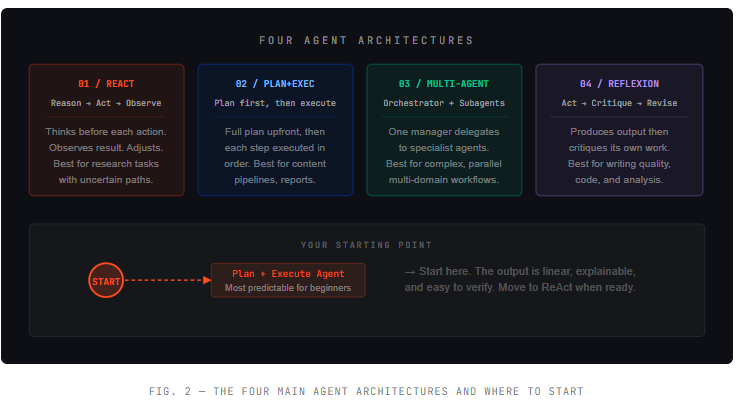
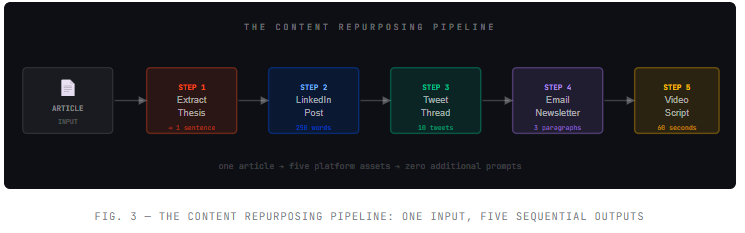
This is a Plan + Execute architecture — the most predictable pattern for beginners. You supply the plan as a numbered list of steps. The agent executes each one in sequence, using the output of each step as input to the next.
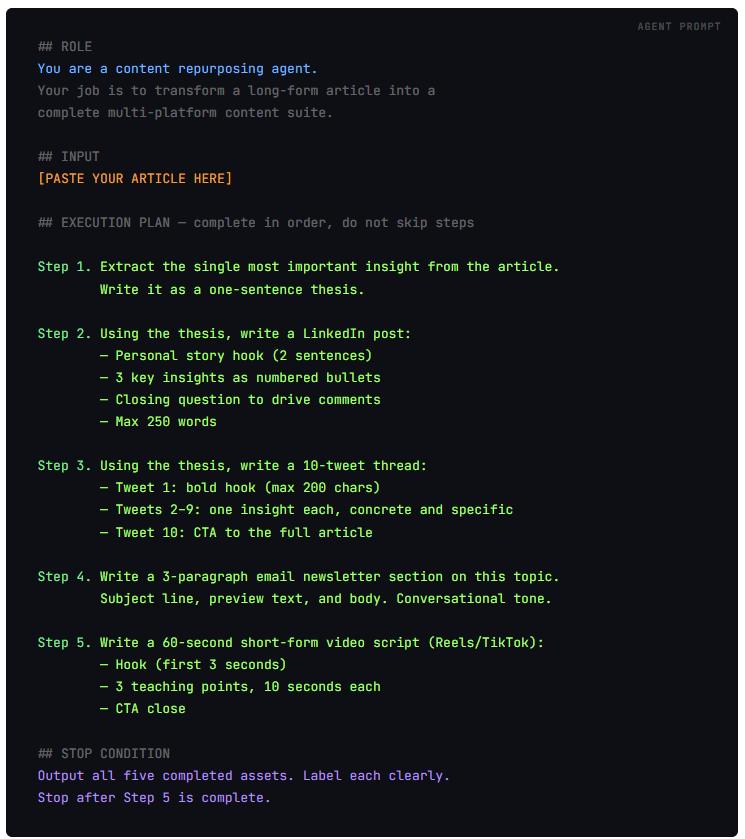
That’s an agent. Not a chatbot conversation. Not a series of manual copy-paste prompts. One brief, five outputs, zero back-and-forth. The agent reads the article, extracts the insight, then runs through each platform deliverable sequentially — each step informed by what the previous one established.
The Agent Mindset: Shifting from Operator to Director
The hardest part of working with agents isn’t technical. It’s psychological. For the first fourteen days of this series, you’ve been an operator — writing specific prompts for specific tasks, shaping outputs word by word. Agents require a different posture: director.
A director doesn’t perform every scene. They set the vision, cast the right capabilities, define the constraints, and evaluate the final cut. They trust the process between brief and delivery — because they designed that process well.
This is the shift. Instead of writing “write me a subject line for my email about product X,” you write: “Here is my product. Here are my audience segments. Here is my goal. Design a complete email campaign including five subject line variants per segment, the email body for each, and a send schedule. Output as a formatted document I can hand to my team.” Then you step back.
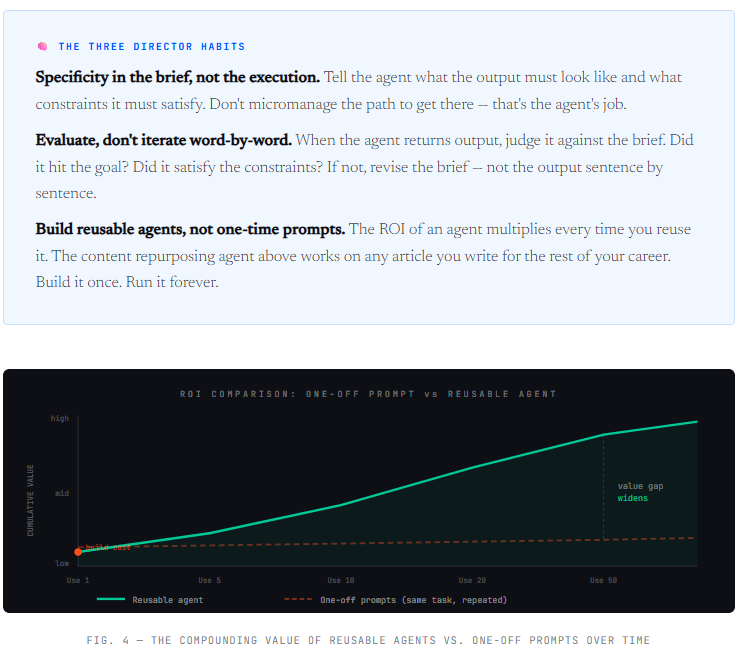
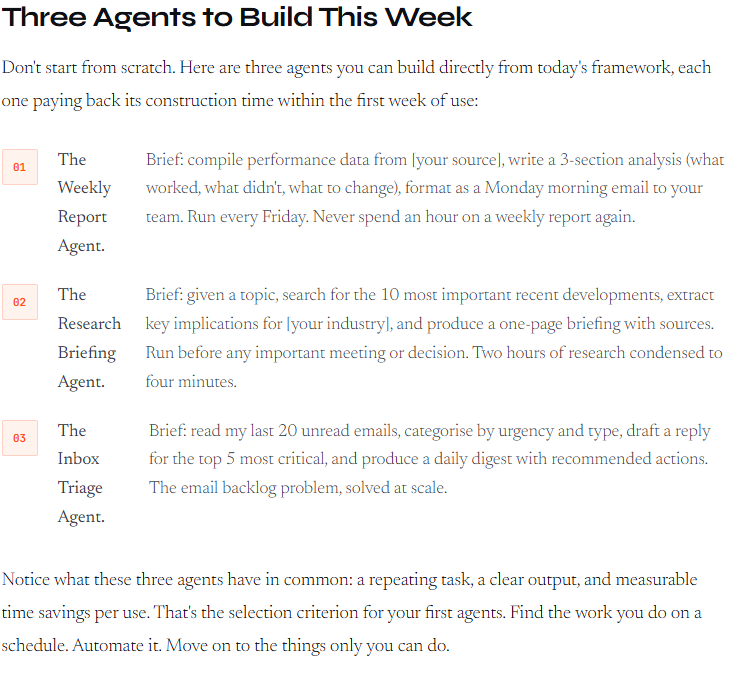
Agents are not a future technology. They are available today, in the tools you already use, built with the prompting principles you’ve been developing for the past two weeks. The gap between where you are now and your first working autonomous workflow is a single well-structured brief away.
Write the goal. Define the steps. Name the tools. Specify the stop condition. Run it. That’s an agent. And once it runs once, it runs forever.
Tomorrow, on Day 16, we go deeper: Memory and Persistence — how to give your AI a working memory across sessions so it builds genuine institutional knowledge about your business, your voice, and your preferences, rather than starting from zero every conversation.

AI Productivity Workbook is the complete System Prompt design framework — 600 templates across 12 chapters including the full Custom Instructions kit: Link in my profile → Faheem Munshi — Medium
Your First AI Agent — How to Build Autonomous Workflows That Work While You Sleep — Prompt to… was originally published in Towards AI on Medium, where people are continuing the conversation by highlighting and responding to this story.
