Prompt Chaining: Multi-Step AI Workflows

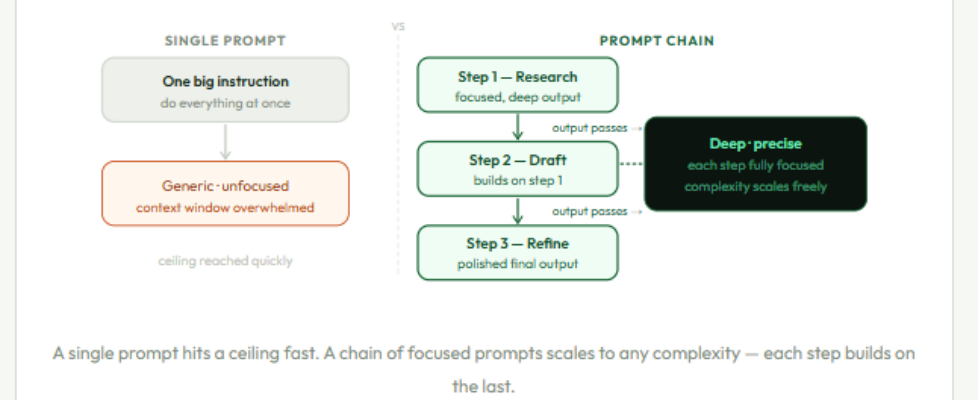
A single prompt can only take you so far. The real power unlocks when you connect outputs to inputs — building pipelines that tackle work no single prompt could ever handle alone.
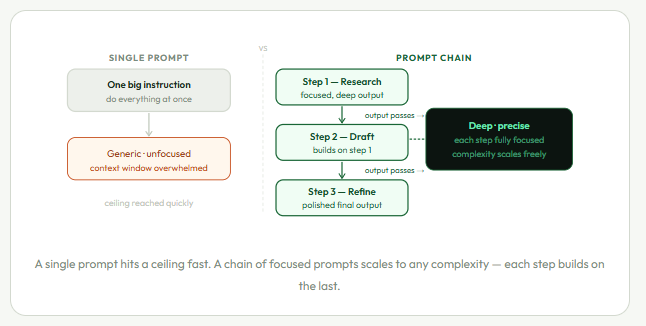
There is a hard limit to what a single prompt can accomplish. Not a context-window limit — a cognitive limit. When you ask an AI to simultaneously research a topic, synthesise findings, draft a document, adjust the tone, extract key points, and format everything for three different audiences, none of those tasks gets the AI’s full attention. Every one of them suffers.
Prompt chaining is the solution. Instead of overloading one prompt with an entire project, you break the work into focused steps — each prompt receiving the previous step’s output as its input. The AI handles each stage with full precision, and the cumulative result is work that a single prompt could never produce.
This is how professionals who use AI seriously actually work. Not one big sprawling prompt, but an engineered sequence — a pipeline that mirrors how complex work actually gets done.

Why single prompts fail at scale
The fundamental limitations of one-shot prompting
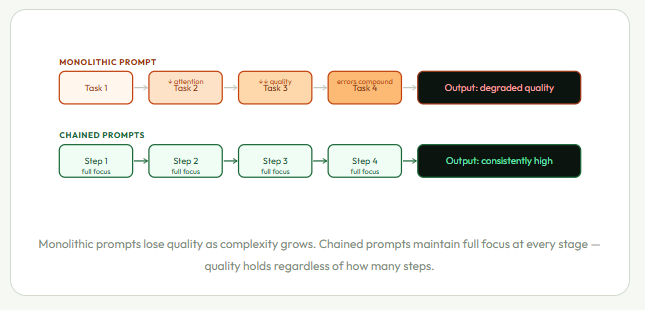
When you give an AI a complex, multi-faceted task in a single prompt, three things happen that all reduce quality. First, attention dilutes — the model must allocate its representational capacity across many simultaneous objectives, and none gets the depth it deserves. Second, context competes — early instructions get pushed further from the active processing window as the prompt grows. Third, errors propagate — if the AI makes a wrong assumption at step one of a single long prompt, every subsequent decision compounds that error with no opportunity to correct.
Chaining solves all three. Each step is narrow and focused. Early outputs are locked before later steps begin. And you can inspect — and correct — the output at each stage before passing it forward.
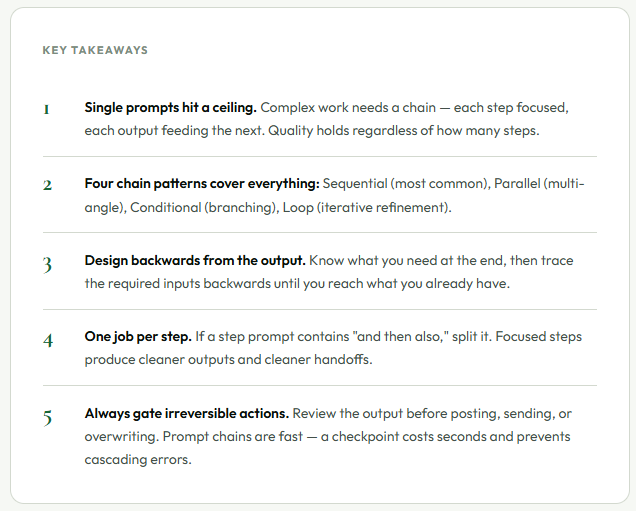
The four types of prompt chains
Not all chains are built the same — match the pattern to the task
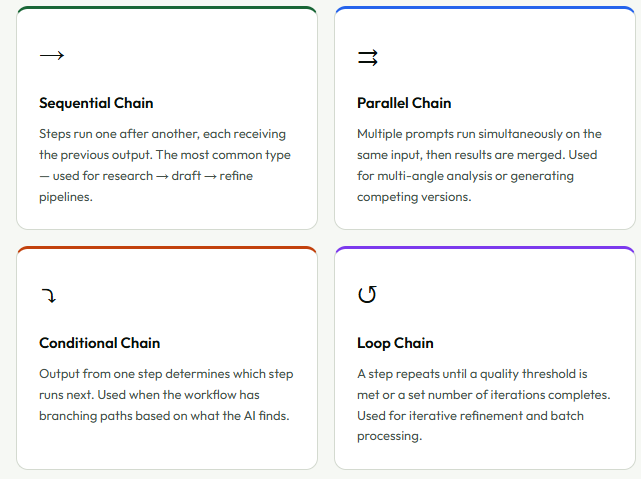
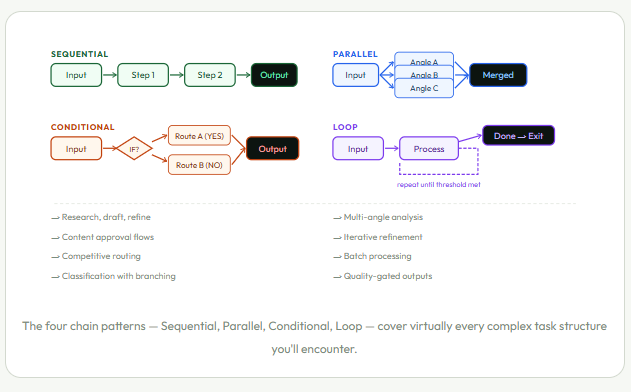
Prompt chaining isn’t a single technique — it’s a design pattern with four distinct variants. Understanding which type to use for which task is what separates casual AI users from people who build genuinely powerful workflows.
Four real-world chain workflows
Complete pipelines you can adapt and run today
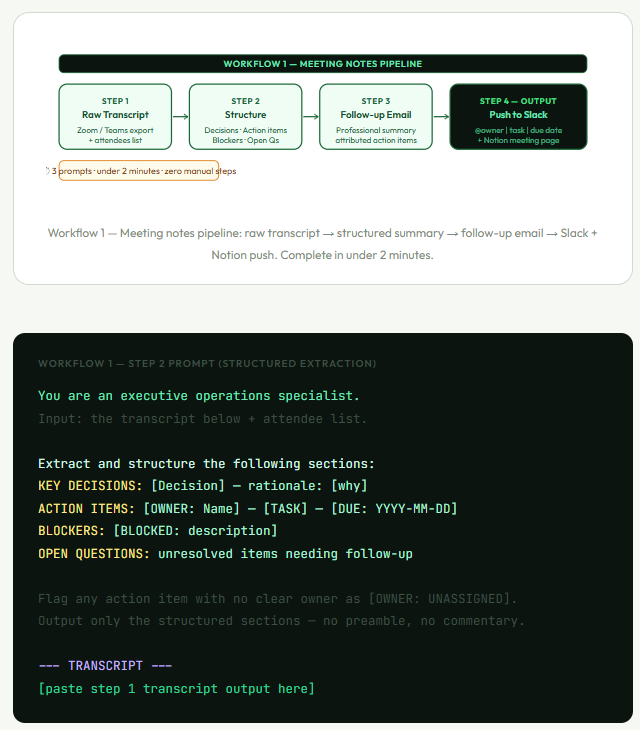
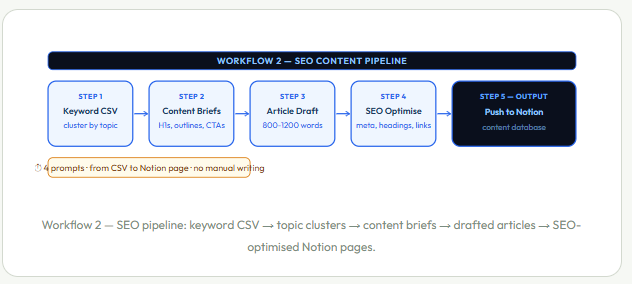
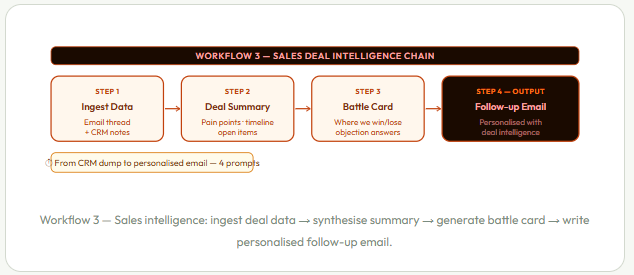
Theory is useful. Working examples are better. Here are four fully-designed prompt chains — each inspired by the kind of high-value work that professionals actually need to do, built using the sequential and conditional patterns above.
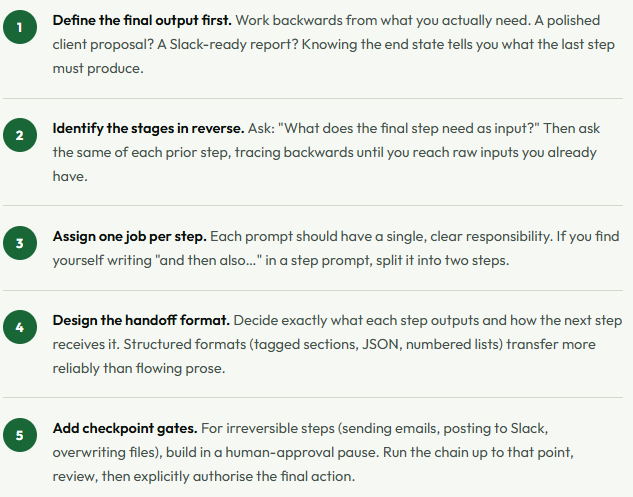
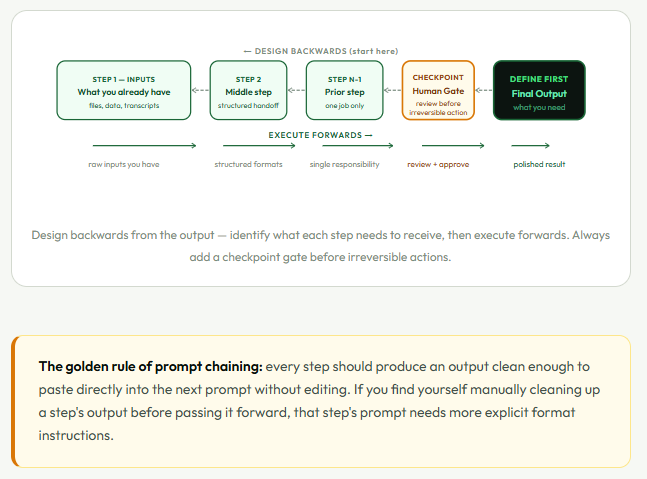
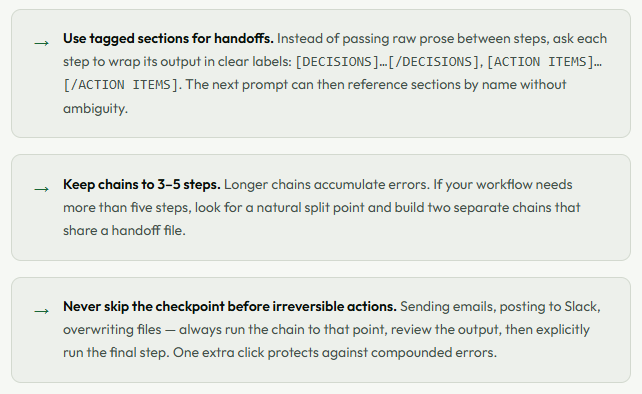
How to design your own chain
A repeatable five-step framework
Building a prompt chain from scratch sounds daunting until you realise there’s a simple framework behind every well-designed one. The structure is always the same — only the content changes.
Get Access to the complete prompt setup with copy-paste templates:
Here is the link: Claude Cowork OS
Prompt Chaining: Multi-Step AI Workflows was originally published in Towards AI on Medium, where people are continuing the conversation by highlighting and responding to this story.
