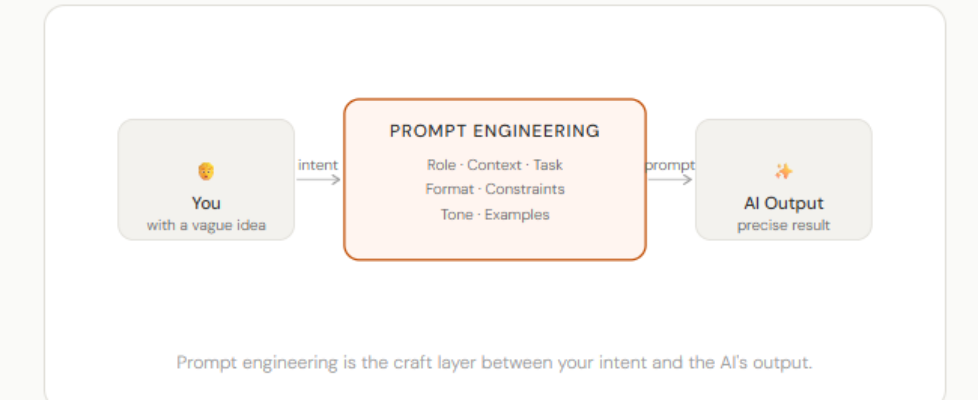
What Is Prompt Engineering?

A beginner’s guide to having better conversations with AI — and actually getting what you asked for.
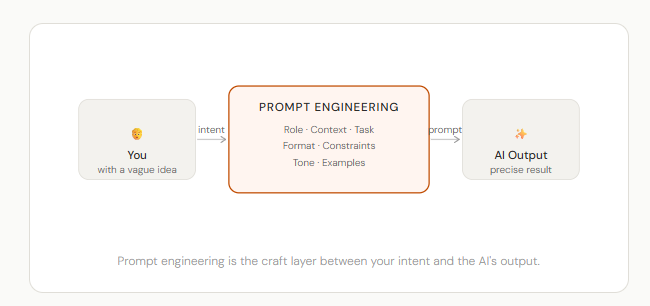
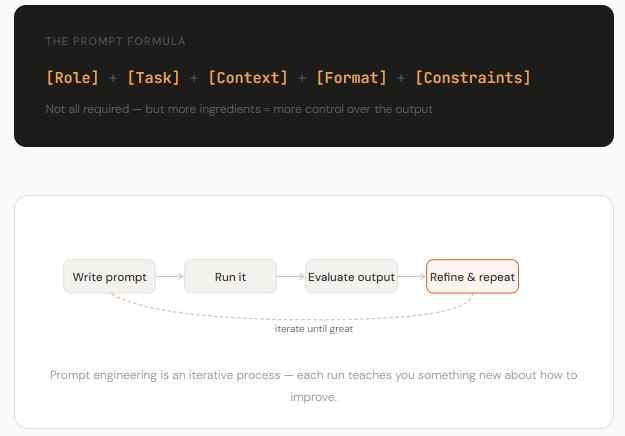
Every time you type something to an AI and get a frustrating, vague, or completely wrong response — that’s a prompt problem, not an AI problem. The model didn’t fail you. The instruction did.
Prompt engineering is the practice of crafting instructions that reliably get AI models to do what you actually want. It sounds technical. It isn’t. It’s really just learning to communicate more clearly — and understanding a few key principles about how language models interpret what you say.

Why does this matter?
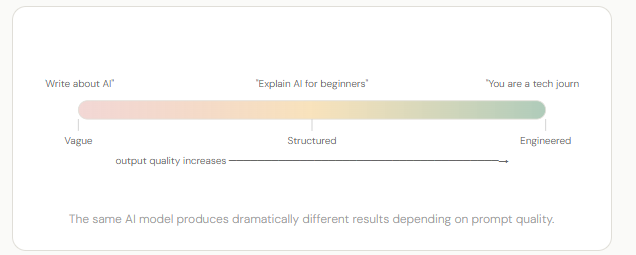
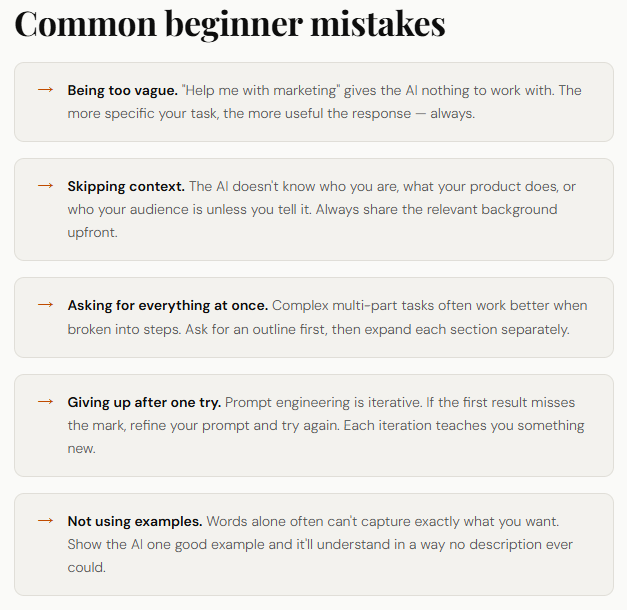
Most people treat AI like a search engine: type a few words, get a result, tweak if needed. But language models work very differently. They generate text by predicting what comes next based on everything you’ve given them. A thin prompt gives them little to work with. A rich prompt gives them a detailed map.
The difference between a basic prompt and an engineered one can be the difference between a generic 200-word blog post and a publication-ready draft tailored to your audience, brand voice, and format requirements.
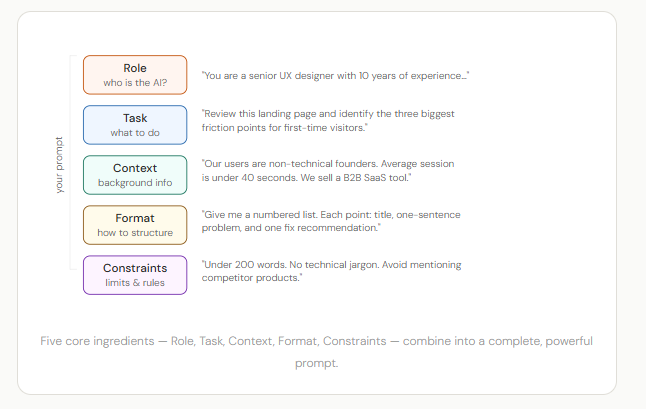
The anatomy of a great prompt
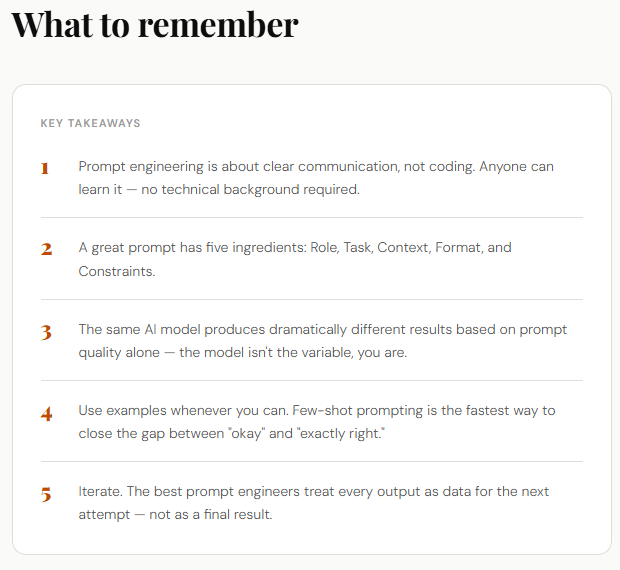
A well-engineered prompt is built from a small set of ingredients. You don’t need all of them every time — but knowing each one gives you precise control over what the AI produces.
Bad prompt vs good prompt
Let’s make this concrete. Here’s the same request written at two levels of craft:
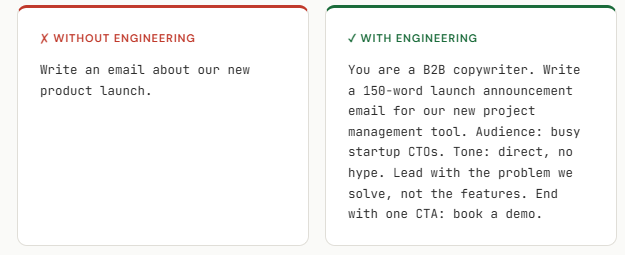
The second prompt will consistently produce a better result — not because the AI got smarter, but because you gave it a clear job description, audience, constraints, and goal.
The four most powerful techniques
1 — Assign a role
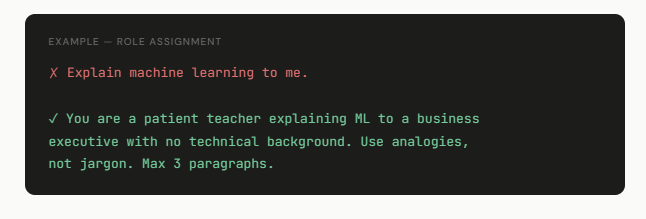
Tell the AI who it’s supposed to be. This isn’t roleplay for fun — it’s a shortcut to expertise. “You are a senior data analyst reviewing a quarterly report” activates a very different response mode than just asking a question cold.
2 — Specify the format
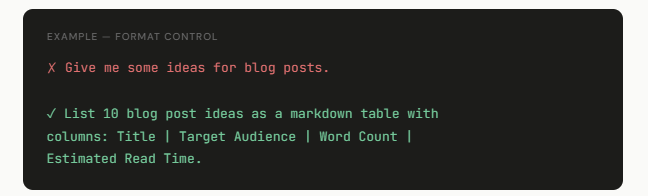
If you don’t say how you want the answer structured, the AI will make a guess. Be explicit: bullet list, numbered steps, table, JSON, a single sentence. Format instructions are often the difference between output you can use immediately and output you have to restructure yourself.
3 — Give examples (few-shot prompting)
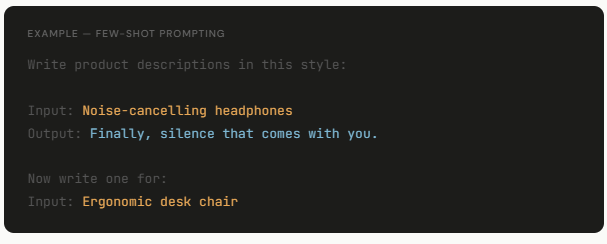
This technique — called “few-shot prompting” — is one of the most powerful tools in the toolkit. Show the AI one or two examples of what a good output looks like, and it will pattern-match to produce more of the same. It’s far more reliable than trying to describe the output in words alone.
4 — Add constraints
Constraints focus the model. Word limits prevent rambling. Tone requirements prevent mismatches. Explicit things to avoid (“don’t mention competitors”, “no bullet points”) produce cleaner outputs. Think of constraints as guardrails — they narrow the probability space of what the AI generates.
Next in this series → The Anatomy of a Great Prompt — a deep dive into each of the five ingredients with real before/after examples across writing, data, and code tasks.
Get it →Detailed Prompt Workbook: The AI Productivity Workbook 2026 is a 100-page educational guide built around 12 original frameworks, one per chapter. Each framework is a named, structured methodology you can master and apply beyond the templates included. Think of it as a complete AI skills curriculum, not a one-time cheat sheet.
What Is Prompt Engineering? was originally published in Towards AI on Medium, where people are continuing the conversation by highlighting and responding to this story.
