
Google bets on ‘vibe design’ with Stitch

Read Online | Sign Up | Advertise

Good morning, {{ first_name | AI enthusiasts }}. Last year, “Vibe coding” changed how the world built. Now, Google is hoping it can do the same for design.
The company’s new Stitch overhaul adds voice editing capabilities, new agentic capabilities, instant prototyping, and more, hoping “vibe design” can do for UI what vibe coding did for development — collapse weeks of work into a single conversation.
Reminder: Our next live workshop is today at 2 PM EST — join part 2 of our Intro to Vibe Coding, where you’ll learn the vocabulary, mental models, and prompting habits that keep your development clean and consistent. RSVP here.
In today’s AI rundown:
-
Google brings ‘vibe design’ to its AI UI canvas
-
MiniMax’s new M2.7 helped build itself
-
Generate an actionable SEO audit with AI
-
Microsoft ‘weighing’ legal action over Amazon-OAI deal
-
4 new AI tools, community workflows, and more
LATEST DEVELOPMENTS
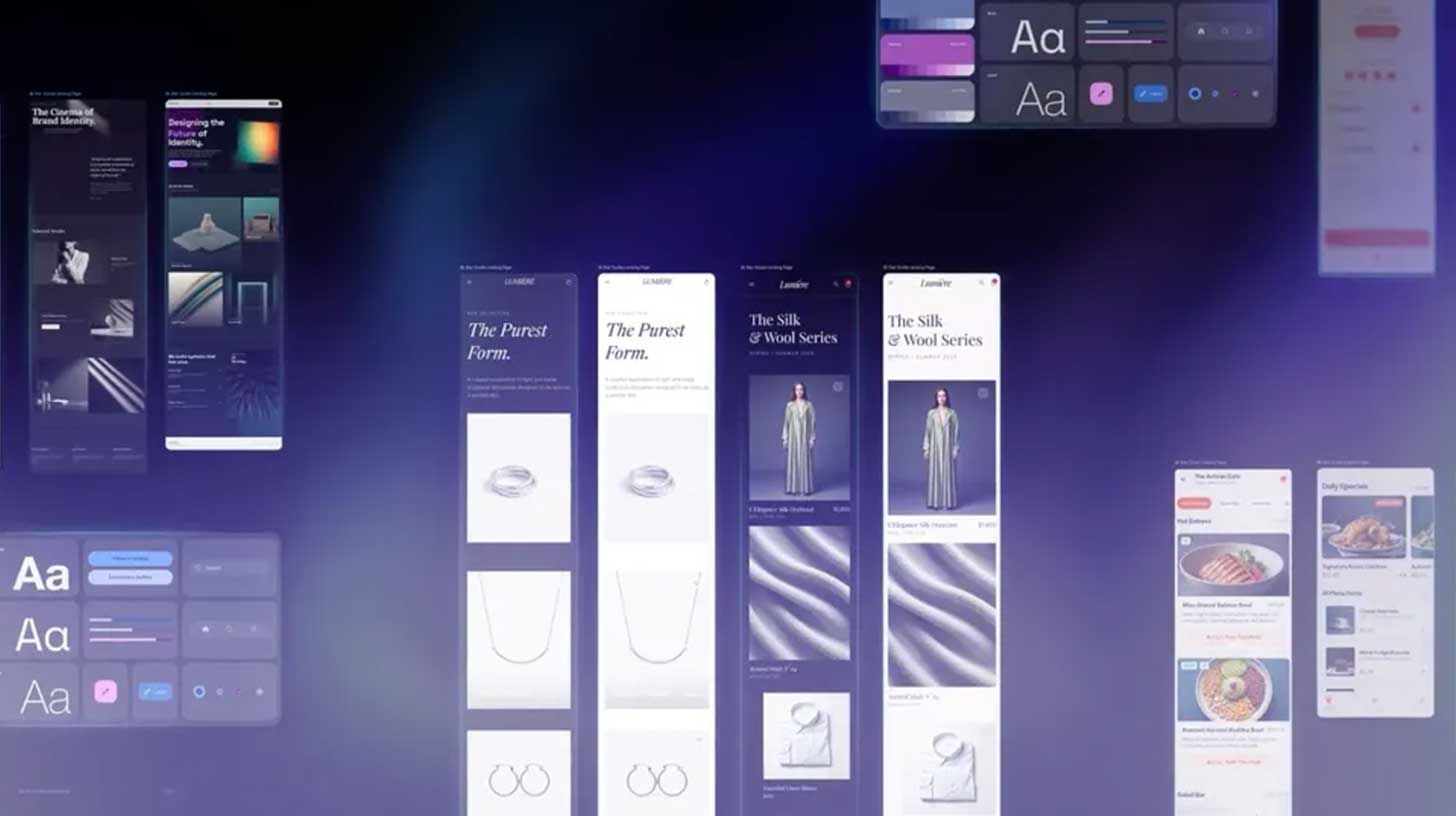
Image source: Google
The Rundown: Google just overhauled Stitch, turning its AI UI design tool into a voice-enabled infinite canvas that takes users from a rough idea to a clickable prototype — and coining the term “vibe design” for its new development workflow.
The details:
-
Stitch now runs on an infinite canvas where users feed in images, code, or briefs, plus an agent manager that juggles multiple design directions at once.
-
A new voice feature in preview turns the tool into a hands-free design partner, able to take direction and make live edits mid-chat.
-
Instant prototyping can turn static screens into interactive prototypes in seconds, while auto-generating logical next screens for the UI flow.
-
A new DESIGN.md format lets teams port design rules between Stitch and coding tools, with each project getting a style system out of the box.
Why it matters: Design has already changed completely in the AI era, but agentic capabilities are taking things to new levels. Stitch’s upgrades let users move at AI-native speeds with easy integration into existing workflows, and a “vibe design” ethos that puts strong creation in reach in the same way “vibe coding” did for development.
TOGETHER WITH VISA
🤝 Get to Know Visa’s Trusted Agent Protocol
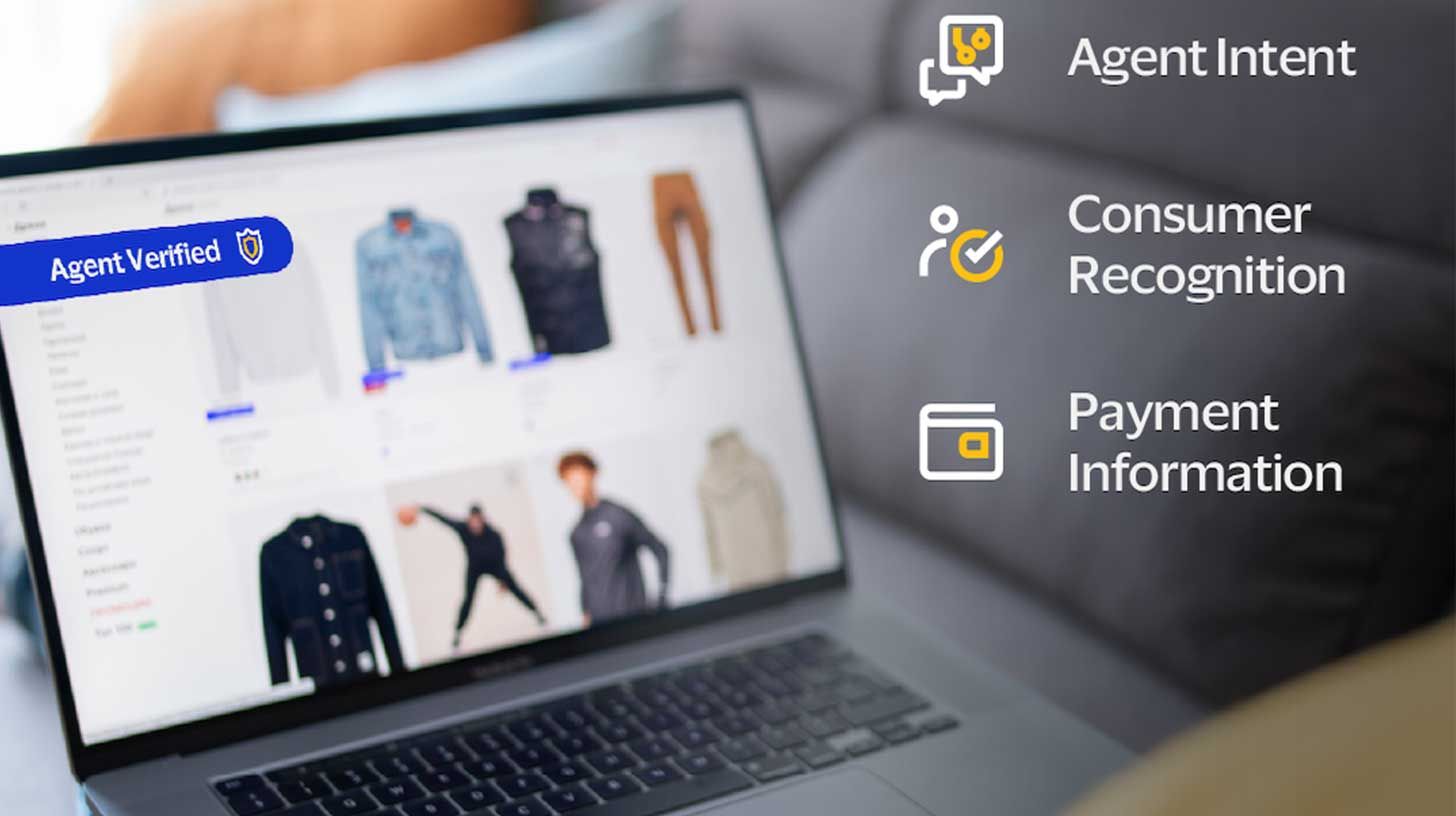
The Rundown: The trust layer for agentic commerce. Visa’s Trusted Agent Protocol allows AI agents to verify who they are, who they represent, and what they’re authorized to do — so merchants can interact with agents with confidence, and humans stay in control.
Visa Trusted Agent Protocol Helps Deliver:
-
Cryptographic verification of AI agent identity and intent
-
Clear authorization and accountability for agent‑initiated actions
-
Trust signals to help merchants distinguish legitimate agents from bad actors
Learn more here.
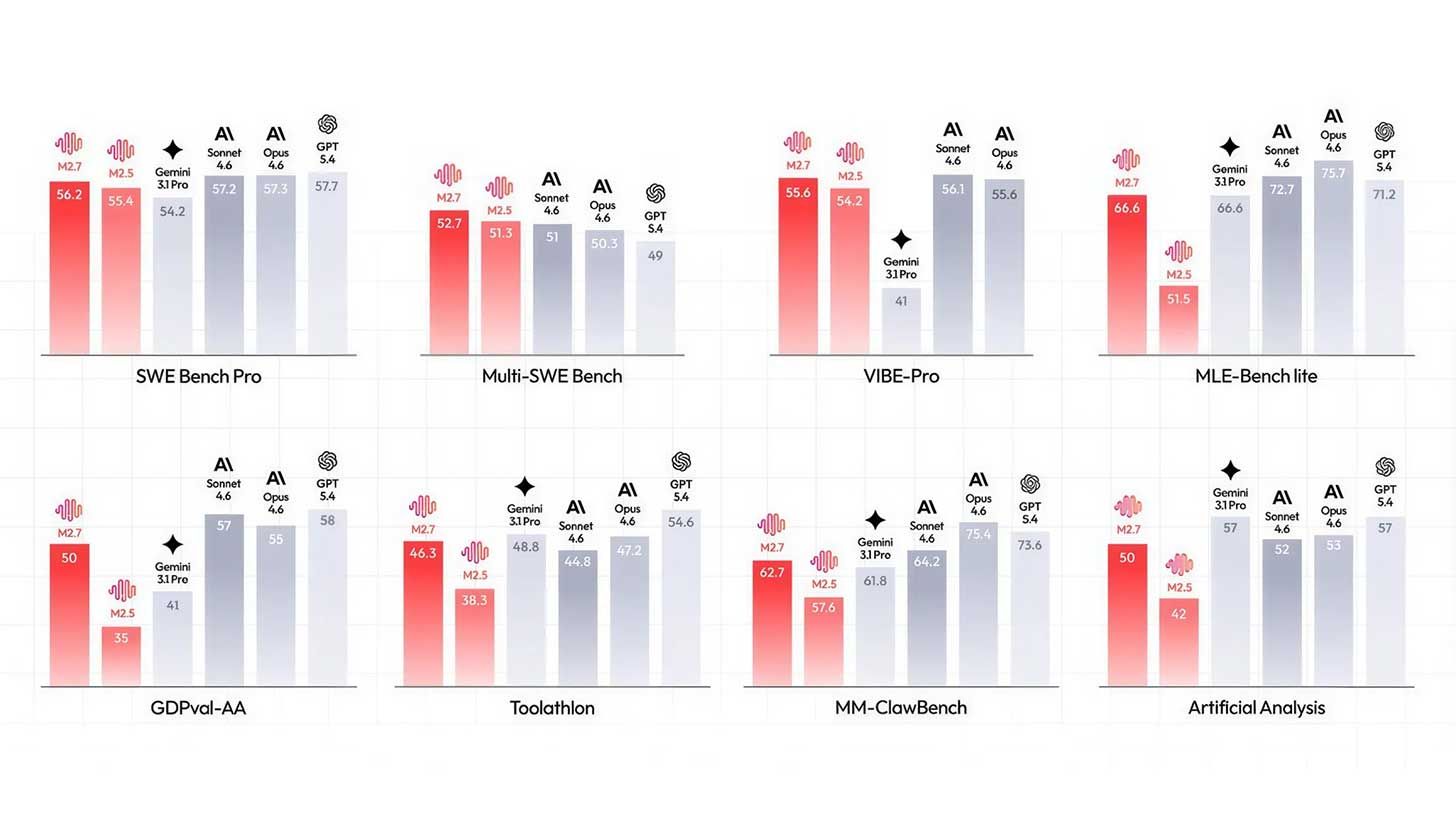
Image source: MiniMax
The Rundown: MiniMax launched M2.7, what the company calls its “first model which deeply participated in its own evolution” — writing its own training code, running autonomous improvement loops, and matching the scores of top Western models.
The details:
-
Early M2.7 versions were put to work on their own training, including writing improvement routines and tuning how the model learns from feedback.
-
M2.7 ran 100+ cycles of autonomously analyzing its mistakes, rewriting code, and testing fixes — showing a 30% accuracy boost on internal benchmarks.
-
On coding, M2.7 hit 56.2% on SWE-Pro and 55.6% on VIBE-Pro, putting it near Opus 4.6 and GPT-5.3-Codex for agentic engineering work.
Why it matters: Self-evolving AI is one of the bigger next steps forward, and while we’ve heard rumblings from OAI, Anthropic, Google, and xAI, MiniMax is one of the first labs out of China to openly make the claim. Future models will all likely be training and improving themselves, but for now, we’re just watching the feature emerge.
AI TRAINING
📝 Generate an actionable SEO audit with AI
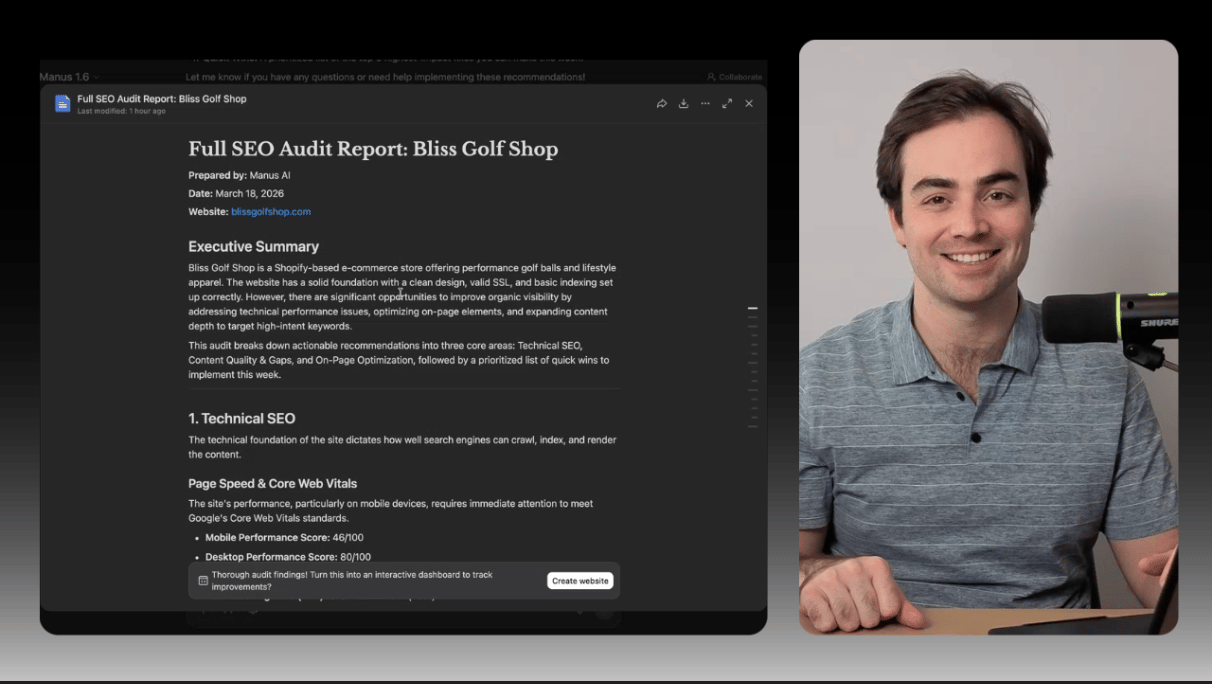
The Rundown: In this guide, you will learn how to run a full SEO audit on any website using AI and turn the results into a slide deck and a prioritized task list. We tested this method in Manus, Claude, ChatGPT, Gemini, and NotebookLM.
Step-by-step:
-
Open any AI tool and prompt: “Perform a comprehensive SEO audit of [website URL]. Analyze SEO, on-page optimization, content quality, and backlink profile. Give me the top 10 highest-impact fixes ranked by effort vs. results. Export as a PDF report with sections for each category. Cite your data sources.”
-
Review the PDF, then prompt: “Turn this audit into a slide deck I can present to a client or stakeholder. Keep it under 10 slides. Include an executive summary, top issues by category, and a recommended action plan with priorities.”
-
Finally, fix the issues by prompting: “Create an SEO workbook as a CSV with every issue from the audit. Columns: Issue, Category, Priority (High / Medium / Low), How to Fix, Affected Page URL. Sort by priority.”
Pro tip: Give tools browser access so they can gather SEO data from free online tools. Manus did the best job on this without any configuration.
PRESENTED BY GLEAN
🔒 AI moves fast, and security hasn’t caught up
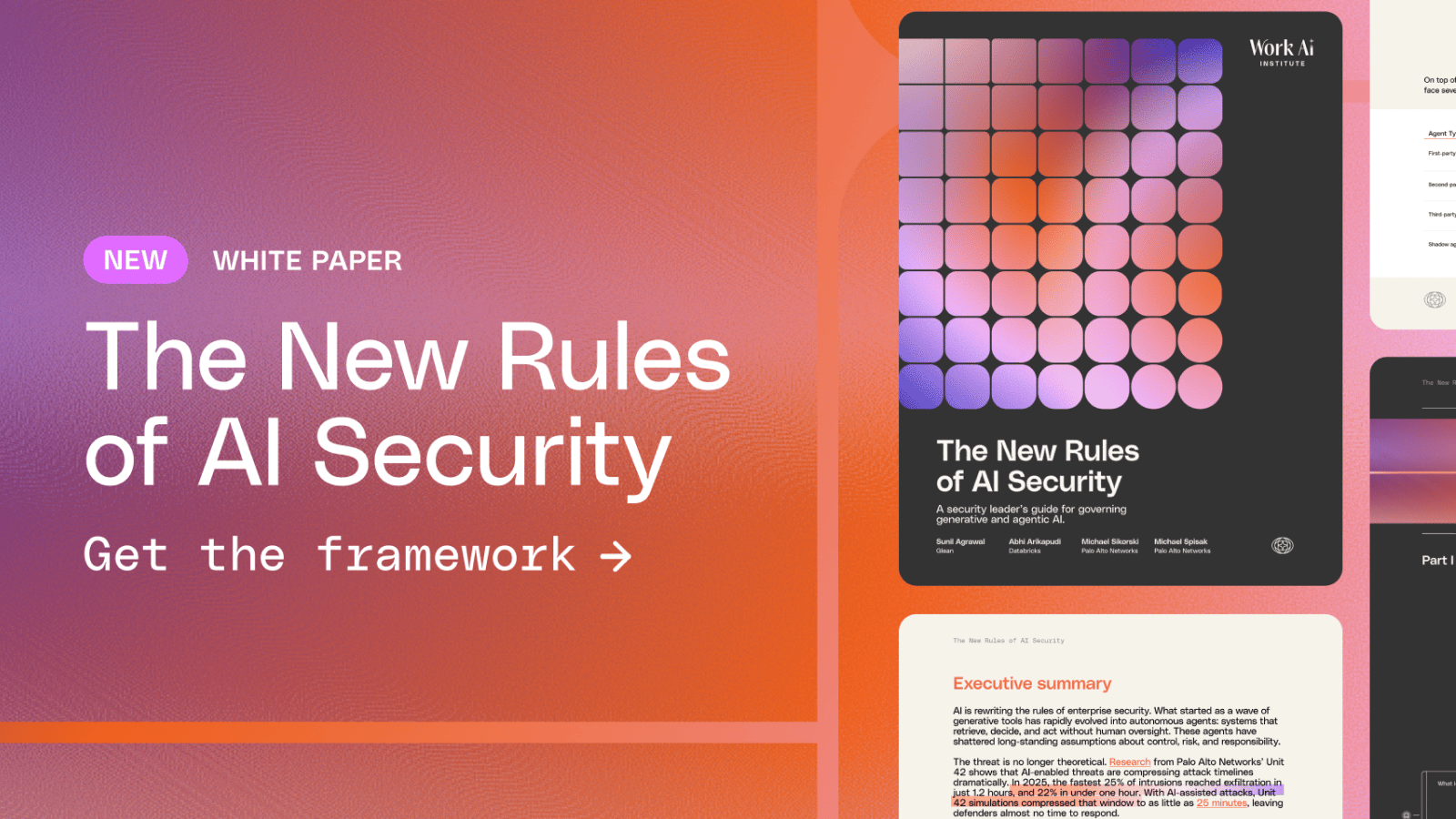
The Rundown: AI agents now make decisions, take actions, and touch sensitive data across organizations — but most security policies weren’t built for that. The AWARE Framework, developed by the Work AI Institute with Palo Alto Networks and Databricks, gives security and IT leaders a practical guide for governing AI agents at scale.
Download the AWARE Framework to learn:
-
Why AI agents create risks most security tools weren’t designed to catch
-
Where organizations have blind spots and how to close them before they become a problem
-
A practical governance model that any team can act on without slowing AI adoption

Image source: Lovart / The Rundown
The Rundown: Microsoft is reportedly considering legal action against Amazon and OpenAI, with sources telling the FT it will sue if a new $50B cloud deal between the two companies violates its exclusive contract to host the startup’s models on Azure.
The details:
-
The dispute is over Frontier, OpenAI’s new enterprise agent platform — also the anchor of a broader deal committing $138B in cloud spending to AWS.
-
Microsoft dropped its exclusive hosting lock on OAI in October, but kept a clause that forces all developer access to OAI models to run through Azure.
-
The FT’s source said “We know our contract… We will sue them if they breach it”, with another source adding “the last thing OAI needs is another court case”.
-
OAI reportedly signed a new deal with AWS last week, which opened the door for the company’s deployment with the Pentagon.
Why it matters: Just when you thought the Microsoft-OAI relationship couldn’t get more awkward, now there’s a potential lawsuit to worry about. The FT source is right that OAI can’t afford another legal fight with an IPO looming and the Musk trial, but the Microsoft partnership itself also continues to feel like a headache for the AI giant.
QUICK HITS
🛠️ Trending AI Tools
-
🚀 Stitch – Google’s newly updated UI creation tool for “vibe design”
-
📱 Dispatch – Control Claude Cowork on your computer via mobile
-
♻️ MiniMax M2.7 – ‘Self-evolving’ AI with strong coding, agentic benchmarks
-
🦞 GLM-5-Turbo – Z AI’s high-speed agentic model built for OpenClaw
📰 Everything else in AI today
ASAPP’s Nirmal Mukhi and special guest Forrester’s Kate Leggett explore how to plan, staff, and operationalize the new roles AI agents bring to the customer service workforce.*
The U.S. Dept. of Defense filed a 40-page rebuttal to Anthropic’s lawsuits, arguing its safety limits make it an “unacceptable risk to national security” during war operations.
Xiaomi released MiMo-V2-Pro, a model that topped OpenRouter’s charts under an ‘Hunter Alpha’ codename and excels in agent-related tasks and OpenClaw usage.
Microsoft acquired the full team behind Cove, a collaborative AI interface startup, with the company saying its “ideas will live on” at the tech giant.
Midjourney rolled out a preview of its new V8 image model, coming with improved speed, detail, and text rendering, garnering mixed reactions in early testing.
*Sponsored Listing
COMMUNITY
🤝 Community AI workflows
Every newsletter, we showcase how a reader is using AI to work smarter, save time, or make life easier.
Today’s workflow comes from reader Sofia F. in London, UK:
“I’ve recently started a wine subscription, and while I know which wines I prefer, I’ve never been great at pairing them with food. I’ve finally solved this by setting up an AI workflow to manage my wine pairings. Every time my subscription arrives, I snap photos of the labels so the AI can index the vintage and tasting notes.
Now, when I finish my weekly shop, I just upload the receipt; the AI parses the ingredients and cross-references them against my wine inventory to generate a 7-day pairing schedule. It’ll even warn me if I’m about to waste a high-tannin Bordeaux on a mid-week stir-fry, suggesting a cheap bottle of plonk from the corner shop instead! My husband, a total wine connoisseur, says it hasn’t been wrong yet.”
How do you use AI? Tell us here.
🎓 Highlights: News, Guides & Events
-
Read our last AI newsletter: Simo sounds alarm on OpenAI’s ‘side quests’
-
Read our last Tech newsletter: China greenlights commercial brain implant
-
Read our last Robotics newsletter: Travis Kalanick’s stealth robot play
-
Today’s AI tool guide: Generate an actionable SEO audit
-
RSVP to next workshop @ 2 PM EST today: Intro to Vibe Coding pt. 2
See you soon,
Rowan, Joey, Zach, Shubham, and Jennifer — the humans behind The Rundown

