Nvidia’s big AI day at GTC

Read Online | Sign Up | Advertise

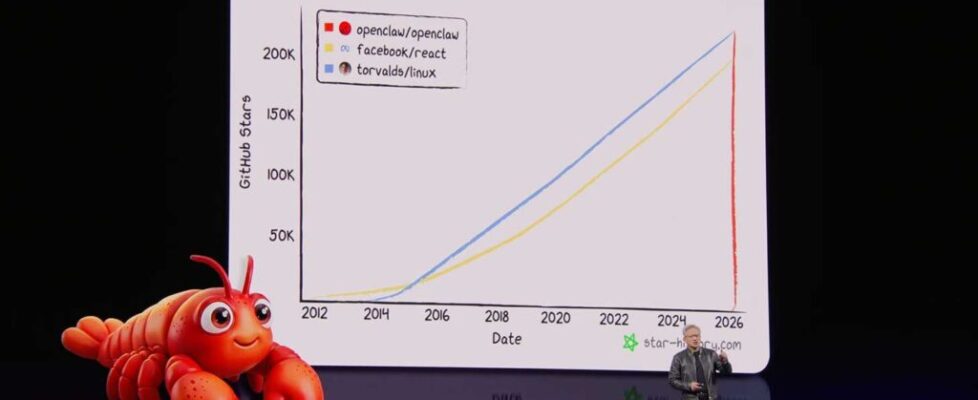
Good morning, {{ first_name | AI enthusiasts }}. Jensen Huang has called OpenClaw “the single most important piece of software, probably ever,” and this year’s GTC showed just how serious the Nvidia CEO is about adopting the viral agentic tool.
Its NemoClaw security stack for OpenClaw was one of dozens of new announcements, including next-gen chips, AI game graphics, and a wave of enterprise and robotics partnerships that show the chipmaker is spreading far beyond its hardware roots.
In today’s AI rundown:
-
Nvidia unloads at GTC with NemoClaw, and more
-
Exposed AI band becomes real in Japan
-
How to use Grok for free automated research
-
Manus brings its AI agent to the desktop
-
4 new AI tools, community workflows, and more
LATEST DEVELOPMENTS

Image source: Nvidia
The Rundown: Nvidia CEO Jensen Huang made a wave of announcements at GTC 2026, including an open-source NemoClaw for agents, next-gen Vera Rubin platform, DLSS 5 for photorealistic game graphics, and new enterprise and robotics tools.
The details:
-
NemoClaw brings security and privacy guardrails to OpenClaw agents, with an emphasis on growing the agentic tech’s use across enterprises.
-
The Vera Rubin platform puts seven new chips into production to power AI training and agents, with Huang also teasing space-based data centers.
-
DLSS 5 uses AI to add photorealistic lighting and materials to games in real time, with Bethesda, Capcom, and Ubisoft among the first studios on board.
-
A new open-source Agent Toolkit lets enterprises build secure AI agents, along with new AI platforms and partnerships for vehicles, robots, and more.
Why it matters: Huang pitched Nvidia as ‘the first vertically integrated but horizontally open company,’ and GTC makes that case hard to argue. Chips, agents, game graphics, robotics — every announcement pointed to the same play: own the infrastructure layer beneath all AI workloads, and let everyone else build openly on top.
TOGETHER WITH YOU.COM
🤔 Keep your LLMs from making stuff up

The Rundown: It happens — LLMs hallucinate. Grounding your LLM, however, can help dramatically improve accuracy. In this guide, You.com explains what AI grounding is and how organizations can implement it to achieve more reliable outputs.
The playbook covers:
-
A three-part approach that outperforms RAG alone
-
Why grounding isn’t set-and-forget, and how to build audit trails
-
The open vs. closed platform trade-off (and what it means for your next model switch)

Image source: Spotify
The Rundown: A pseudonymous producer called “Kage” built a fictional Japanese metal band called ‘Neon Oni’ with Suno that pulled in 80k+ monthly listeners before fans uncovered it was AI, then hired real Tokyo musicians to perform the AI tracks live.
The details:
-
Neon Oni’s Spotify page listed fictional member bios and a Tokyo location, with AI-generated music videos, merch, and a growing fanbase.
-
Reddit users eventually spotted AI-generated hands in the music videos and traced the creator to Europe, exposing the band as entirely fabricated.
-
The creator recruited seven musicians from Tokyo bands to perform the AI music live, with three shows now complete and a headline gig set for March 29.
-
From an interview with Kage: “In an age where AI is taking everyone’s jobs, this has actually created jobs. It’s done the complete opposite.”
Why it matters: Initial deception aside, musicians play cover songs and hit songwriters produce tracks for other artists every day. Neon Oni might be the strange, AI-future version of that model: one creator builds the brand and writes the music with AI, then real performers bring it to the stage when a concept or particular sound gains traction.
AI TRAINING
🔎 How to use Grok for free automated research

The Rundown: In this guide, you will learn how to use Grok’s Tasks feature. If you have a free X.com account, you get 2 automated tasks each day — use them to build automated daily research briefings pulled from live X data.
Step-by-step:
-
Go to Grok and sign in with your X account. Click on your profile picture in the bottom left, then click Tasks in the pop-up
-
Click New Task, give it a name, set your schedule (daily, weekly, or specific days), and prompt: “Search X for the top trends in [your niche] from the last 24 hours. Summarize the top 3 and flag anything gaining traction”
-
Once you save the task, Grok will run the search on schedule and send you the results via email and as a push notification in the mobile app
-
To view run results on desktop, navigate back to grok.com/tasks and click on the task.
Pro tip: In addition to your two daily tasks, you can also stretch your free Grok account further by scheduling up to 10 research tasks per week or month.
PRESENTED BY LAMBDA
📊 Open-weight arrivals: Lambda’s benchmark results

The Rundown: Lambda model cards are clean, single-page reports built around the metrics that actually matter in production, so you can evaluate open-weight models without digging through scattered benchmarks.
Each card includes:
-
Model overview and specs to help you evaluate fit
-
Real throughput and latency numbers on NVIDIA A100, H100, and B200 GPUs
-
Side-by-side comparisons for vLLM and SGLang serving frameworks
-
Launch commands and benchmark scripts to reproduce results on your own cluster

Image source: Manus
The Rundown: Manus just launched My Computer, a new desktop app that moves its cloud-based AI agent onto users’ local machines to manage files, run terminal commands, build apps, and more.
The details:
-
My Computer works through the local terminal, giving the agent direct access to read, sort, and edit files stored on a user’s machine.
-
Use cases range from organizing unsorted photos into labeled folders, batch-renaming invoices, to building and packaging apps autonomously.
-
Meta acquired the Chinese agentic startup in December for $2B, with its team joining the company, and CEO Xiao Hong coming in as a VP.
-
The agent can also tap into a machine’s hardware when it’s sitting idle, running jobs in the background, or completing tasks assigned remotely from a phone.
Why it matters: Manus was already one of the more capable AI agents in the cloud, and now it’s making the desktop move we’ve seen from OpenClaw, Perplexity, and others. The race to be the orchestrator of users’ computers is on, and Manus is a good opportunity for Meta to gain a foothold without a current frontier model of its own.
QUICK HITS
🛠️ Trending AI Tools
-
🗣️ Unwrap Customer Intelligence – Turn unstructured customer feedback into data-backed insights that inform your product roadmap*
-
💻 My Computer – Manus’ AI agent for local machines
-
📐 Get Physics Done – Open-source AI for end-to-end physics research
-
📢 AI CMO – Okara’s agent-powered marketing suite
*Sponsored Listing
📰 Everything else in AI today
Microsoft AI Envisioning Days – Free video series helping software companies build, deploy, and monetize AI apps and agents. Watch now.*
Encyclopedia Britannica and Merriam-Webster sued OpenAI, alleging it scraped their articles, produced competing outputs, and attributed hallucinations to them.
Physical Superintelligence dropped Get Physics Done, an open-source AI agent that can scope research problems, run experiments, verify results, and draft papers.
Moonshot AI published Attention Residuals, a technique that lets models pull from their earlier layers instead of stacking them, delivering 1.25x more compute efficiency.
OpenAI is reportedly restructuring its Stargate computing team, coming alongside a shift in strategy to renting more AI servers rather than building its own data centers.
Meta signed a $27B deal with Nebius to deploy AI cloud infrastructure, including one of the first large-scale deployments of Nvidia’s Vera Rubin platform.
*Sponsored Listing
COMMUNITY
🤝 Community AI workflows
Every newsletter, we showcase how a reader is using AI to work smarter, save time, or make life easier.
Today’s workflow comes from reader Barry L. in Houston, TX:
“As a stand-up comedian, I’m constantly having to market and promote both myself and my shows. AI has become my go-to marketing and promotions strategist, helping me grow online and drive more ticket sales.
One of the best prompting tips I’ve learned is ending prompts with: “Ask me clarifying questions until you’re 95% confident you can complete the task successfully.” That tip alone dramatically improved my results.
AI has helped me develop better content ideas, sharpen my messaging, and build a strong Meta ad strategy for ticket sales. I produce a twice-monthly comedy show, and we’ve sold out every show but one.
How do you use AI? Tell us here.
🎓 Highlights: News, Guides & Events
-
Read our last AI newsletter: Musk takes xAI into a full rebuild
-
Read our last Tech newsletter: Apple’s foldable iPhone leaks
-
Read our last Robotics newsletter: Travis Kalanick’s stealth robot play
-
Today’s AI tool guide: How to use Grok for free automated research
-
RSVP to our next workshop on March 19: AI coding bootcamp pt. 2
See you soon,
Rowan, Joey, Zach, Shubham, and Jennifer — the humans behind The Rundown

