GABBE: The Cognitive Engineering Platform That Transforms AI Coding Agents Into Engineering Teams

A deep dive into the open-source kit that gives AI assistant agents a mind, a memory, and a “conscience”.
“The agent is the engine. You are the steering wheel.”
The Problem Nobody Talks About
AI coding agents — Claude, Copilot, Cursor, Gemini, Codex — promised a revolution. They delivered on speed. But teams started drowning in code they couldn’t review, verify, or trust.
Tests were skipped. Architecture decisions were made on the fly and undone next session because the agent forgot everything. Security reviews? An afterthought.
GABBE (Generative Architectural Brain Base Engine) was born from this. Created by Andrei Nicolae Besleaga, it asks a different question: “How do we make AI code correctly, safely, and in a governed way — every time?”
The answer draws from software engineering orthodoxy, neuroscience, cognitive psychology, and multi-agent systems theory. The result: a kit that gives AI agents a mind, a memory, and a “conscience”.
What Is GABBE?
GABBE is a Universal Agentic Software R&D Engineering Kit — a drop-in context layer that transforms any AI coding agent into a governed engineering team.
It is not a new AI model. It is not a new IDE. It is the operating system for agentic software development.
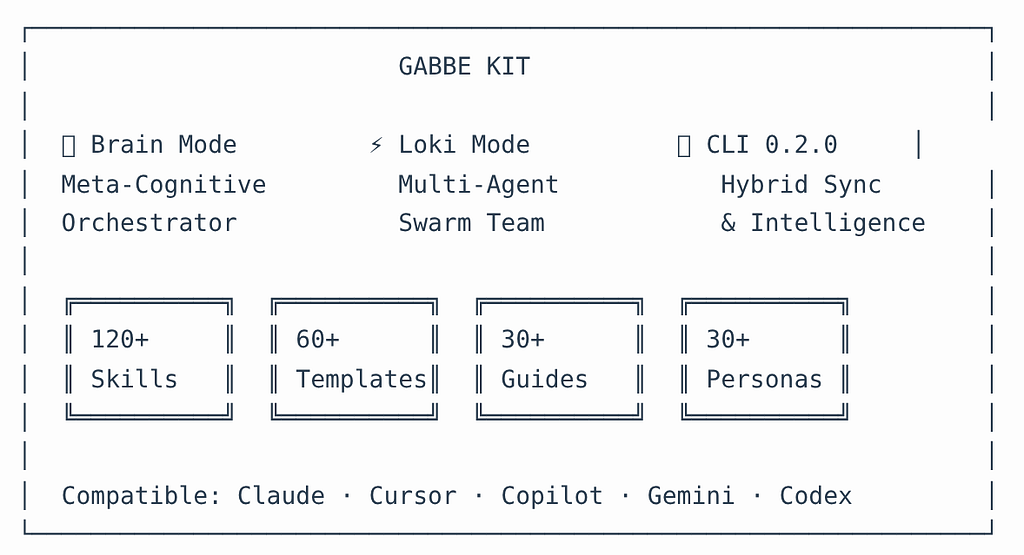
120+ Skills · 60+ Templates · 30+ Guides · 30+ Personas · 10 SDLC Gates — compatible with Claude, Cursor, Copilot, Gemini, and Codex.
Its Universal Skill Compiler lets you write a skill once and deploy it across every platform automatically.

Another Lethal Trifecta
GABBE identifies three compounding problems in agentic AI development
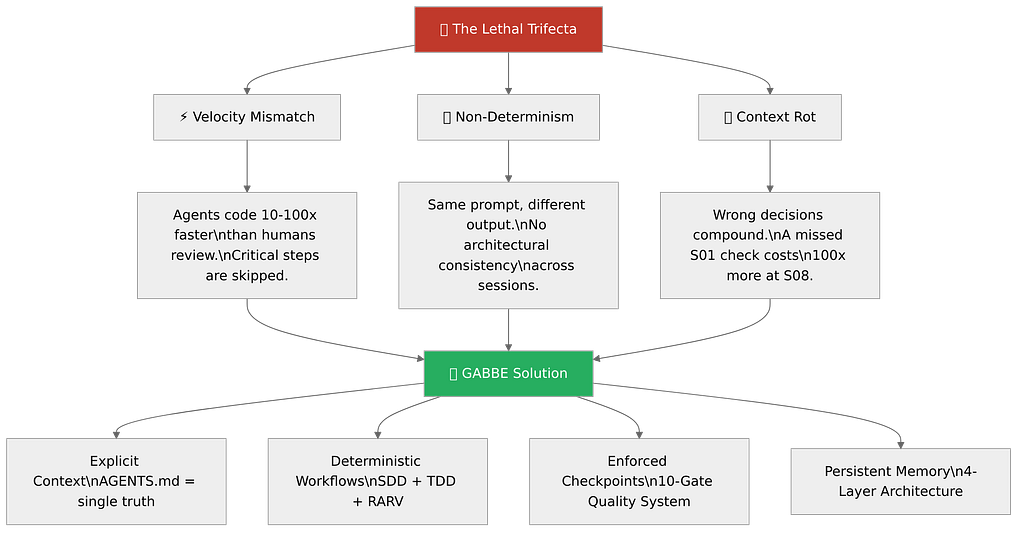
⚡ Velocity Mismatch — Agents code 10–100× faster than humans review. Critical steps get skipped.
🎲 Non-Determinism — Same prompt, different output. No consistency across sessions.
💸 Context Rot — Wrong decisions compound. A missed check at Requirements costs 100× more at Code Review.
GABBE solves these with a 10-Gate Quality System (agents can’t skip gates), AGENTS.md as single source of truth (every agent reads it first), and a 4-Layer Memory Architecture (agents never repeat failed approaches).
System Architecture
GABBE treats software systems as Cognitive Entities — drawing directly from neuroscience.
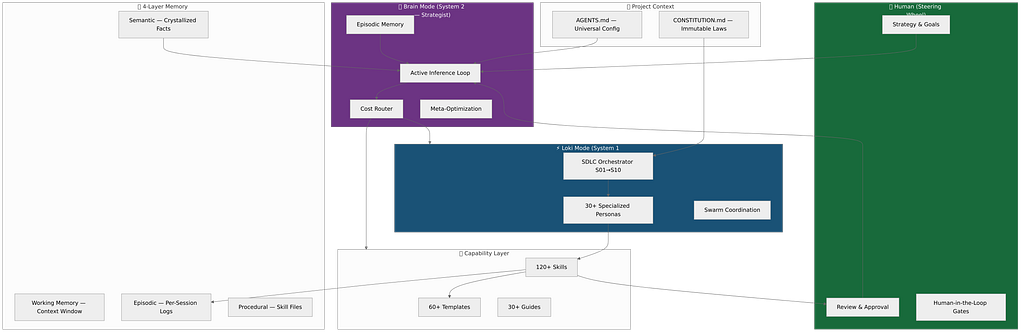
4-Layer Memory: No More Agent Amnesia
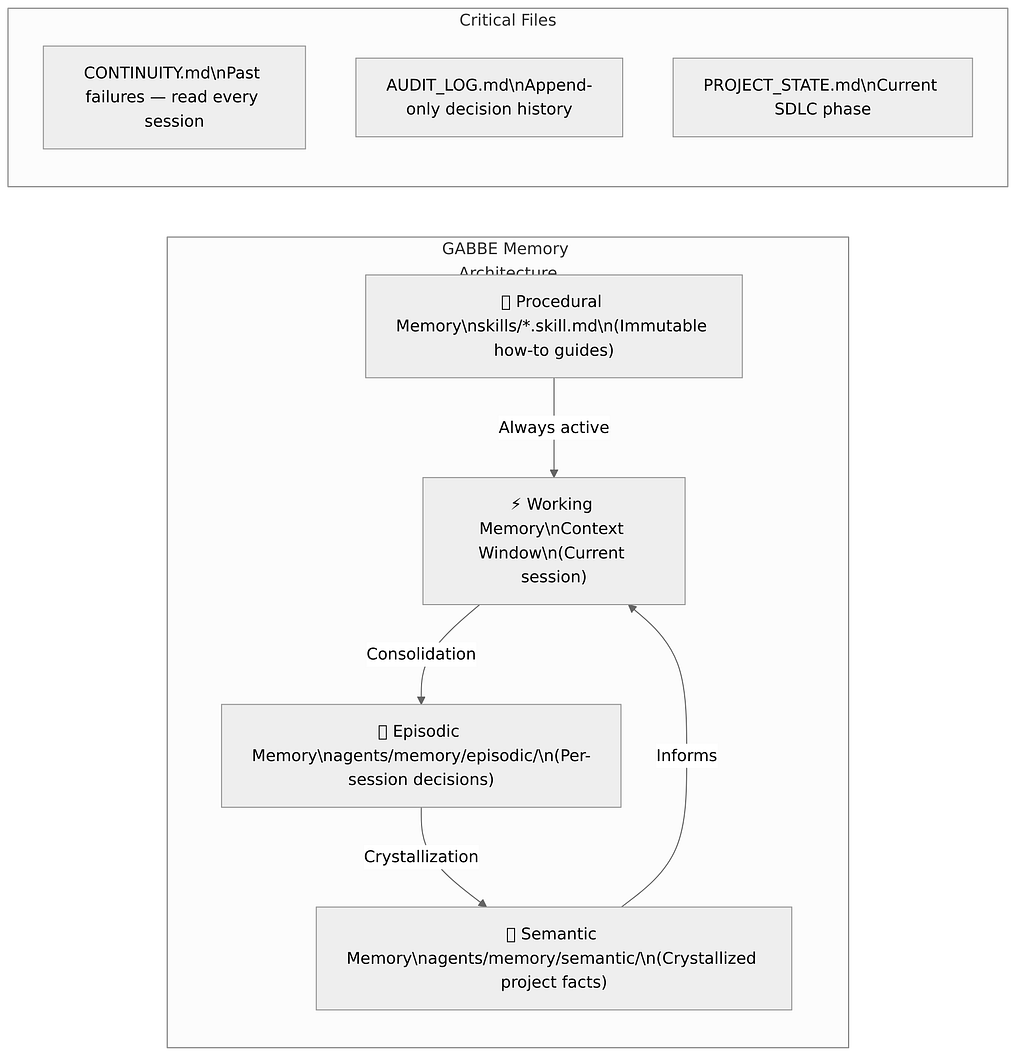
The most critical file: CONTINUITY.md — read every session, containing every failure, dead end, and hard-won lesson. This is how GABBE eliminates “repeating the same mistake.”
Brain Mode: Neuroscience Meets AI
Brain Mode models the agent as a Cognitive Turing Machine using Active Inference (Karl Friston’s Free Energy Principle).
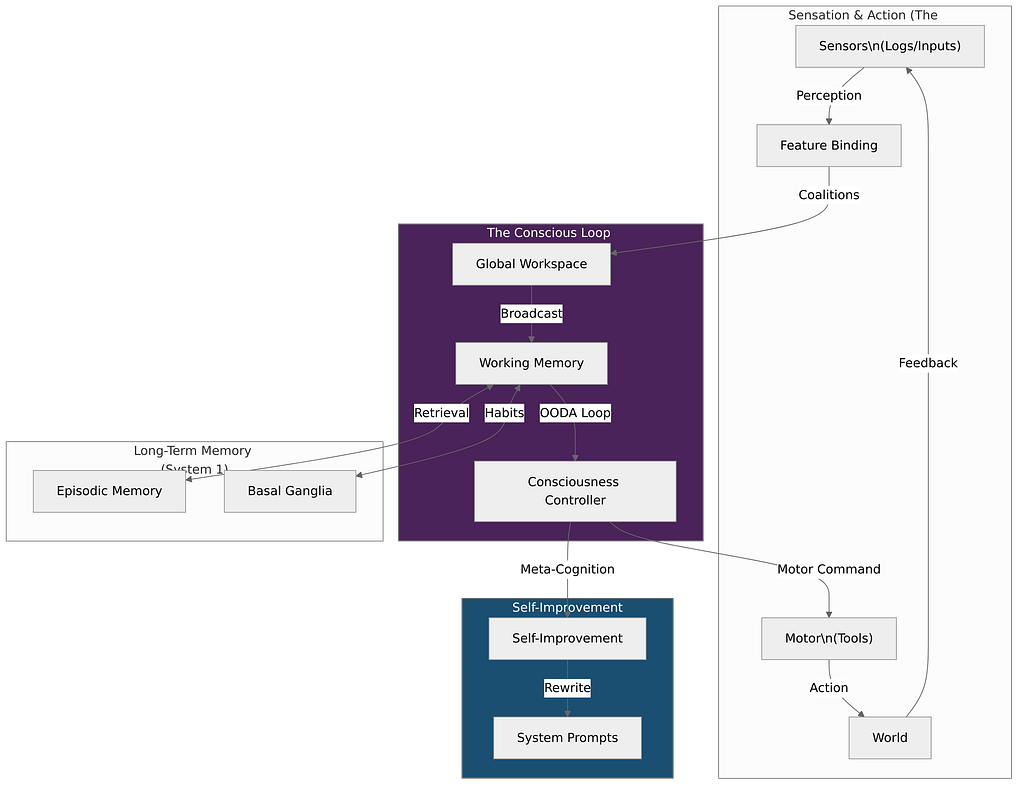
The key mechanism: Brain Mode compares what it expected versus what actually happened. When there’s a mismatch — a test fails, costs spike, requirements drift — it doesn’t just retry. It updates its model and adapts.

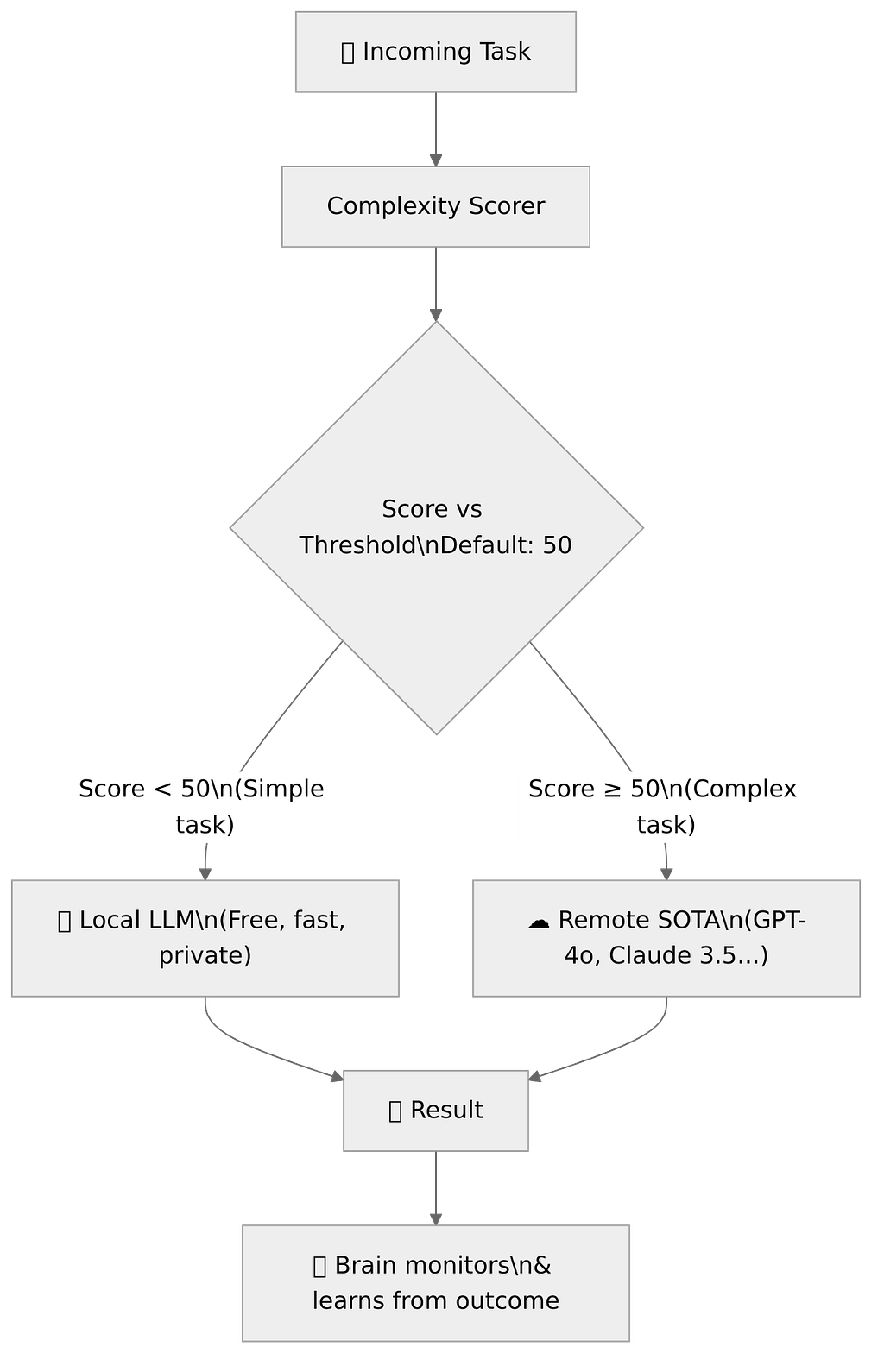
It also handles Dynamic Cost Routing — automatically sending simple tasks to free local LLMs and complex tasks to remote SOTA models.
Loki Mode: A Full Engineering Department
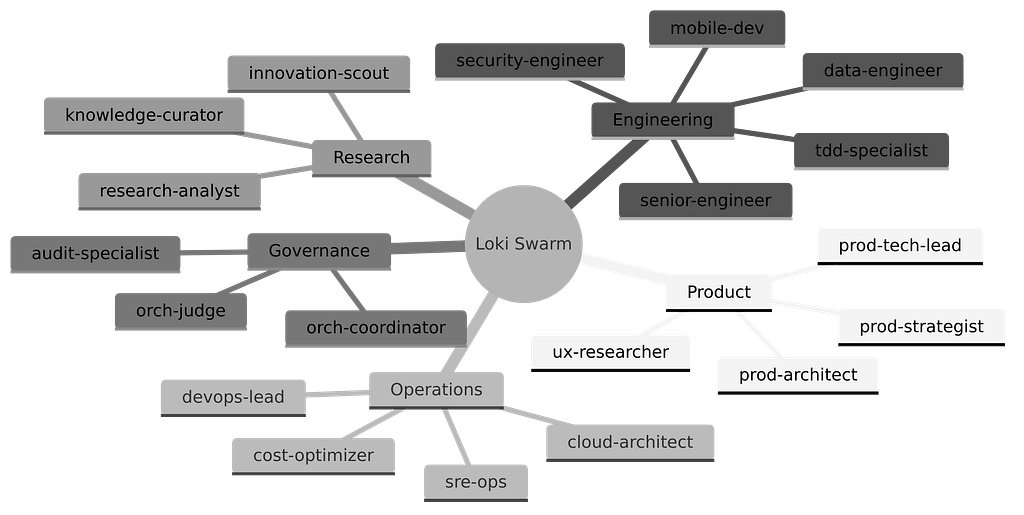
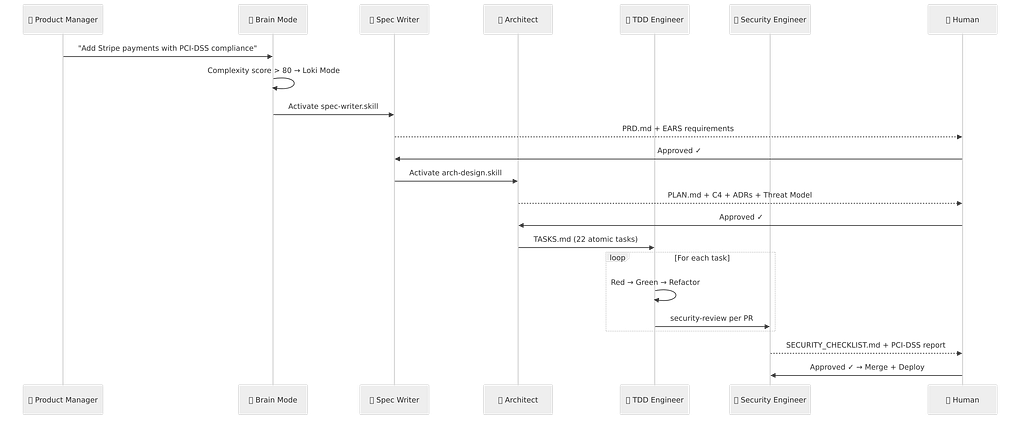
If Brain Mode is the strategist, Loki Mode is the executor. It transforms a single AI agent into a 30+ persona engineering swarm.

Product Strategist → Architect → TDD Engineer → Security Auditor → SRE — all coordinated through the 10-gate SDLC with mandatory human checkpoints.
The GABBE CLI: Hybrid Intelligence
The CLI bridges Markdown (human-friendly) with SQLite (machine-reliable) — Hybrid Mode.
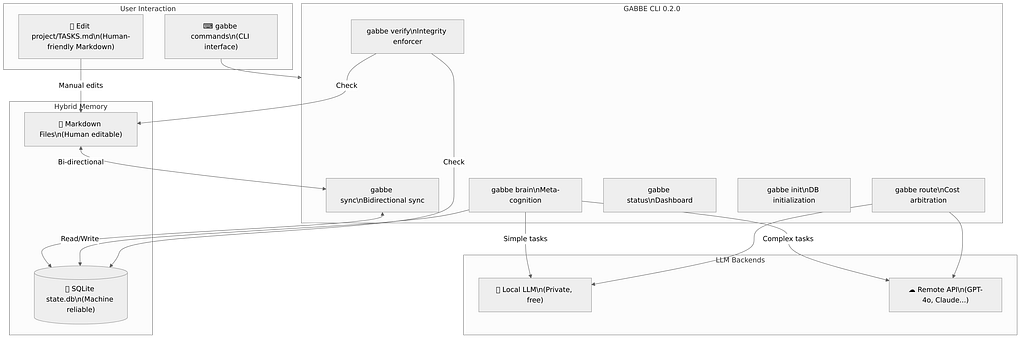
Six commands: gabbe init, gabbe sync, gabbe verify, gabbe status, gabbe brain, gabbe route.
10-Gate SDLC
Every feature passes 10 mandatory gates from Strategy to Production — with human approval at critical junctions.
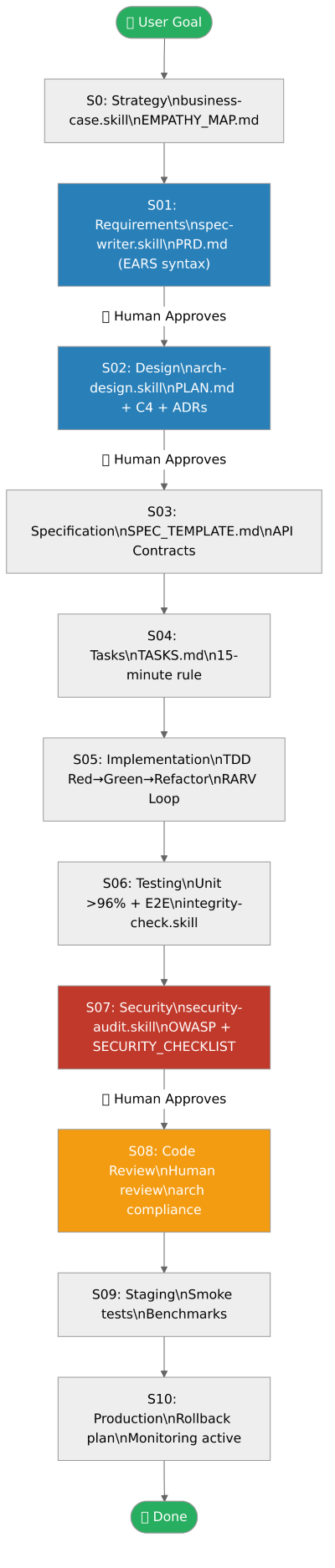
Inside every implementation task, the RARV cycle runs: Reason → Act → Reflect → Verify. If verification fails, the self-heal loop retries up to 5 times before escalating to a human.

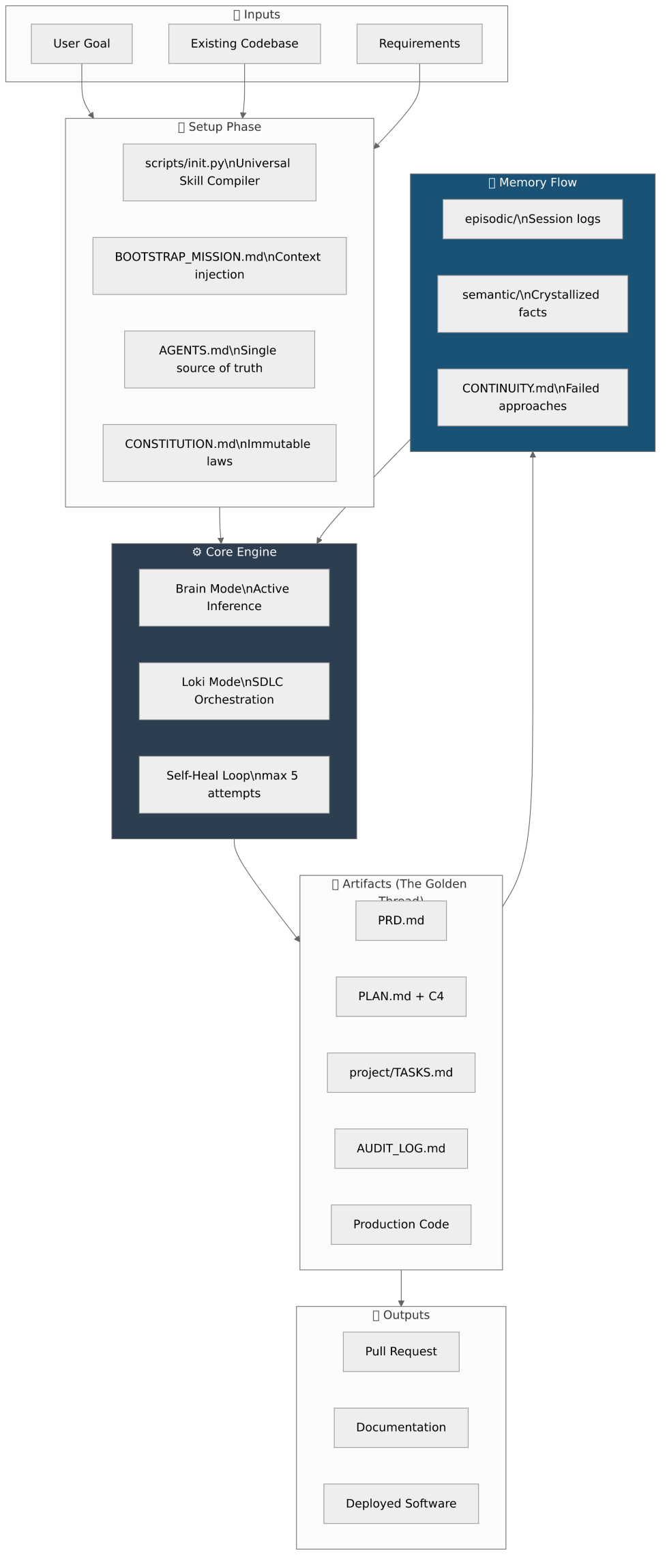
Data Flows

Creative Use Cases
Vibe Coding — Translate aesthetic intent into code: “Make it feel Cyberpunk 2077 meets corporate SaaS. Glassmorphism, neon accents, micro-animations.”
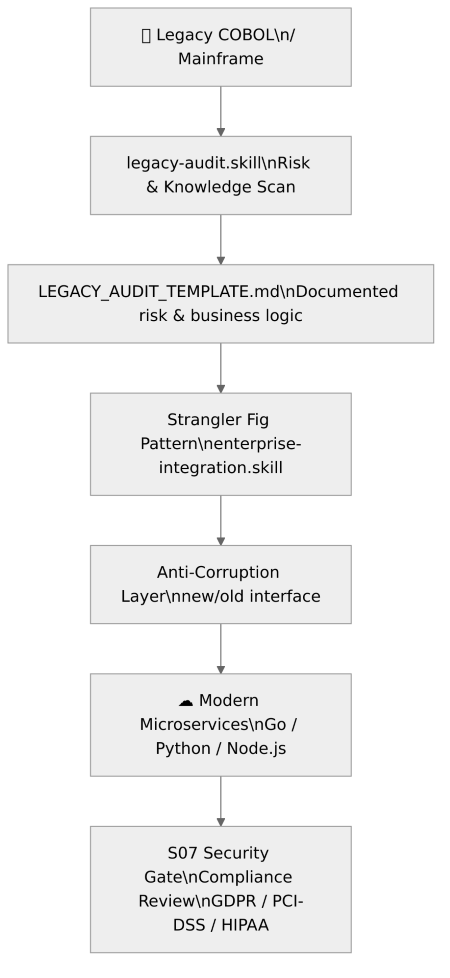
COBOL Modernization — Strangler Fig pattern with Anti-Corruption Layers and compliance review (GDPR/PCI-DSS/HIPAA).
Enterprise Swarm — Run complex features through Loki Mode’s full persona chain.
Autonomous Tech Debt — Impact × Effort prioritized backlog with automated refactoring.
Architecture Governance — Continuous dependency enforcement on every PR.
Who Is It For?
- Solo developers — TDD discipline + structured memory without overhead
- Team leads — Governance across humans + AI agents simultaneously
- Enterprise architects — Compliance, legacy migrations, traceability
- ML engineers — Research governance, AI ethics, self-correcting pipelines
- Startup CTOs — Move fast without accumulating fatal tech debt
- Frontend developers — AI that understands aesthetic intent
- Security engineers — Security as mandatory gate, not afterthought
Key Innovations
- Neuroscience-derived orchestration — Active Inference, Global Workspace Theory, Basal Ganglia habit patterns
- Write Once, Run Everywhere — One skill source → Cursor, VS Code, Claude, Gemini formats
- Hybrid Markdown-SQLite architecture — Human expressiveness + machine reliability
- Evolutionary Prompt Optimization — The system improves its own prompts
- Self-Healing with Escalation — 5 retries → human escalation (not too aggressive, not too passive)
- Cost-Aware Routing — Automatic local vs. remote LLM decision-making
Get Started in 5 Minutes
git clone https://github.com/andreibesleaga/GABBE
python3 GABBE/scripts/init.py
Then paste the generated BOOTSTRAP_MISSION.md into your AI agent. That’s it.
First prompt: “Read AGENTS.md. I want to build [X]. Start with spec-writer skill.”
“The Agent is the Engine. You are the Steering Wheel. GABBE is the Roadmap.”
GABBE v0.2.0 · Author: Andrei Nicolae Besleaga © 2026 CC BY-SA 4.0 GitHub: github.com/andreibesleaga/GABBE
GABBE: The Cognitive Engineering Platform That Transforms AI Coding Agents Into Engineering Teams was originally published in Towards AI on Medium, where people are continuing the conversation by highlighting and responding to this story.
