Answer Engine Optimization: How to Be AI’s First Choice in 2026

Search feels different now. You ask a question, and AI gives one clear answer.
No clicks. No scrolling.
So where does that leave your content? It leaves it either chosen or unseen and this is why Answer Engine Optimization matters.
In 2026, AI tools handle a big share of searches. Around 25% already, according to industry reports from Gartner, and that number keeps rising.
You may ask, can your content still win?
Obviously, yes, if you write for answers, not rankings!
In this guide, you will learn how answer engines work, why SEO alone falls short, and how to become AI’s first choice in 2026.
What Is an Answer Engine?
An answer engine is any system designed to deliver direct, concise answers to user questions without requiring a click. Unlike traditional search engines that list pages, answer engines aim to resolve intent instantly.
A traditional search engine gives you a list of 10 blue links and says, “Good luck finding it.” Meanwhile, an answer engine does the heavy lifting for you. It scans the web, synthesizes the best information, and presents a single, unified answer.
Types of Answer Engines
Depending on how your audience searches, they likely interact with one of these three types:
1. Generative AI Chatbots
While these tools started as creative tools, they are now full-fledged research hubs:
- ChatGPT: With the full integration of SearchGPT, it now functions as a real-time answer engine, pulling live data from the web to back up its claims.
- Gemini & Claude: Powerful models that summarize complex topics instantly.
- Perplexity & Grok: Built specifically for real-time information retrieval and “source-first” answers.
2. Voice Assistants
These are the hands-free engines we use in our cars, kitchens, and on our wrists. For example, Google Assistant, Siri, and Alexa. These engines rely on the most concise “featured snippet” of information available.
If your content isn’t structured for a 30-second spoken answer, these assistants will never find you.
3. AI-Powered Search Tools
This is the “middle ground” where traditional search meets AI. Two popular examples are:
- Google AI Overviews (SGE): The snapshots you see at the top of Google results.
- Bing Chat / Copilot: Microsoft’s integration of GPT-4 directly into the search bar.
So you might be wondering what’s the big shift from old SEO? It’s often win or lose.
In traditional search, spot #3 still gets clicks. Here, AI picks one main source for a 150-word answer. You’re either chosen, and seen by everyone… or invisible!!!
How Do Answer Engines Work?
Behind the simple question-and-answer box is a fascinating two-step process. To become AI’s first choice, you need to know the steps.
First, it retrieves. When you ask a question, the system doesn’t just make up an answer. It performs a high-speed sweep of the web, hunting for relevant information. This is the “R” in RAG (Retrieval-Augmented Generation). It’s looking for the most current and contextually relevant data it can find.
Then, it generates. Next, it synthesizes what it found. Using its large language models (LLMs), it writes a new, original summary that directly answers your specific question. It cites the sources it used. This is the “AG” in RAG.
How They Understand and Extract Answers
So, how does the engine decide which content to retrieve and extract? It’s looking for clarity and directness.
You can think of it as a researcher scanning a page. They aren’t reading the whole novel. They’re skimming for the thesis statement. Answer engines do the same using advanced natural language processing (NLP).
They scan a page and ask:
- Is there a direct answer to the question here? They love content that starts with “The best way to…” or “X is defined as…”
- Is the information structured clearly? Bullet points, numbered steps, and clear headers act like signposts.
- Is the language simple and declarative? Complex jargon and meandering intros get ignored. The most straightforward explanation wins.
Your job is to make the answer so well-structured that the AI can’t miss it.
The Critical Role of Structured Data, Context, and Authority Building
This is where you move from being seen to being chosen. Three factors are crucial:
1. Structured Data: This is code you add to your page (like FAQ or How-To schema) that explicitly tells machines, “This part is a question, and this part is the answer.” It’s the equivalent of handing the AI a highlighted, pre-organized research note. Pages with properly structured data are far more likely to have their content cleanly extracted.
2. Context: Answer engines are getting better at understanding the intent behind a question. A query for “apple” could be about the fruit, the tech company, or the record label. They look at your entire page… the supporting content, related topics, and semantic keywords to determine if you’re a relevant, comprehensive source on the topic.
A shallow, 300-word page rarely provides enough context to be trusted.
3. Authority: Before an answer engine will cite you, it must verify you’re a trustworthy source. This is where E-E-A-T becomes non-negotiable.
Let’s take a look at the broader explanation:
- Expertise: Does the author have proven credentials?
- Authoritativeness: Is your site recognized as a leader on this topic by others (through links and mentions)?
- Trustworthiness: Is your site secure, accurate, and transparent?
Answer engines work by finding the clearest, most structured, and most authoritative content that matches a user’s intent. Your AEO strategy is about engineering your content to check every one of those boxes.
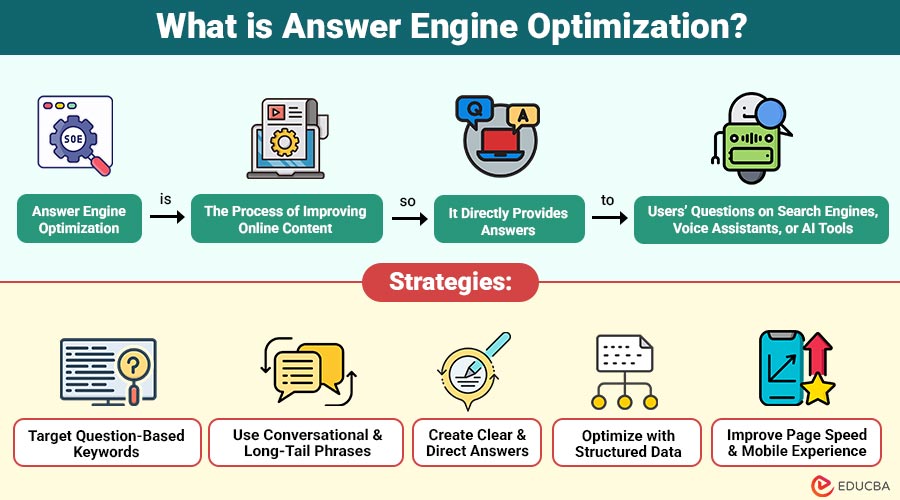
What Is Answer Engine Optimization (AEO)?
Answer engine optimization is the practice of structuring your content so AI tools cite you as their source. It’s not about ranking on page one anymore. It’s about being the answer that ChatGPT quotes, the Google AI Overview references, or Alexa reads aloud.
Think of it this way: SEO gets you in front of people. AEO best practices help you get quoted by the machines people trust. So, in short, this is what AEO is:
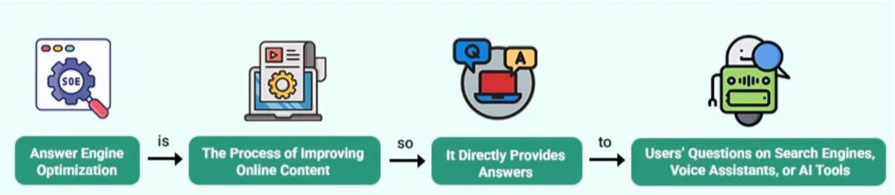
The goal shifts from “get them to click” to “become the authoritative source they hear about, whether they click or not.”
Why is AEO Important for Your Business in 2026
In early 2026, zero-click searches were the norm. Studies show that about 58-60% of Google searches end without a click to any website.
That’s huge, and your traffic? It drops fast. AI answers make it worse.
When Google shows an AI Overview, organic clicks fall by around 61%. Some sites lose 20-60% of visitors or more. People shift, too. About 37% now start searches on AI tools like ChatGPT instead of Google. ChatGPT alone has 800 million weekly users.
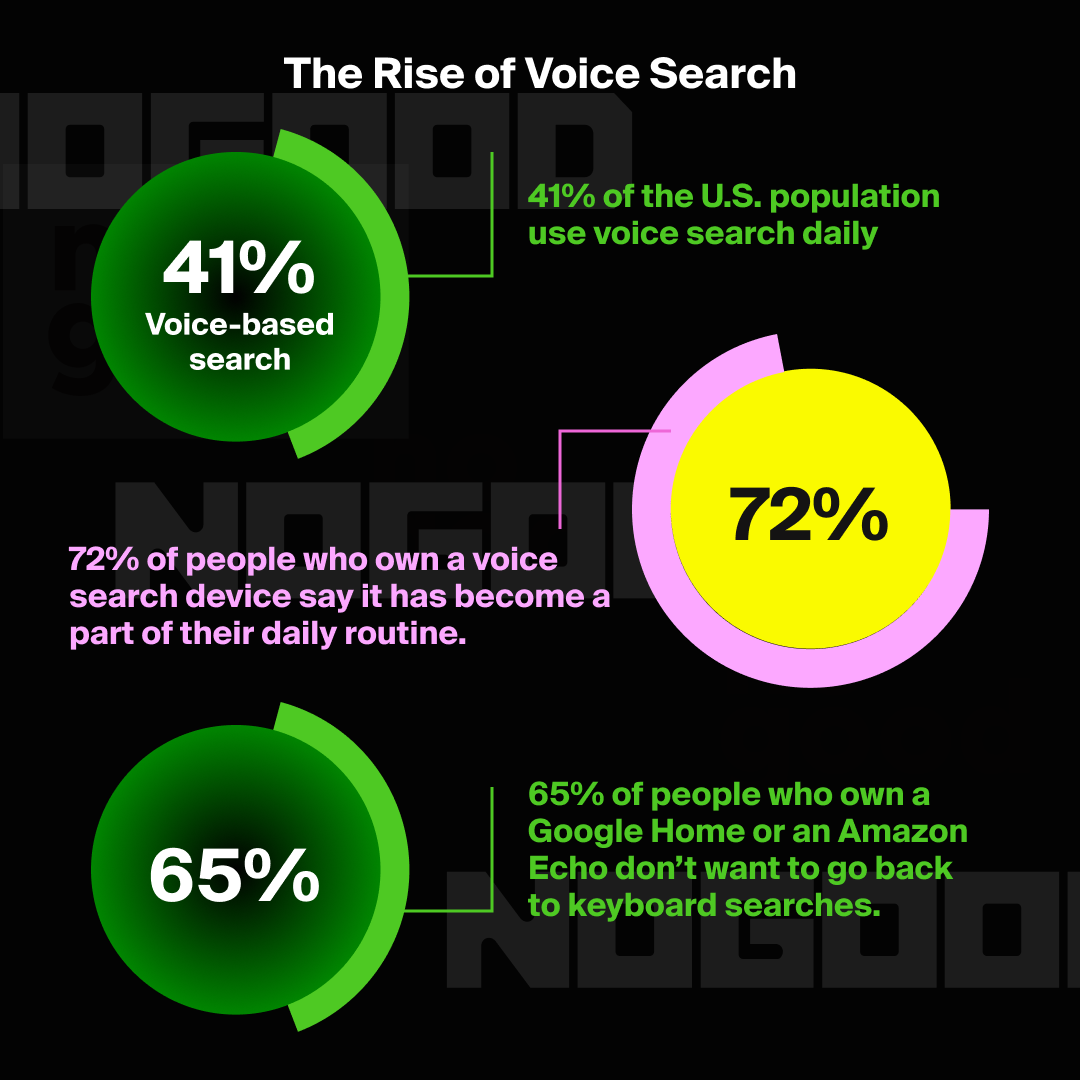
One more concern is that voice searches grow fast. Over 1 billion voice queries happen each month. You ask Siri or Alexa and get an instant spoken answer.
The following image will help you understand the rise of voice search properly:
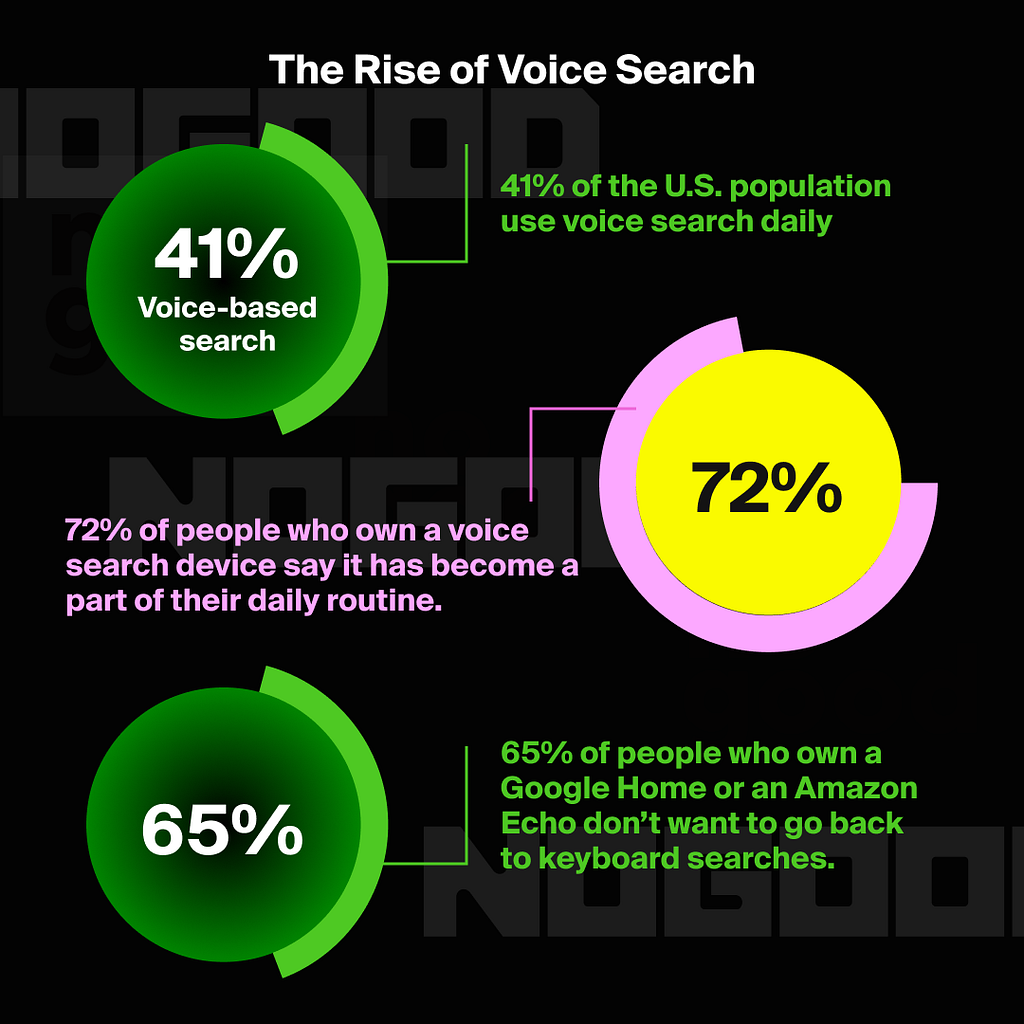
What does this mean for you? Great content alone isn’t enough, and if AI skips you, you’re invisible… no clicks, no visits, less brand recall.
But here’s the flip side. Get chosen as the source? Your name shows up to millions. Trust builds. People search for you directly later. That’s why AI answer optimization matters now. It helps you win where being AI’s first pick is the real goal.
How Long Does AEO Take to Work?
Answer engine optimization can take a few weeks to a few months to deliver results.
If your site already has strong SEO foundations: good authority, quality content, and proper structure, you’ll see results faster. New sites need longer. One case study showed AI visibility jumping from 0% to 11% in hours after publishing a single AI-optimized piece.
But consistent results typically need 2-4 months of focused AI search optimization.
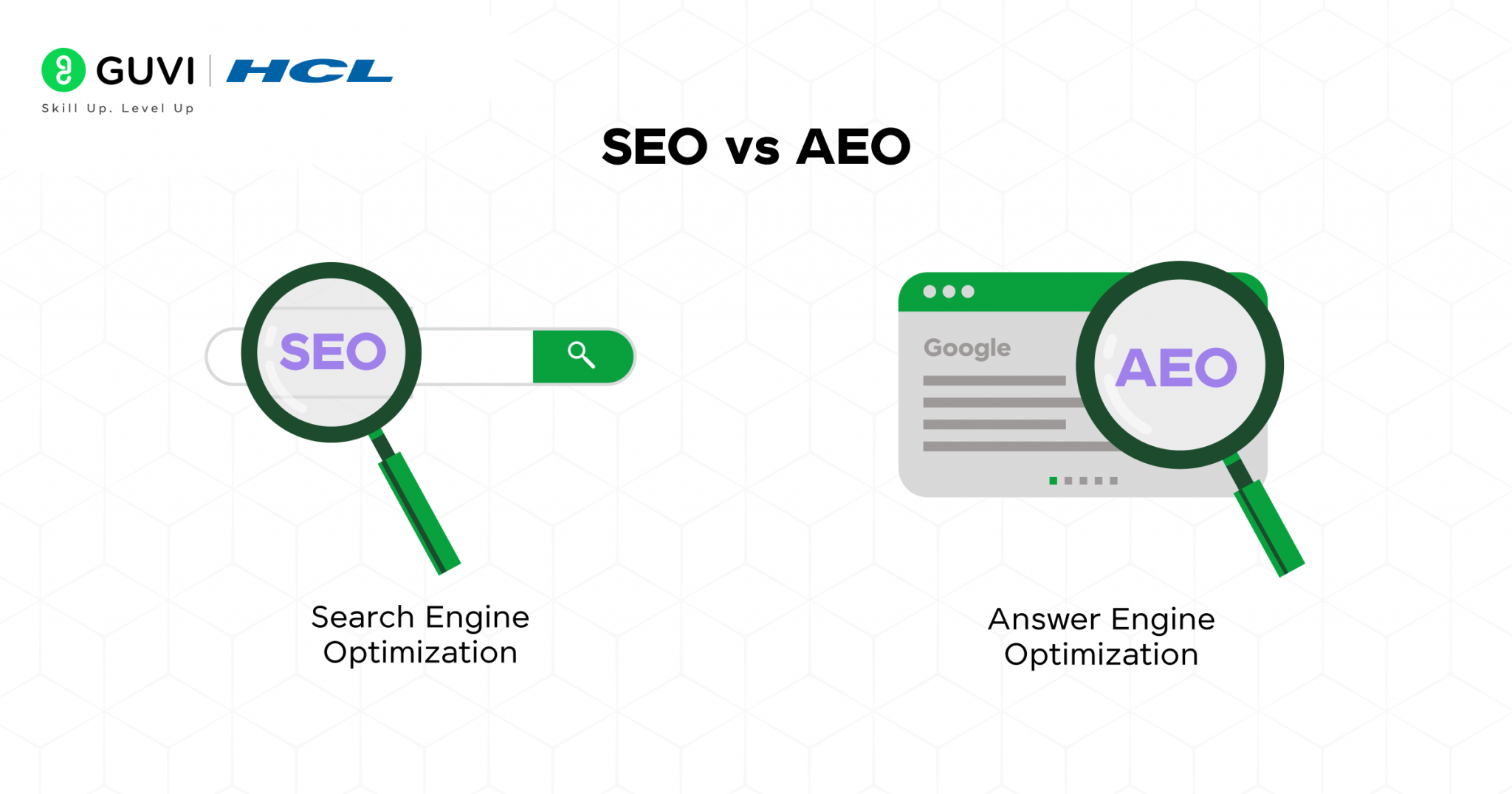
AEO vs SEO: How AEO Differs from Traditional SEO
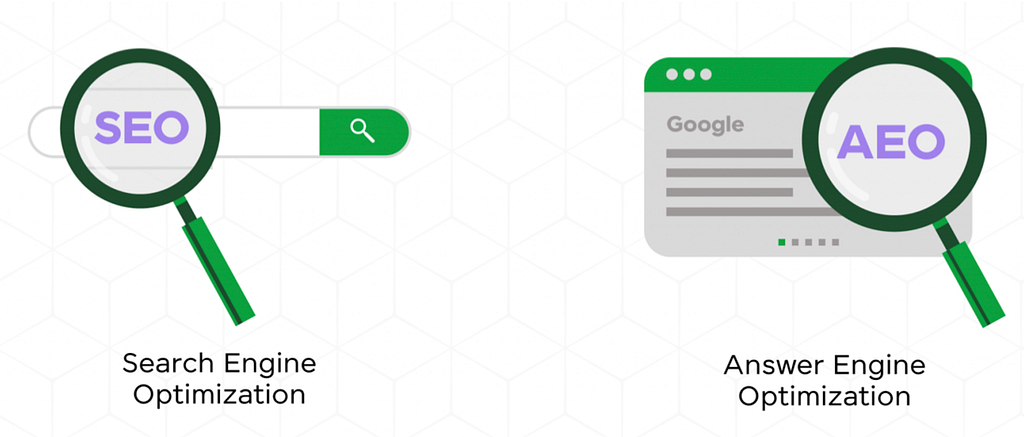
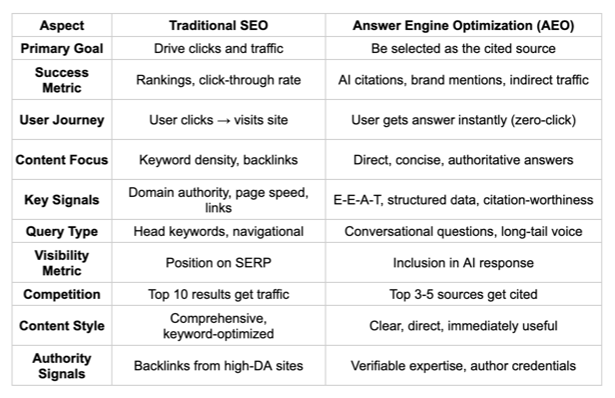
Traditional SEO optimizes for algorithms that rank pages. Answer engine optimization optimizes for AI that understands and synthesizes information.
In SEO, you win by being one of ten options on page one. In AEO, you win by being the one source AI trusts enough to cite. The competition is fiercer, but the reward is bigger… you become the topical authority in your space, even when users never visit your site.
The table below will help you identify the basic differences between SEO and AEO:
A Step‑by‑Step Guide to Answer Engine Optimization
Answer Engine Optimization works best when you follow a clear process. Random changes rarely help. The following step-by-step approach reflects what the benefits of answer engine optimization are and help you get the most out of it.
Step 1: Set AEO Goals and KPIs
Start with the right goal. Ask yourself a simple question: Do you want traffic, or do you want to be the answer?
Your main AEO goals should include:
- AI citations and mentions
- Visibility in AI Overviews and chat tools
- Growth in branded searches
Ahrefs data shows that AI-driven visitors convert up to 23x better than traditional organic users (2024). That makes visibility a real business metric, not just branding.
Step 2: Audit and Prioritize Content
Don’t start from scratch. Use your analytics to find pages with high “answer potential.”
- The Quick Filter: Prioritize pages that already rank on page one for “how,” “why,” or “what” questions. A page getting traffic for a question is already seen as relevant; it just needs to be reshaped for a direct answer.
- The Foundation Test: Also, audit pages that cover the absolute fundamentals of your field. AI needs basic, authoritative definitions to build upon.
Step 3: Rewrite for Direct Answers
AI answer engines extract concise, self-contained responses, often from the first 40–60 words of a page. This is your “answer block.”
Apply the Inverted Pyramid model:
- Lead with the definitive answer in 1–2 clear sentences.
- Then provide context, examples, or evidence.
For example, an education site can use a definition like:

This “snippet-first” writing ensures AI crawlers (like Google-Extended or GPTBot) can easily parse and cite your content.
Step 4: Optimize for Voice and Conversational Queries
People do not speak in keywords. They speak in full questions, and so voice searches are typically longer, question-based, and locally contextual. You too, write like people talk. Use full sentences. Answer one question per section.
Studies from Google show that voice search optimization often include words like “best,” “how,” and “near me.”
For example, “Hey Google, how do I explain fractions to a 7-year-old?”
By following some specific instructions, you can optimize your content for voice, such as:
- Use natural language and contractions (“you’ll” vs. “you will”)
- Anticipate follow-up questions within the same piece
- Include local or situational modifiers if relevant (e.g., “in online classrooms,” “for ESL learners”)
Step 5: Create Comprehensive FAQ Pages
Pages with FAQ schema are 3.2 times more likely to appear in Google AI Overviews compared to pages without FAQ structured data.
FAQ structured data has one of the highest citation rates in AI-generated answers, with content using the FAQPage schema appearing significantly more than unstructured content.
Answer engines recognize and reward content that answers several questions and anticipates follow-ups. Don’t just answer one question. Build comprehensive FAQs that address the entire topic cluster.
Each FAQ should follow this format:
- Question as the heading (H2 or H3)
- Direct answer in the first sentence (40–60 words)
- Supporting details (optional, 2–3 sentences)
Step 6: Use Structured Data (FAQ, HowTo, Article)
Schema markup is the language answer engines speak. This is like a translation layer between your content and AI systems. Without it, you’re making AI guess what your content means.
FAQ and Q&A schema appears in only 10.5% of AI-cited pages, despite aligning closely with how answer engines retrieve information, which means there’s a massive opportunity for brands that implement it correctly.
Semrush data shows AI Overviews are driving 13% of all queries, a jump from approximately 6.5% in January 2025 to 13.1% in March 2025.
Structured data helps you capture that visibility.
The essential schema types for AEO you should use are as follows:
- FAQ schema for question pages
- HowTo schema for step guides
- Article schema for long-form content
- Speakable schema for voice assistants
- Organization schema to link content to your brand
Step 7: Conduct Keyword Research for User Intent Optimization
Traditional keyword research finds search terms. AEO keyword research finds questions.
Research specific questions people ask using tools like “People Also Ask” boxes, AlsoAsked.com, and AnswerThePublic.
Look for:
- Question modifiers: “how,” “what,” “why,” “when,” “where,” and “which”
- Comparison queries: “vs,” “versus,” “compared to,” ir “better than”
- Problem-solving queries: “how to fix,” “how to solve,” or “troubleshooting”
Track this inventory in a shared spreadsheet or your CRM, noting which questions you’ve covered, which are in progress, and which represent content gaps your competitors might be filling first.
Don’t just find questions, cluster them by topic.
For example, if users ask, “What is email marketing?” They also ask “How does email marketing work?” and “Why is email marketing effective?”
Answer all three in one comprehensive piece.
Step 8: Build Trust and Authority (E‑E‑A‑T for AEO)
In 2026, AI answer engines heavily weight Experience, Expertise, Authoritativeness, and Trustworthiness (E-E-A-T), especially for YMYL topics like education, health, or finance.
So let’s review some actionable tactics you should implement:
- Clearly display author credentials (degrees, years of experience, affiliations)
- Link to authors’ professional profiles (LinkedIn, Google Scholar, ORCID)
- Cite peer-reviewed sources or policy documents
- Show real-world application (e.g., “Used in 12 school districts across Bangladesh”)
This is about being remembered when the answer appears without a click. In a space of anonymous AI summaries, your brand’s credibility becomes your most valuable asset.
What Are the Challenges Of Implementing AEO?
AEO promises top visibility, but hurdles slow many down. Here’s what you’ll face:
- Constant changes in AI search: Answer engines change fast. Google, Bing, and AI tools update how they choose answers often. A page picked today may disappear tomorrow. You cannot lock results. You must keep improving your content.
- No clear ranking signals: SEO has rankings. AEO does not. You either get chosen, or you don’t. This makes progress harder to predict and explain.
- Ongoing monitoring is required: You must track more than clicks. AI mentions, citations, and branded searches matter now. Many teams lack the tools or time to monitor these signals regularly.
- Traffic may drop even when visibility grows: AI often gives full answers. Users feel satisfied and leave. This can reduce visits even when your brand appears more often. You need strong wording that invites deeper reading.
- Trust takes time to build: Answer engines favor proven sources. You must show real expertise, clear authorship, and consistent quality.
- User behavior keeps changing: People now ask full questions by voice or chat. Old keyword-focused content feels unnatural. Teams must relearn how to write for humans and machines at the same time.
How to Monitor AEO Performance
Monitoring AEO is tricky. Traditional clicks don’t tell the full story anymore. You need new ways to spot wins in AI answers.
Good news is that tools have improved a lot in 2026. They track citations and mentions directly.
Key Metrics to Track
Move past old KPIs like click-through rates.
Focus on these instead:
- AI impressions and citations. How often your site shows in AI Overviews or summaries.
- Citation share. Your brand’s percentage of mentions versus competitors.
- Brand sentiment in AI responses. Analyze if AI is saying good things about you.
- Branded search lift. If people see your name in answers, they search for you directly later. Watch this in Google Search Console, it often jumps 20–40% with strong AEO.
- Visibility score. Overall presence across engines like ChatGPT, Perplexity, and Google. These show real impact. Even without clicks.
Tools and Reports to Use
Start free, then upgrade. Here is a sample toolkit you may use:
- Google Search Console. Best starting point. It tracks AI Overview impressions and clicks from them. Filter for AI features.
- Semrush AI Visibility Toolkit. Great for tracking mentions across platforms. Spots opportunities too.
- Ahrefs. Solid for competitor citation analysis and keyword gaps in AI.
- Bear AI. Real-time tracking of AI mentions and crawler activity.
- xSeek. Monitors AI bots like GPTBot and PerplexityBot visiting your site.
- Otterly.AI. Affordable and strong for brand mentions in major engines.
Others like Profound or Goodie AI for deeper sentiment and share of voice.
Check weekly and adjust based on what you see.
The Future of Answer Engine Optimization (AEO)
AEO is already being adopted by many businesses. Over 81% of professionals optimizing for AI respondents to a poll conducted by Neil Patel and his team stated that they had been integrating AI into their business operations for at least six months, as shown below:
AI answers will dominate as zero click searches already hit 75% in 2025. By 2027, expect 65% of queries to come from voice and AI agents. Businesses lose if they wait.
Two tactical shifts are waiting ahead:
- Answer engines will cite discussion sources like Reddit more. Real user conversations prove relevance better than polished posts.
- Video transcripts will become AEO lifters. Multimodal AI pulls answers from spoken content, 40% of 2026 voice results will use them.
The next big step? AI agents. These aren’t just answer tools. They act for users.
Book trips. Shop products. Run tasks. AEO will mean optimizing for trusted sources agents rely on.
Conclusion
Answer engine optimization puts your content where users look first: AI summaries and voice replies. You’ve got the steps: audit smart, rewrite direct, add schema, track citations. Zero-click wins build brand trust fast.
Don’t wait for algorithms to change. Pick one page and AEO-ify it this week. Start with your top question page. Watch citations grow in the Search Console.
Your expertise deserves to be the answer!
Frequently Asked Questions
1) What is search engine optimization?
Search engine optimization, or SEO, helps your content rank higher in search results. It focuses on keywords, links, page speed, and user experience so people can find and visit your website through search engines like Google.
2) Is ChatGPT an answer engine?
Yes. As of 2026, ChatGPT works as a hybrid of a Large Language Model and a real-time search engine. With SearchGPT, it pulls live data and selects trusted sources to answer questions.
3) What are the best AEO tools?
In 2026, top tools include:
- HubSpot’s free AEO Grader: Quickly checks across ChatGPT, Perplexity, and Gemini.
- Semrush AI Visibility Toolkit: Tracks mentions and opportunities.
- Ahrefs: For brand radar and competitor insights.
- Profound and Goodie AI: Deeper citation tracking and optimization.
You can start with Google Search Console for basics.
4) How can AEO improve user engagement?
AEO puts your brand inside the answer users see first. This builds trust fast. Even without clicks, users remember your name and search for you later.
Answer Engine Optimization: How to Be AI’s First Choice in 2026 was originally published in Towards AI on Medium, where people are continuing the conversation by highlighting and responding to this story.