Build an Instant Chat Assistant with Groq & Llama 3

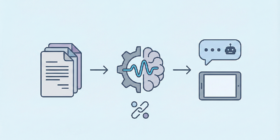
Created by Nano-banana Pro A technical guide to handling messy PDFs, optimizing Hugging Face embeddings, and deploying with Llama 3 We’ve all been there, drowning in a sea of PDFs, documentation, and random URLs, trying to find one specific answer. The old way? Control+F and hope for the best. The new way? Chatting with your data. Today, I’m going to show you how I built PdfPal, a lightweight, hyper-fast RAG (Retrieval-Augmented Generation) engine. Unlike standard tutorials that use slow APIs, PdfPal […]
Like
0
Liked
Liked