How to Lose Inherent Counterfactuality in Reinforcement Learning
How to Lose Inherent Counterfactuality in Reinforcement Learning, ICLR 2026 Paper: https://openreview.net/pdf?id=2kutK2Y8Sv submitted by /u/ml_dnn [link] [comments]
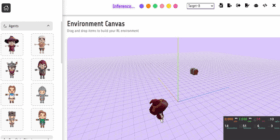
After 9 months of work I finally got my first successful run in a simple RL environment where the agent learns to find a target 🎉 I’m still validating more SARL scenarios, but I’m now thinking ahead toward MARL and wanted some advice on architecture and trainer choice. Current RL engine structure: 1. SimulationEngine • Handles both logic and physics orchestration • Calls the other layers internally 2. EnvironmentEngine • Handles environment logic 3. BulletWorld • Builds and […]
Read Online | Sign Up | Advertise Good morning, {{ first_name | AI enthusiasts }}. Google DeepMind CEO Demis Hassabis thinks we’ll have AGI by 2030 — give or take a year. Some gaps remain, but he’s more confident now that we’re on track. We sat down with Hassabis at I/O to talk about what’s still missing, which diseases AI will crack first, and where humans will always have the edge. Watch the full interview: YouTube, Twitter/X, Spotify. […]
You just doubled the RAM on your database server to handle a climb in p95 latency. You expect the extra memory to absorb your growing dataset and bring those 45ms spikes back down to 8ms. Instead, the dashboard shows minimal improvement. Write latency remains high, and query response times stay variable. The problem isn’t that you added too little RAM. It’s that you gave most of it to the wrong layer. PostgreSQL and your operating system both cache data […]
Modern enterprise AI and data platforms are becoming too operationally complex for traditional reactive monitoring systems. This article explores how self-healing infrastructure architectures can combine telemetry, anomaly detection, autonomous remediation, governance-aware orchestration, and operational learning to create adaptive enterprise reliability systems.
submitted by /u/LargeStrategy9390 [link] [comments]
submitted by /u/northern_intro [link] [comments]
From the Gobi Desert to the Arctic Circle, a generation of private rocket startups is finally bending metal. 2026 is the year they either reach orbit—or run out of cash. (title image credit: Rockets of the World by Nick Stevens) The Monopoly in the Sky Look up on a clear night in 2026 and you’ll see them: not just Orion or Cassiopeia, but the synchronized trains of Starlink, drifting across the sky like a slow-motion barcode. One company, […]
The next enterprise AI risk is not that a chatbot writes a bad email. It is that an AI agent quietly enters the operational layer of the company and starts ranking priorities, routing approvals, classifying risk, delaying purchases, escalating tickets, flagging customers, and shaping managerial decisions before anyone calls it management. Companies still describe these systems as “assistants” because the word sounds harmless. But once a system can trigger action inside an ERP, CRM, inventory platform, purchasing workflow, […]
Most AI products don’t fail because the model is bad. They fail because the product decisions around the model are wrong — or absent. Activation looks healthy in week one, then collapses in week two. Generation counts climb while export and approval rates stay flat. Users try the AI feature once, mark it as “interesting,” and never come back. If you’re shipping AI products in 2026, you’ve seen this pattern. The question is what to do about it. […]